


 Unlock with Patreon
About This Episode
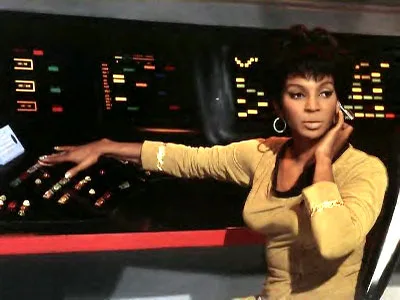
Some might know Nichelle Nichols best from Star Trek, but this actress, singer, dancer and space advocate has much to say beyond her role in TV’s exploration of the final frontier. In this exclusive interview, she talks about how science fiction and Star Trek—and specifically her ground-breaking role as Chief Communications Officer Lt. Uhura—not only impacted her life, but also had an influence on society over space and time.
NOTE: All-Access subscribers can listen to the entire episode ad-free here: A Conversation with Nichelle Nichols.
Transcript
DOWNLOAD SRTWelcome to StarTalk, your place in the universe, where science and pop culture collide. StarTalk begins right now. Welcome to StarTalk Radio, I'm your host, Neil deGrasse Tyson, astrophysicist and director of New York City's Hayden Planetarium. For our show...
Welcome to StarTalk, your place in the universe, where science and pop culture collide.
StarTalk begins right now.
Welcome to StarTalk Radio, I'm your host, Neil deGrasse Tyson, astrophysicist and director of New York City's Hayden Planetarium.
For our show today, I'm going to break format a bit.
Normally, there is a professional stand-up comedian right to my side serving as my co-host, and we banter and chat about the science topic of the day, reacting to interview clips that I've slotted into the show of special guests that I've collected over the previous days.
In this particular case, I want to present to you straight through an exclusive one-on-one conversation that I had with actress Nichelle Nichols.
That name is no stranger to the geek set among you out there, but for the rest who need a little bit of extra info, she is the legendary icon who played Lieutenant Uhuru in the original Star Trek television series.
That series was created, as many of you know, by Gene Roddenberry, and it was groundbreaking on many fronts.
For me, the most important feature of that show was that the deck of the Starship Enterprise was international.
Lieutenant Uhuru herself represented, again, this is the future, the United States of Africa.
Not only was she there, but there was representation from Asia, from Europe, from the Americas, and even Planet Vulcan, of course, in the guise of Spock.
The point is, if you were a science fiction fan of the day, and you viewed how authors and producers portrayed the future, it was a future that did not include people of color.
A really frightening prospect if you happen to have been a person of color.
And now comes the series Star Trek.
And you see a woman who is dignified, who has poise, who is not somebody's maid, and who is in fact an educated communications officer on the deck of the Starship Enterprise, who is fourth in command, by the way, of that Starship.
And your vision of the future can change overnight.
This fact did not go unrealized by Nichelle Nichols.
Let's pick up on my interview with her in my office at the Hayden Planetarium here in New York City.
Before Star Trek, did you have any particular interest in science or science fiction?
Or was that just your next acting gig, and it just blossomed into the rest of what became an important identity?
Well, I thought Star Trek was going to be my next acting gig because I grew up in musical theater, and I never had any dreams of being in film or television.
Theater people tend to be snooty that way.
I didn't know it was being snooty.
You see, it wasn't like that with me.
It was a live audience that I loved and that I thrived in.
And you get an immediate response to your effectiveness.
You get an immediate response and you never do the same performance twice.
That's how I feel when I give lectures.
Yes.
I feed off of that.
Yes.
That give and take, isn't it?
I bet even now you realize another dimension of what you were going to say that because of an audience reaction or question, because you affect people in different ways.
This was a very exciting time for me when I realized my life was bigger than my narrow.
I was a ballerina and became involved with all forms of dance.
So the total stage performer.
I was a singer with a four octave range voice.
I thought I had two voices until I found out how to connect them.
I had this high voice, and I had this deep voice, moaning low.
You need that deep voice.
I was just this little child.
The needle on my microphone doesn't know what to do.
And I was this actor, and I was also a writer.
I used to write plays, and I'd get the kids in the neighborhood, and I'd cast them, and I would always be the star of the show.
And they were just delighted because they loved having fun.
And then our parents would come and see it, the show.
The kids in the neighborhood would come, write another one, write another one.
And they got to have fun, and I got to be as a young child in the theater, the theater of the street.
And so I always knew I was going to be a star.
But it was going to be at the highest level on Broadway.
You'd be the toast of Broadway.
The toast of Broadway.
And then Star Trek interrupted my career.
Damn, Star Trek.
I got this role as Uhura, and I thought, oh, well, that's nice.
I didn't think of it as a leading role.
I just thought of it as being a powerful adjunct and participant of my resume, which would get me closer to Broadway, starring on Broadway.
Who would have thought?
Who would have thought?
Yeah, yeah, yeah.
I'll act the Star Trek role so that I can be better on Broadway.
And so that I can be sought after, because I never underestimated the power of television.
So here I've got this lovely little role, and I thought it was nice.
And after the first season, I thought, okay, I'm fantastic, you know.
And you're not singing and dancing, right?
No, that wasn't.
No, I was singing.
No, no, not singing in Star Trek.
Yes, I did.
Three times.
I missed that.
Oh, my God.
Oh, yes.
Oh, sure.
That was the first song that Gene had written for me.
I'm Netflixing that tonight.
And then I sang twice again.
I sang the, Oh, but I really had fun.
I was singing to Mr.
Spock in the rec room, teasing him about his ears and so forth.
And it was fascinating to me that that was the only time you would see Uhura relax or be funny.
When she was on that command deck, she was all business.
She's from the United States of Africa.
She was expected to be of a level.
High professional.
Highest of professional, not just high.
That's not good.
Excuse me, highest.
Yes.
Well, that showed, let me just say, you had a presence on that deck that no one else had.
And she could tease Spock because, do you ever wonder why Uhura was the only one that Spock, even Dane, to try to teach, much less teach, to play the Vulcan Lair, an impossible instrument even for Vulcans to play.
And so I used that to relate to the intelligence of Spock and the intelligence of my family, which is from the United States of Africa, most assuredly, expected the best and the highest of their daughter.
So you went through a year, and at the end of the year, what happened?
Thank you.
I was floating back there, and I thought if I talk long enough, I'd get...
So after the first season, I was going, well, you know, this is not a major role, or it doesn't have anything to do, although I had some really wonderful episodes.
This might be the very coolest time for me to thank Jean for the opportunity, because I'm getting all of this attention now that we're on television, and I'm on my way to Broadway.
And I had already talked to a producer who wanted to write something around me and so forth, so I went and told Jean, I said, I thank you for everything you've done.
Jean, we've been friends, and I thank you so very much, but I'm going to be leaving.
And Jean was sitting behind his desk, and he had a raucous sense of humor, but he was not amused.
And he just looked at me and he said, you can't, don't you see what I'm achieving here?
And it stunned me because I didn't think, you know...
You were just another actress on the stage.
And nobody had told me yet that I was Chief Communications Officer and fourth-in-command until two nights later.
And Jean said, well, take the weekend and think about this, Nichelle.
And I handed him my little letter of resignation.
He stuck it in his desk drawer and looked at it.
He said, think about it.
Think about what I've talked to you about.
This is more than just a role.
I go, OK, Jean, thank you.
And he says, if Monday morning you want to come in and talk to me and you still feel the same way, I will still be very disappointed, but I'll let you go with my blessings.
And I said, thanks, Jean.
I walked out of there.
Phew, that went well.
On Saturday night, I was, had been invited as a celebrity guest at an NAACP fundraiser in Beverly Hills.
And when I went in, I was being greeted and so glad you could come.
So this year now is 1967, 66?
Yes, approximately that time.
Mm-hmm.
Seven, eight.
Yeah, there you go.
And just as I'm sitting seated at the dais and getting ready to turn to other celebrities, one of the promoters walked over behind me and said, Ms.
Nichols, sorry to bother you.
I said, no problem.
And he said, well, there's someone who wants to meet you.
And he says he's your greatest fan.
And I smile and I said, of course.
And I'm getting up to turn and said, where is he?
He says, right over here.
And I'm thinking it's a trekker, you know, maybe a child, maybe a young man.
They just, someone wants to congratulate him.
And so delighted.
I turn and I see this man across the room with this brilliant smile, which you didn't often see on his face.
And I remember saying to myself, whoever this little trekker is, they're going to have to wait because this is my leader, Dr.
Martin Luther King walking towards me with a smile on his face.
And I never met the man, you know.
This is like I'm starting to tremble.
And he walks to me and he says with this smile, he says and puts his hand out and says, yes, Ms.
Nichols, I am your greatest fan.
Martin Luther King Jr.
I thought, what an incredible moment.
Now I have to wrap my head around this.
You are at a fundraiser.
Yes.
You Star Trek actress at a fundraiser in Beverly Hills and you run into Martin Luther King.
Well, he was also a guest.
I'm just saying.
And I've just told Gene Roddenberry I'm leaving the show.
Right, okay.
So that's the setup for this.
Well, this man, he says, I am your greatest fan.
And I just was flabbergasted.
You're still flabbergasted.
I can't say the word.
Just remembering it.
And he begins to speak about my role on television and the power of Star Trek and how important it is.
In the meantime, for the first time in my life, I had no words to say.
I couldn't, they wouldn't come out anyway.
I'm shaking in front of this man.
And he is saying how important Star Trek is to the future, that this man who's written this, who has produced this, has seen the future.
And we are there because you are there.
We as the black community has been imagined in the future created by Gene Roddenberry.
It's a truth because it's on television.
And the black community was not part of anybody else's vision of the future that had been portrayed until now.
That's correct.
That's correct.
You've been listening to my exclusive interview with Nichelle Nichols.
When we come back, we'll hear more about her extraordinary encounter with none other than Dr.
Martin Luther King.
You're listening to StarTalk Radio.
Welcome back to StarTalk Radio.
I'm your host, Neil deGrasse Tyson.
For this special edition of StarTalk, we're breaking format to bring you an exclusive one-on-one interview that I had with actress Nichelle Nichols.
She's, of course, Lieutenant Uhura of the original Star Trek TV series.
She was visiting New York, I invited her by, we chatted, we had lunch, and out of that visit came this conversation.
In the first segment, we left off where she was describing when she first met Dr.
Martin Luther King Jr.
I was surprised to learn that he was her biggest fan.
Not only he, but his wife and his kids would reserve time in the evening to watch the Star Trek series.
Why?
Because, in fact, he recognized that Star Trek was providing an important service to the American culture because she, as a black woman, had showed that, in fact, the black community could be part of at least somebody's vision for the future of humanity.
In this next part of the interview, Nichelle Nichols reveals exactly what Martin Luther King, Jr.
told her about the importance of Star Trek to society.
Let's see what she had to say.
He said, you have one of the most important roles.
This is a first.
It's non-stereotypical.
It's brilliant.
It's beauty and it's intelligence.
And you do it with warmth and grace.
And I'm just standing there watching him and listening to him.
I'm thinking the only visions I've seen of this man really are nightly in the news with marching and black people in the south marching and demanding their rights to sit at a stupid lunch counter and coming out, being hurt, hurt it out and having hoses, fire hoses turned on them, dogs, attack dogs turned on, men, women and children.
And this man leading them and marching and the face of all of this, being arrested, every night I ever saw him, I said, they're gonna kill him.
It won't happen past this time, but it did.
And so he became this power of hope.
And here I am playing this character that I'm gonna give up.
And I said to him, Dr.
King, thank you so much.
I'm going to miss my co-stars.
Before I could say because, he said, what are you talking about?
And I said that I just told Gene that I'm leaving the show after the first season because I've received, and he said, you cannot.
I felt like that little boy who later said, what are you talking about, Will?
Because I felt like saying, what are you talking about, Dr.
Martin Luther King?
But my mouth just dropped, and he said, you cannot leave.
Do you understand?
It has been heavenly ordained.
This is God's gift and onus for you.
You have changed the face of television forever because this is not a black role.
It is not a female role.
Anyone can fill that role.
It's a role with power and dignity.
He said it can be filled by a woman of any color, a man of any color.
It can be filled by another Klingon or an alien.
He said this is a unique role and a unique point in time that breathes the life of what we are marching for, equality.
He says, beside your chief communications officer, your fourth-in-command.
I'm thinking nobody told me that.
I mean, he's paying attention to these episodes.
He knows Star Trek is built on the Air Force.
On the rankings, yes.
Ranking, so he knew the rank.
And he said, you have no idea the esteem that we hold for you.
And I start shivering.
And I'm just looking at him and my mouth was quivering.
And he said, beside Nichelle, you have no idea the power of television.
This man has shown us in the 23rd century, what started now, this man who's created this, this man has created a reality.
And because it's in the 23rd century, and you are chief communications officer, forth in command of a starship going on a five-year mission where no man or woman has gone before, it means that what we are doing today is just the beginning of where we're going, just how far we're going.
We have to make sure that that's enabled.
You cannot leave.
Besides, and then he smiles again, Star Trek is the only show that my wife Coretta and I allow our little children to stay up late and watch.
And, Nichelle, I can't go back and tell them this, because you are their hero.
So overnight, your life became bigger than yourself.
Exactly.
Your role became bigger than you.
I couldn't think of anything for the rest of the weekend.
I was just shivering.
Sometimes I was furious.
Sometimes I was crying.
Sometimes I just sat numb and thought about it.
And I went to Gene Roddenberry on wobbly legs, and I walked into his office, and he was behind that same desk.
And Gene was a 6'3, muscular, hatchet-faced man with a wicked sense of humor and a brilliant mind.
And he sat there and he looked at me, and I said, Gene, if you still want me to stay, I'll stay.
And I told him the story, what had happened to me with Dr.
Martin Luther King.
He just looked up at me and didn't say anything for a long time, and he opened his desk drawer and took out my letter of resignation and handed it to me.
I looked at this man and the tears rolling down his face, and he said, God bless Dr.
Martin Luther King.
Someone knows what I'm trying.
Someone realizes what I'm trying to achieve.
I'm getting misty-eyed just listening to your story.
I mean, just...
I can hardly ever tell it.
And he handed me my letter of resignation, which had been torn up into a million pieces from the moment I had handed it to him.
He wasn't going to accept it anyway.
And I said, Gene, do you know Dr.
King?
And he says, I've never met him, but I bless him.
And because I said, this is...
Two coincidences.
It was two coincidences that I could just see him picking up the telephone.
I got a job for you.
Like Dr.
King has nothing else to do.
So the real truth here is that even though the show got canceled, it planted seeds within the consciousness of the nation that sprouted later, greater than anyone I think had ever imagined.
I think because the show got canceled, it caused an incredible thrust of pain and fury and because so many people to this day said, I found myself, I found who I am, and people say to me, women, because you were there, I could never see the world the way I was raised to see.
I became a different person.
I had a man in one of the Star Trek conventions in London where they had the skinheads movement, and he was obviously a skinhead.
And there was a long, long, long line of people, and I had security behind me who were irritating me.
And I never had anything, but here was this man at the front of the line.
He couldn't have been more than maybe 18, 19, but he looked more frightening with the skinhead and the whole thing and the muscles and the tattoos.
And he walked over to the table, and my security team tensed, and they said, don't move, Ms.
Nichols.
And I said, I'm not bothered.
The young man walked over to me, and he realized what was going on and said whatever his name was, and he said, I'm not really here as a fan, Ms.
Nichols.
I just wanted you to know that because of you on Star Trek, I stopped being what I was on my way to be.
I came here dressed as I had been doing, so that you would know.
This guy is tearing, and I'm looking up at him tearing.
I'm tearing now.
And he said, I can never be that again.
He says, I understand what the world and the future is, and Star Trek depicts it, and it's not what I was going through with all my pain in my life.
This is a former skinhead telling you that.
This is a former skinhead.
And he said, I've done some dastardly things.
I can only hope to make up for it.
And I stood, and I leaned across the table because it wasn't really a big, big table, a wide table.
And I said, come here, son.
And I put my arms out, and tears came down his eyes, mine, and I held him.
And I said, don't look for forgiveness anywhere.
God just forgave you.
Your choice makes you whole.
And he just, he thanked me.
I'm sorry.
He thanked me, and he walked away, and I turned to my men who were protecting my security.
And they just stood there like their hands were just limp.
And one man said, well, I'll be damned.
And I said, no, you'll be blessed.
He just got blessed.
But that was the power of what Gene Roddenberry meant.
And Martin Luther King was right.
And Martin Luther King was right.
And I never looked back.
And he was going through some really hard times, and it was only another couple of years that we lost him.
You're listening to StarTalk Radio.
We're breaking format today from our usual comedic banter to bring you exclusive coverage of my one-on-one interview with actress Nichelle Nichols.
She's, of course, Star Trek's Lieutenant Uhura, the communications officer on the deck of the Starship Enterprise.
In that conversation which took place in my office at the Hayden Planetarium in New York City, we talked about everything under the sun, or at least under the universe.
More from that interview when we come back.
Welcome back to StarTalk Radio.
I'm your host, astrophysicist, Neil deGrasse Tyson.
If interested, I'd love to have you as a Twitter follower, but I warn you in advance, no, I'm not gonna tweet about what I had for breakfast or where I'm going that day or what shoes I'm wearing.
What tends to come out of me are just sort of random thoughts drawn from the cosmos and exploring how they connect to everyday life.
I call them my personal cosmic brain droppings.
If interested, feel free to follow me.
I tweet at Neil Tyson.
In the first half of this show, we joined my exclusive one-on-one interview with actress Nichelle Nichols.
And that's when we talked about how Star Trek and her role as Lieutenant Uhura had a huge impact on the civil rights movement of the 1960s and beyond.
In this next part of the interview, we continue the conversation about the impact that Star Trek had on the culture.
We also explore the importance that her role in the show had on the lives of certain individuals you might just recognize.
Let's rejoin that conversation.
I happen to know that Whoopi Goldberg credits the fact that she was on television in the Star Trek series was because of you.
It was so beautiful to meet her, because she's such a brilliant woman with her humor.
And the manner in which she does her human, you might at first be thrown by her and underestimate her.
She's brilliant.
And when I actually met her in person, the next generation was on, and she was on the show, and I'm going, oh, isn't that wonderful to myself.
And coincidentally, we were doing one of the, now the Star Trek movies.
I think it was the first Star Trek movie.
And so my dressing room was across, her dressing room, her van, a bus, whatever.
And mine was across the street.
And she asked one of the guys on my set that she wanted to meet me.
And I'll never forget when she met me, you know, when I said, certainly, absolutely.
And I said, you want me to come there or do you just, you know, she said, no, I want to come to her.
And so she did.
And I loved her humor so much.
I got it, you know.
And I said, you are so incredible.
And she just looked at me and she said, you are my queen.
And she said, if it hadn't been for you, I had never been on Star Trek was my favorite show.
And she said, when Star Trek came on, I was nine years old and I saw this show and it came on and there you were.
And I ran through the house saying, hey, come everybody quick, quick, quick, come, come, look quick.
And they came as a, what's the matter?
What is it?
There's a black lady on Star Trek and she ain't no maid.
There's a black lady on television and she ain't no maid.
And she said, I knew from that moment that I could become anything I wanted to be because you were there.
And I said, and you became Whoopi Goldberg, isn't that a blessing?
Not only that, she's working on Star Trek before you even had the occasion to learn this about her.
Exactly, yes.
She'd gone into, Gene told me the story.
Gene Roddenberry.
Gene Roddenberry, well, he wrote the story, actually was in one of the fan magazines.
But he said, when her agent called and said...
Well, this is after she already got the Academy Award for Ghosts, so she's already a successful film actress.
I was a gasping fan, you know?
Okay, I'm going, she wants to meet me, you know?
But Gene told me that her agent called and said, Whoopi Goldberg wants to be in the next generation.
And Gene said, Are you kidding?
He said, She's a big star.
This is the little TV thing.
Yes, you know, she's got time to do that.
And so the agent was so happy to be able, he says, Thanks Gene, thanks.
He goes back and tells, Well, you can't do it because Gene said blah, blah, blah.
And she said, Go back and talk to Gene Rodmeri and ask him to tell me to my face.
So the agent goes, Oh, he thinks me.
And he goes to tell Gene, Gene says, Of course, I'll meet with her.
But the answer is still no.
And he said, Good, Gene, just explain it to her.
Gene was a brilliant man, such depth in his thinking and his vision.
But he met with her and she came in.
Now, she later told me how nervous she was.
But she came in and sat there and looked at him and he said, I have only one question to ask you.
And she said, Yes.
And he said, You're a big star and you're a great comedian artist.
Why would you want to be on the little screen on Star Trek?
And she said, It's all Nichelle Nichols fault.
When Gene told me that, I said, What, what, what did I do?
And then she told him the story of her being nine years old.
And when Gene heard that story, he said, I'll tell you what I'm going to do.
I will create a role for you under one condition, that you only come in and do it at your convenience when you are not working, because I refuse to take you away from the rest of that.
Yeah, from the world.
That's a wonderful pact.
That's beautiful.
And that was such an honor when I heard it.
I just, when Gene told me, he called me and told me, and tears came.
So you're like the matriarch of an entire generation of people coming into it.
I'm not that old yet.
Okay.
Then I'll take on that auspicious mantle.
When you just sit in the chair and people come up to you and pass you gifts.
No, I'll be telling them where they can go and how far they can get if they do the right thing.
I think it's incumbent on us as human beings and part of this race on Earth is to add to the goodness that we've been given on this Earth.
I remember a business partner who passed away, unfortunately, before his time, Jim Nehan, who was, before he retired and became partners with me, corporate vice president of Rockwell International who built the space shuttle.
And I met him during that point in time.
He was one of the great songwriters, and this is a man of science, a scientist himself who was pulled out of being a research scientist for Rockwell because he happened to be a good organizer.
They pulled him and put him in the front offices and kept...
That happens, you know.
Yes, yes, it does, it does.
But when we met, both of our interests, separate from our business, brought us together.
And we wrote space musicals that encouraged young people in the whole world.
You know, everybody saw that.
When are you going to do your musical again?
When are you going to do that?
He produced most of my latest albums.
But he said one day, and I said, you know, if we don't stop doing this, we're going to blow this earth to kingdom come.
And I said, we're going to lose everything.
And he said, no, it won't destroy the earth.
The earth is not going to be destroyed.
We may destroy ourselves, but the earth will mend.
And earth is earth.
We've been here billions of years.
Maybe another billion years.
Left another life form.
Well, he scared the hell out of me when he told me that.
Well, I feel that way because all the green movement says, save the earth.
The earth is going to be here long after we are.
I can tell you that.
It's like what they really mean to save us on earth.
That's really what they mean.
Exactly.
And he was a chemist and my father was a chemist.
You know, you meet people in your life, as I feel now, I've met you, Neil, and whether you like it or not, you're part of my life now.
An important part.
But I think that fine minds come together.
Fine minds of a like kind come together, and we're the salvation of America, of any other country of this whole planet.
The founding fathers, those fine minds coming together.
Yes, yes, fine minds coming together, the right time and the right place.
And what we decide and move, the foundations that we're doing, the work that you're doing, the ambition, the foolish ambition of a future that we have dismisses all the negativities.
That is a hopeful vision.
That is a hopeful vision.
I think it's a positive and I think it's a real vision.
It's a vision that will save the world, because there are enough people out there who think like we think.
So often a mission dies with its creator.
Yes.
Or it gets forgotten.
Yes.
It fades.
None of the above has happened with Gene.
As fandom says, never die.
Never die.
Gene is on the moon right now.
Where are you going to be?
Oh, I think Gene is beyond the moon.
Didn't they put his ashes?
He was born beyond the moon.
His ashes are out there going glistening.
They're becoming new stars.
But if I remember correctly, they attached some of his ashes to a lunar craft.
I hope to join him.
You can join him on the moon, looking down on earth.
Or wherever out there.
Because out there is forever.
Yep.
And if not forever, it's for billions of years.
Billions and billions and billions.
You've been listening to my exclusive interview with Star Trek actress Nichelle Nichols.
Listen to us live on the web at startalkradio.net.
Or download us as a podcast and listen to us while you're at the gym.
Find us at iTunes, Star Talk Radio.
Or you can send us a question on Facebook.
Find us at Star Talk Radio.
Or you can even tweet us at, what else but, Star Talk Radio.
When we come back, more of my exclusive interview with Nichelle Nichols.
Thanks Welcome back to StarTalk Radio.
You've been listening to my exclusive interview with Star Trek actress, Nichelle Nichols.
Let's rejoin that conversation.
So, Nichelle, I have to tell the radio audience that you've donned this morning a red jacket.
Now, this is taboo for Star Trek people because we all know what happens to the people who wear red in a Star Trek episode.
I think maybe that's why Uhura never got to get off the bridge.
I guess she never did.
She was too smart.
It's okay, you guys go, take the guy in the red.
So therefore, you could wear red and be safe.
You bet.
Somebody's got to take care of the ship and who better than Chief Communications Officer forth in command, Lieutenant Uhura.
You've got it all the way.
I hear often people talk of science fiction as a unique genre because you can tell social, cultural stories that might be taboo for normal fiction or just kind of out of reach.
When I was a kid, I wasn't a science fiction fan as such, but I knew that it existed and I didn't think of, if I read something that was science fiction or fictional, I regarded it in its context as a piece of literature.
I didn't know there were people that read science fiction devotedly or that there were other people who thought they were all geeks or nuts.
If I liked it, it was either good fiction and if I didn't like it.
It happened to be scientific.
Exactly, that happened to be scientific and I liked it in that context.
It was good, I loved it.
And there came a point in time as a young girl, I'd see people on the elevated line or on a bus reading a book and engrossed in it and it was wrapped in brown paper bag.
Because if it was obvious that they were reading, I came to learn that it was obvious they were reading science fiction.
They were treated in a certain kind of weird way, like you're really a geek, you know, and for the rest of my life, whenever I saw a brown paper bag, they're reading something that must be really, really good.
There would always be science fiction.
In secret.
Yes, in secret, as though nobody knew, but nobody would then bother them, you know.
But I thought, and again, I said that I had read what was, I came to understand as science fiction, but I read everything.
I was a voracious reader, and it didn't matter to me whether it was Shakespeare or a love novel, if it had something really to say, or science fiction.
If it impacted life as we know it and made you think, Lady Chatterley's lover, you know, makes you stop and think about the power of controlling people, not who they are, but what they're supposed to be in society and how they respond and act to that.
You can take that and set it in any setting, and you go all the way from early science fiction to Harry Potter.
And it's interesting and it touches on how we think about life and our place in it.
Now, there are people that get really, really, really, really interested, but they become fandom, you know?
And because there's something there that speaks to them.
And so I always thought of it that way, not as a science fiction reader or a non-science fiction reader.
But I think that science fiction, and especially Gene Rundbury's Star Trek, and that really loosened the minds of a lot of people.
And you see a lot of science fictional television now.
Some of it's good, some of it's not so good.
But it's imaginative.
It takes you into another world and it's still about a sense of morality of who we are, who we choose to be, and who we choose not to be.
I would say Star Trek episodes at their best hit every one of those pistons.
Absolutely.
When they were firing all together.
And I think that's what touched amazingly so many people.
And for the first time, you saw science fiction or anything else with males and females as equals of all colors.
And that was amazing.
In positions of power and influence.
In positions of power, coming from every attitude, from a high level of understanding or compassion to the lowest.
Didn't matter what color you were or what planet you came from.
So they were complete characters fleshed out.
Mind, body, emotion.
Exactly.
And with each having a lesson at the end that you could...
Take home with you.
You could take home with you, but you could breathe it in or not.
Or you can laugh and you could have fun.
Or you could go, that was so cool.
Or that was so deep.
Or that was so me.
That was me doing, that was me in that character.
What you're saying is that if it's a good show at the end, something's going to come out of it.
And you're going to have to react to that in some way or another.
A life's lesson.
How you accept it.
And if you want to, you will be a better person for it.
And too many shows, nothing comes out of it.
The hour is gone and you don't even remember what you did that hour.
Exactly.
So what?
It's like, you know, that's an hour I'm never getting back for the rest of my life.
You hit the nail.
Everyone knows, but we got to remind everybody, that you had the first interracial kiss on television.
I was part of the first interracial kiss.
It took two, I'm sorry.
Let me clarify that.
I didn't kiss Bill Shatner.
Bill Shatner kissed me.
Kissed you.
But actually, Uhura and Captain Kirk were forced to embrace.
Oh, I forgot.
About that.
That's the only way they could have gotten that one by.
That was the only way we would get it by back then.
On StarTalk Radio, I'm going to give you a non-interracial kiss.
Nichelle, thanks for being on StarTalk Radio.
Thank you so much.
That about wraps up our show for the week.
Thanks for listening.
What you heard was my exclusive interview with actress Nichelle Nichols, Lieutenant Uhura of Star Trek fame.
You may be delighted to learn that we have an entire other hour of this interview soon to arrive in our StarTalk broadcast.
This is Neil deGrasse Tyson signing off for StarTalk.
And as always, keep looking up.
 Become a Patron