


 Unlock with Patreon
About This Episode
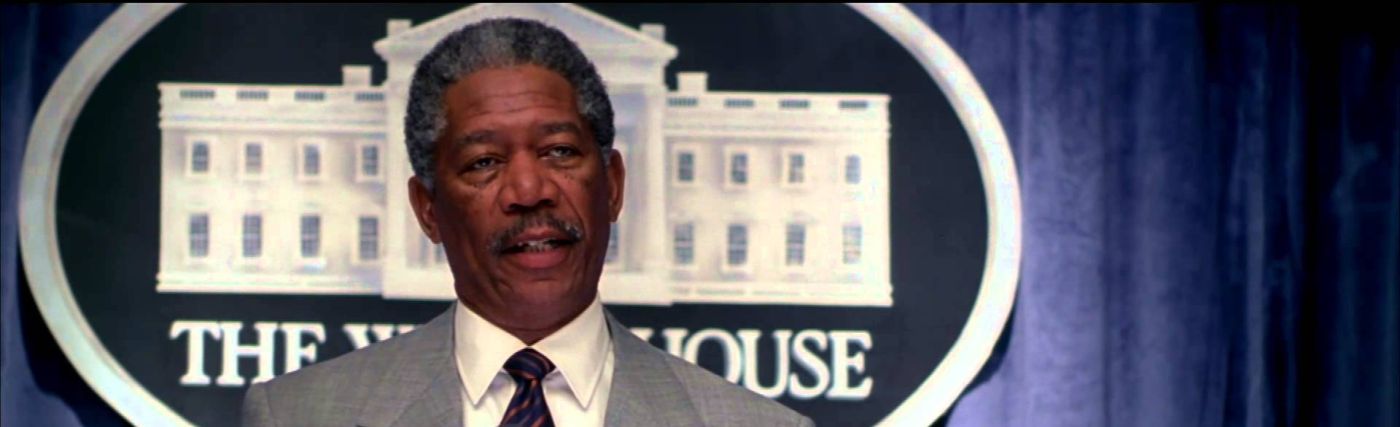
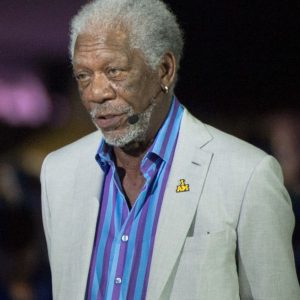
Morgan Freeman is not only one of the most popular actors in Hollywood today, he received Academy Award nominations for his performances in Street Smart, Driving Miss Daisy, The Shawshank Redemption and Invictus.
He won an Oscar in 2005 for Million Dollar Baby. His other popular films include Unforgiven, Glory, Seven, Deep Impact, Bruce Almighty, Batman Begins, The Bucket List… the list goes on. In this show, Neil talks with him about the many roles he has played over his career that celebrate science, the dramatic potential that science can offer, and his thoughts about alien life and space exploration.
NOTE: All-Access subscribers can listen to this entire episode commercial-free here: A Conversation with Morgan Freeman.
Transcript
DOWNLOAD SRTWelcome to StarTalk, your place in the universe, where science and pop culture collide. StarTalk begins right now. Welcome to StarTalk Radio. I'm your host, Neil deGrasse Tyson, astrophysicist and director of New York City's Hayden Planetarium at the American...
Welcome to StarTalk, your place in the universe, where science and pop culture collide.
StarTalk begins right now.
Welcome to StarTalk Radio.
I'm your host, Neil deGrasse Tyson, astrophysicist and director of New York City's Hayden Planetarium at the American Museum of Natural History.
In this episode of StarTalk, we're featuring a conversation with award-winning actor Morgan Freeman.
He came to my office at the Hayden Planetarium, and we chatted about his interest in science and space exploration.
In fact, after we recorded this interview, we headed down to the radio studio for a StarTalk episode where we talked about his Science Channel TV series, Through the Wormhole.
So you'll want to check out that show on our website's archive, www.startalkradio.net.
Morgan Freeman's Through the Wormhole series tackles some of the most intriguing questions in science today, including the birth of the universe, the origin of life on Earth, the question of alien life, and the deep mystery of dark matter.
Morgan Freeman is not only one of the most popular actors in Hollywood today, he's received Academy Award nominations for his performances in Street Smart, Driving Miss Daisy, The Shawshank Redemption, and Invictus.
He won an Oscar in 2005 for Million Dollar Baby, and he's also won a Golden Globe Award and a Screen Actors Guild Award.
His other popular films include Unforgiven, Glory, Seven, my favorite, Deep Impact, Bruce Almighty, where of course he plays God, Batman Begins, The Bucket List, it goes on and on.
So I had to ask him about the many characters he's portrayed over his career and what role science has played in his life.
Morgan, you played God twice.
You played the president twice, one for United States and in South Africa.
You played a chauffeur and a convicted murderer.
You know, I could barely eke out my one cameo appearance, and I was playing myself.
So what does it take to have that kind of breadth as an actor?
Because I don't know anyone who could rack up that kind of resume.
You're asking me to pat myself on the back here, Neil.
I'll admit to having been born with a specific talent, not yours.
If I had your mind, I wouldn't be doing this.
No, we'd send you back because we need you out there.
Because I think your president was the best president I've ever seen.
As the bombs shattered the second comet into a million pieces of ice and rock that burned harmlessly in our atmosphere and lit up the sky for an hour, still we were left with the devastation of the first.
The waters reached as far inland as the Ohio and Tennessee valleys.
It washed away farms and towns, forests and skyscrapers.
You know you're saying that because you're like me.
Wait, wait, you said you were born through it.
That meant as a kid, you had some foresight that you'd land this way?
Don't tell me you were a kid.
I want to play God one day.
No, no, no, no, no.
I was a kid that says I want to be an actor.
That's what I'm going to do.
I'm going to be an actor.
I am an actor.
I would tell kids now when I'm talking about me, they say, well, what are you going to do when you grow up?
I want to be an actor.
I say, well, you know, you are an actor.
So that's as good an answer as I can give you concerning.
Yeah, but there are a thousand actors who are waiting tables now.
And so some of them pull this off and others don't.
So I'm just saying you played God and they came back from war.
So you're really him, aren't you?
You want more proof?
I haven't done the pillow soft thing in a while.
That's all right.
I believe you.
I just, I don't understand why you chose me.
You want to change the world, son.
So do I.
What?
What an arc.
I mean, that's like flood territory.
You wouldn't do that again.
You wouldn't do that.
Would you do that?
Let's just say that whatever I do, I do because I love you.
Well, then you have to understand that this whole building and arc thing is really not part of my plans here.
I need to settle into my house.
I need to make a good impression at work.
Your plans.
What are you talking?
We're talking about an arc, right?
I mean, an arc.
An arc is huge.
I don't even know where I would begin.
Well, I hear that a lot.
People want to change the world, don't know how to begin.
You want to know how to change the world, son?
One act of random kindness at a time.
From the highest levels of society to the lowest, you are portraying these characters convincingly, compellingly, with warmth, with compassion.
Can somebody learn that?
No, I don't think so.
It's like art.
I don't think acting is an art, but it's like art.
You can teach painting.
The mechanics of it.
The mechanics of it, but you cannot teach art.
You can't teach about it to do.
Starry night.
Plango starry night.
Yeah.
I can look at it now and I can do it line for line, but I can never dream it up.
Okay, so in the purest form of art, that's got to come from some place deep within that no one can teach you.
Yeah.
Not that I'm saying that acting is an art.
I don't think it's an art.
It's just a talent.
You know, I get into discussion with people about my art.
Well, I think being an artist, you have to start with nothing.
And no actor does that.
We always start with a script.
That's somebody else's art.
By the way, that's a humble point of view, because most actors, they see themselves as the thing.
When somebody actually thought up the movie, thought up the script, wrote the words down.
But it is curious that we live in a society where the person who portrays the art is the one who gets all the fame and glory.
Just the nature of the beast.
So I think we have to disclaim artistry as it is, you know.
I'm an artist's son.
Okay.
But nonetheless, some are better than others.
That's all I'm saying.
And I got a good one sitting next to me right now.
That's all I'm saying.
I like you too.
So, you know, I always ask, what role did science play when you were a kid?
Did you have good science teachers?
Did you like it?
I think I probably had great science teachers, but let's go back to your original question.
What were you going to be when you were a kid?
This is the annoying question adults always ask kids.
I was never going to be a scientist.
In your life?
In my life.
It was never going to be a scientist.
For me, it was since I was nine, I was given that answer.
They said, what were you going to be when you grow up?
I said astrophysicist, and they walk away.
Right.
And stop the conversation.
But okay, I think you have some sensitivity to science that most people don't, and I'm just trying to probe that.
I've always been more interested in astrophysics than in the science of biology.
And you're not just saying that because you're sitting in my office here at the Hayden Planetarium.
No, no.
So the universe caught your fancy, you're saying.
The idea of physics, just physics.
I was in a school for a very few minutes in Nashville, Pearl High School, and there I had a physics class.
And I remember being very excited in that class.
I was an A student.
Give me a test and I'd make a C, but in everyday classwork.
You were feeling the physics.
I was feeling the physics.
I had all these questions, and every time I'd ask a question, I'd get an A.
In everyday class activity, I was doing great, and I think I was doing great because I had these questions.
I still have them.
You were cosmically curious.
Cosmically curious.
So I read Cosmos.
Carl Sagan's Cosmos.
Carl Sagan, yeah.
I mean, he just completely galvanized me.
Okay, but you were a kid before that book came out.
I'm pretty sure of that.
No, no, no.
I was in my 20s or 30s when I read Cosmos.
I can't remember.
Maybe my 40s or 50s.
Well, so that's interesting, because Cosmos treated science differently from other books.
It looked at science as a human activity that could stimulate your soul of curiosity.
Well, it certainly stimulated mine.
And the idea of looking deep into space, looking into the cosmos, having some understanding of distances and numbers, the next thing you start doing is wondering, is there a reason for us to care?
You're asking what does it all mean?
Yeah, what does it all mean?
Why do we care?
You look up there and you think, well, it's just up there.
And then you get some smattering of knowledge that the nearest star is about eight light years away, something like that.
Well, you got Alpha Centauri, that system, that's four light years away, that's the closest, yeah, from the sun.
So, 186,000 miles per second.
Yeah, you multiply that out, it's staggering.
It's six trillion miles per light year times four, 24 trillion miles away.
And so, can you even contemplate going there?
Forget, say, the galaxy.
Right, just the nearest, the neighbor, backyard.
Backyard, yeah.
Just to clarify, so you're saying as a kid you had a curiosity, but it didn't really become philosophical to you until after Cosmos.
Yeah.
Okay, gotcha.
But you were primed to receive it.
I was primed to receive it, yes.
Right, okay, because you were physics friendly before then.
Now, here's another realization, though.
I think that anything humankind can imagine, they can do.
All right.
And so how have you brought this to bear on your life?
Is it stuff you've imagined that you want to make happen?
Ask yourself, why are you sitting here as an astrophysicist, as a very well known and accepted astrophysicist?
How did you manage that from nine years ago?
I imagined it.
You imagined it.
But I didn't imagine that I would stop the rotation of the Earth or reverse time.
I mean, I was kind of sensible, I think, about what the stuff I was imagining.
So I would modify the word, not anything you can imagine.
I think anything you can imagine doing, you can do.
What did Archimedes say?
Give me a place to stand.
Give me a lever and a fulcrum and a place to stand.
And I can move the earth.
That's what he said.
Well, it's true.
So that's actually good sort of philosophy of life if you have high ambitions.
Yeah, have them.
Have them, because if you can imagine it, you can do it.
In one hour, you are going to take an exam administered by the state to test your basic skills and the quality of education at East Side High.
And I want to tell you what the people out there are saying about you and what they think about your chances.
They say you are inferior.
You cannot learn, you're lost.
I mean all of you.
Are you getting my point, people?
Is it beginning to sink in?
We sink, we swim, we rise, we fall, we meet our fate together.
And now I've got a message for those people out there who've abandoned you and written you off.
You are not inferior.
Your grades may be, your school may have been, but you can turn that around and make liars out of those b*****s in exactly one hour.
Welcome back to StarTalk Radio.
I'm Neil deGrasse Tyson.
In this episode of StarTalk, we're featuring a conversation with the award-winning actor, Morgan Freeman.
In this part of the interview, we talked about the many movies he's appeared in over the years in which science is celebrated, and the dramatic potential that science-themed plots can offer.
So let's get to your movie career.
Forgive me for leaving out the ones where science was not a theme.
Starting off, you narrated Cosmic Voyage, the IMAX film, which was produced by some of my very closest colleagues.
And that was my first time hearing you as a voice, by the way, and that was 1996 or 7, I think it was, the late 1990s.
So you didn't see the Shark Tank Redemption?
Well, yes, you were the voice of that, but I think of you as an actor of that, not the narrator.
But yes, of course you narrated that.
No, you get a pass, it's all right.
Let me slide on that one.
So that was the first time I heard what your voice could do in that context.
And it looked like a perfect match, you know, your voice and the universe.
And IMAX was, of course, the IMAX...
You like me!
Since the universe is a big place, we could easily get lost.
So we'll need signposts to give us a sense of scale.
The acrobat's ring is one meter wide.
The crowd is ten times wider, ten meters across, larger by one power of ten.
Now, with every step, every ring, we travel ten times farther from Venice, and our view of the universe is ten times wider.
The one hundred meter ring surrounds St.
Mark's, and one thousand meters, one kilometer, the city center.
As our speed increases, four steps, four powers of ten, reveal all the islands of Venice, the Adriatic Sea, and the mainland of Northern Italy.
Six steps take in Europe from Central Germany across Italy to the Balkans, and soon we can see the entire planet, our home in space.
Eight steps on our outward journey, eight powers of ten, and we pass the farthest reaches of human travel, the moon.
If we visualize the paths that the nine planets take in their orbits around the sun, at thirteen steps from St.
Mark's Square, the entire solar system comes into view.
And with fifteen steps, fifteen powers of ten, we can see that our sun is just another star.
From here on, our void will be measured in light years.
The distance light travels in an entire year.
Only now do we fly past our nearest neighbor stars, almost five light years away.
The same journey at the speed of today's spacecraft would last one hundred thousand years.
So Cosmic Voyage was like a kind of an IMAX version of the powers of ten journey, where you zoom out from Earth to the edge of the universe and then back down to the center of an atom.
So good choice.
I'm happy they found you for that.
Of course, you did March of the Penguins, which that's science.
We'll take it as science, I think.
Yeah, I think that's science.
Biology.
Yeah, it's ecology.
We'll give you that.
I really liked that one though.
I really liked it.
Yeah.
I think at the time I was penguin-ed out because I saw happy feet.
How many penguins can a man take?
I had to put a hold on my penguin viewing for a while there.
No offense, I'm just saying.
Hey, I'm not a penguin.
Then you did some environmental clips.
One Earth, I think, was one of them.
You're a man about science, I think.
We'll claim you.
Whether or not that's deep within you, whether or not it was just your next gig, I'll take it because I think it's important to have at least that association.
But I don't claim to have any knowledge towards scientific anything.
Except that you were in Outbreak.
I remember that movie with that Ebola-like virus that was killing people.
You were in Chain Reaction.
You were in Deep Impact.
My next gig.
You were in Batman Begins as the tech guy.
My next gig.
But not everybody has next gigs that celebrate science the way these films do.
Well, see, you're just putting dots together.
Oh, false pattern recognition.
That's a crime of the analysis of data.
That's what I'm doing.
You're telling me.
Well, okay, so I will ignore what you said, that it's just an accident that you line these movies up.
I want to connect my own damn dots and say it's not a coincidence that you're in more science movies than other actors are.
If I try to find, you know, how many science movies has Sean Connery been in?
Or, you know, Robert De Niro.
The doctor on the Amazon.
Oh, that's true.
They're searching for cancer.
Okay, well, he's got one.
How about Robert De Niro?
No, no, no, no.
He was this guy who was in a coma, not a coma coma.
Oh, yeah, yeah, yeah.
You're talking about awakenings.
Awakening.
So, whether or not it was just your next gig, I have to say I enjoyed all the science movies you've been in, especially Deep Impact with The Asteroid Strike, because we know these things are out there.
And so it's not just, oh, here's a science fiction movie.
It's like there's some real stuff going on here, and it's a wake-up call, a shot across our bow, if you will.
And I got to say, I enjoyed you as the tech dude in Lucius for Wayne Industries, supplying Batman with his bulletproof cape and his, all the doodads.
Who doesn't love the doodads?
So those are, I'm just saying, those are all convincing and meaningful roles, and I would take you as a science geek, honorary science geek, for those roles in those films.
Oh, hey.
I'll accept it.
I accept it.
You'll take the honor.
An honorary geek.
It's not quite like knighthood, but it's the best we can do for you in America.
I listen.
I'm on it.
So let me ask, as an actor, do you think science makes compelling drama?
Absolutely.
Oh, yes, yes, yes.
I think some of our most compelling dramas have been around science.
Well, I'm glad you feel that way, because I think there's many more science stories to tell.
Oh, heavens, there are.
I'm tired of law dramas and cop dramas.
I'm sorry.
I'm tired of, you know, the world is...
How many more lawyer stories can you give us?
I'm with you.
I think we can go into more science-based drama, even comedy.
I mean, you're funny.
No, the universe is funny.
I just reveal that fact.
Well, people have to know a little bit about science before they can get it, and if we don't talk about it, they never will.
They never will.
That's deep.
And that's the challenge that lay before us all.
Well...
Be we artists or scientists?
Let us step up to it.
So, that's great that you agree that science can make compelling drama.
Could you give a really good example?
Yeah, I read Michael Priton's book, The Andromeda Strain.
Oh, that was...
Oh, man, I read that.
Awesome.
I was struck by that book.
Really?
I read it when it came out.
It was back in the 70s.
Yeah.
But here, in my estimation, is a way to ask scientific questions and impose answers in very dramatic...
You could do a science series, a drama series based strictly on science.
Which hasn't been done yet.
Not quite.
No, it has not.
Crime scene investigation is the closest thing to it.
Yeah.
In bones.
And it's a testament to what you're saying, how successful that series has been.
I mean, it's still going strong and it's in different cities.
And what helps, I think, make the science meaningful is that they've embedded it in a social, cultural context.
Yeah, exactly.
And so people have ways, they have access points.
You could do the exact same thing with science, with deep science, I think.
Astrophysics would be awesome.
So you're titillated by this.
I am titillated by it.
The amount of science that you can expose young people to by doing this kind of stuff is amazing.
So of your catalog of movies that had science themes, are there any one of them that triggered you to think more deeply about that particular topic?
After Deep Impact, were you saying, gee, let me read up on these asteroids, see how true this script is?
No, I read Rendezvous with Rama back in the 60s.
That's when I saw it.
So you didn't need Deep Impact to set you off on asteroids?
No.
You and asteroids go way back.
Way back, yeah.
Because this was an asteroid that hit Italy, and Italy was no more.
I mean, having made a catastrophe like that, that's probably the only time that the world coalesces.
Yes, where all differences are forgotten because you have a common enemy.
We have a common enemy.
Space.
So in Batman Begins, when you were a tech dude, did you think, gee, I want one of these.
I want a few of these, actually, and I want to live like this.
Did you have any of these thoughts?
No.
No.
That was a silent no.
Let the radio audience know that he quietly shook his head.
Lips pursed.
Head shaking.
So that means you are drawing a line between science fiction and real life.
No.
I draw a line between science fantasy and real life.
Ooh, that's good.
Thank you.
No-Mech Survival Suit for fast infantry.
Kevlar bi-weave, reinforced joints, terror system.
This sucker would stop a knife.
Bulletproof?
Anything but a straight shot.
Why didn't they put it into production?
Being cowards didn't think a soldier's life was worth 300 grand.
So, what's your interest in it, Mr.
Wing?
I want to borrow it for spelunking.
Spelunking?
Yeah, you know, cave diving.
You're expecting to run into much gunfire in these caves.
When StarTalk Radio continues, we'll have more of my conversation with the award-winning actor, Morgan Freeman.
Welcome back to StarTalk Radio.
I'm Neil deGrasse Tyson.
In this episode of StarTalk, we're featuring a conversation with the award-winning actor, Morgan Freeman.
Many people might not realize that in addition to being a famous actor, he's an airplane pilot.
And so, I had to ask him what led him to take flight, and how far that ambition has gotten him.
You've become an aviator in later years.
Yeah.
That seems like you don't want gravity to keep you on Earth.
This is what that is to me.
That's what that sounds like to me.
Is that what it sounds like to you?
It's like I'm tied to Earth.
Give me the hell off the Earth's surface.
I always wanted to fly.
I always had flying dreams.
I have falling dreams where I never hit the ground.
I leveled off.
And what does Freud say about that?
I don't know.
Did he talk to you about it?
Sure you can!
It's not the jump you're afraid of!
The hell it's not!
You're just afraid your chute won't open, and you'll show off at your own funeral as a Denver Omelette!
No.
Oh yeah, B-U-D-F-O-
This is living!
Oh, so you're falling, but then you level off.
Oh, no, that's different.
That means you grew wings.
I didn't grow wings, I just grew the power of flight.
Okay.
No wings, no angel stuff at all.
Oh, no, yeah, you just leveled off.
Pulled myself up.
So I wanted to fly from early on, and then I realized that wanting to fly jet planes and be a fighter pilot was all movie romance.
So many years later, though, I had a chance to learn how to fly.
How old were you when you learned how to fly?
Six or five, about.
Man.
And then you own some planes?
Yeah, yeah, three planes.
Three planes?
Four planes.
What does one plane do that the other doesn't?
Don't they all fly?
They all fly.
I'm sorry, is that a stupid question?
The latest one, the latest one I have, flies.
Are you going to show me a picture on your BlackBerry here?
Ooh, that's sweet.
Yeah, she flies better than anything in her class.
That's a sweet looking jet.
It's a Swearingen SJ-30.
Say that again, eh?
Swearingen SJ-30.
SJ-30, okay.
Sounds fast.
It is fast.
And I've been buying airplanes after I came to the conclusion that I couldn't no longer fly commercial.
It's just got to be, you know, my God, look who's here.
Yeah, yeah, yeah.
Maybe the celebrity prevented it, is what you're saying.
So I bought fractional ownerships in these companies, and that turned out to be expensive.
So remind me how this works.
You are a participant in the total ownership of a fleet of planes.
Right.
And the plane comes available to you when you need it.
It's like a taxi.
Exactly.
There's always one at my beck and call.
It's not like I call and they say, oh, we don't have anything available.
Okay.
They come get you.
They come get you.
But it's expensive.
You're paying.
It depends how well you did in the last movie.
Yeah.
I guess that too.
Because I have to remind myself that actors don't have steady jobs.
They go movie to movie, and you got to budget that stuff out.
When I first started working, I get a job on stage and I think, oh, man, now I can go out and buy a suit of clothes and I can get caught up in all my rent.
And you do that and you realize that, oh, wait a minute, they just announced that the play is closing.
Right.
So I don't want to ever lose sensitivity to that.
I have a steady gig.
Right.
That's how you sometimes get trapped in a steady job too.
It's like, how long have you been doing this show?
Oh, they're trapped.
That's right.
Then you don't grow.
You don't grow.
So what a delicate line that is to walk.
It is a very fine line to walk.
Okay.
So you need the money to keep this access to planes.
Then what happened?
Well, when I learned how to fly, I just went out and bought my own airplane and realized that, okay, I got my own airplane.
I can go anywhere I want to go.
But I couldn't get there in reasonable time, so I had to buy more airplanes.
A better airplane.
A better airplane.
So then that turned out to be not possible either.
I bought a twin engine, I bought into a twin engine airplane as small twin engine Seneca and flew it to California from Mississippi.
It took two days.
Two days.
Two days.
So it's a small do.
You can get through security usually sooner than two days.
At an irregular airport.
So I bought a bigger, that's a bigger twin engine, piston driven aircraft.
And that cut the flying time down dramatically, but it still took nine hours.
That feels like Limburg, you know, if you're on a plane for half a day, you know.
Well, you stop for fuel.
That's the main thing.
Wouldn't that be cool if you had mid-air fueling for private jets?
So then I said, okay, this won't do.
And so I bought a jet.
There you go.
And that cut three hours off flying time, I think.
But still six hours.
So I'm starting to worry about blood clots in my legs and stuff, you know.
I'm sitting that long, yeah, yeah.
So I bought a little bigger jet.
And still I had to stop for fuel.
So then this plane, I got wind of it.
This beautiful one you just showed me on your Blackberry.
As soon as I got wind of it, I...
So that's your baby.
That's my baby.
That's your baby.
So for you to want to be in control of your movement and motion through space and time, do you ever dream about commanding a starship?
You've got some time on your hands.
I'll tell you all about it.
So the answer is yes.
Okay.
Yes.
Yes, you dream about it.
And yes, you know, it's just...
I'm going to tell you why.
We have access to Arthur C.
Clarke's book, Rendezvous with Rama, and I'm...
The whole series.
The series.
Just that one.
Mm-hmm.
But there are four.
So my fantasy of commanding the Starship is commanding Endeavour, which is the ship used to rendezvous with this craft that's moving towards...
has entered our solar system.
It was an alien thing.
Yeah.
Yeah, that's right.
So you're dreaming yourself into science fiction roles.
Yeah.
Well, that's what a good actor would do, because you see roles and, hey, I could do that, or I could be...
Oh, absolutely.
So is this a pitch to be, like, that person if they ever make that movie?
Well, we're going to make that movie.
You are going to make the movie?
Well, that's what you mean.
Excuse me.
You said you had access to it.
I have to, like...
That means you bought the rights to the book.
Yeah.
Yeah.
Didn't that make sense before?
Access to it is code for you bought the rights.
I bought the rights.
Because you want to be that commander on that ship.
I have...
Since I read that book somewhere back in the 60s, I always saw it as a movie.
And since you bought the rights to the book, you can be whatever damn actor in that story you want to be.
Right.
So the other thing that has happened is I've got this producing partner who is very enabling.
So, I've been enabled.
That's a good kind of partner to have.
Yeah.
All right.
Well, we'll look for that.
Okay.
Make that come out sooner rather than later.
Well, the only task you have that's really, really hard in making movies, harder than getting money, is getting a script.
A good script.
A good script.
Yeah, because movies rise and fall on that.
Absolutely.
And I think we've gotten mature enough in our special effects to now no longer have the special effects save a movie.
The story's got to be something.
The story's got to be there.
It's got to work.
It's got to have the story.
It's got to work.
When StarTalk Radio continues, we'll have more of my conversation with the award-winning actor, Morgan Freeman.
Welcome back to StarTalk Radio.
I'm Neil deGrasse Tyson.
In this episode of StarTalk, we're featuring a conversation with the award-winning actor and smooth-as-butter voice, Morgan Freeman.
In this last part of our interview, we talked at length about space exploration and the possibility of alien life.
I got an email from one of our friends at either NASA or JPL.
They invited me to come and watch the landing of the next Mars probe.
There's nothing more thrilling than the launch of any space probe and their landing.
These are the two critical points, of course, because there it is months and months en route, and there's all this anticipation, and they're waiting for the first signal.
They're waiting for it to call home.
When you get that signal, people pop the champagne corks.
Then you're on another planet.
Another part of my amazement is that everything in this universe is moving.
It's not standing still.
So when you shoot at something, there's a whole lot of calculations you have to do.
That's an underappreciated fact, and I'm glad you brought that up, because you're launching a spaceship from a moving platform Earth to another moving platform, and you have to aim it for not where the target is, but where it will be when it gets there.
Nine months in terms of a Mars shoot.
Nine months.
Wow.
Okay, but not everybody appreciates that.
I'm glad you appreciate that.
The other thing is that, incredible thing, is that Voyager is now outside the solar system.
You got it.
It has crossed over out of the influence of the sun and has entered interstellar space.
Voyager launched in the 1970s.
And you might remember the Voyager spacecraft has a little plaque on the side and some information that an intelligent alien might decode and learn about us.
Some people are kind of afraid of that prospect.
If you send your return address out, some people don't give out their email address.
And here we are, giving the return address.
So you worried that the aliens come and suck our brains out?
I'm with Clark.
Arthur C.
Clark.
Yeah.
I don't think the universe is populated with Northern Europeans.
You mean of the ilk that upon reaching a strange civilization...
Destroy everything.
Kill them all.
Kill them all.
Let God sort it out.
Yeah.
So you think they're a kinder, gentler species.
Even though you have no data to back that up, you're wishing that this is true.
Well, why not wish that was true?
If you're going to project, just do it another way.
So we're not terrified if something does show up.
Now ask the questions.
So you want like 1960s peaceniks to be the aliens.
See, I don't think you're being kind.
You saw Close Encounters of the Third.
Yeah, of course, yeah.
Now, did you walk out of that movie looking up?
I did.
I drove out to a space where there was no light.
I want to be abducted.
I want them to come find me.
Every time I'm alone out on the sky, I say, come on, bring it on.
Yeah, you know, if you're there, I'll go.
You go.
So that makes you feel safer in a universe where you just might get a visitation.
Let's go back to Von Donagen for a minute.
Eric Von Donagen, right.
So he went around the world, found these ancient artifacts and structures, and he couldn't explain it.
And he didn't think anyone back then could have figured out how to do it.
So he figured intelligent aliens from another planet came to Earth and directed them.
Yes, that's what he thinks.
And he also thinks that there are depictions among some of the sculptures and drawings in ancient societies that depict these space people, because some of these drawings have figures with helmets on them.
Space helmets, yeah.
Now, this is an idea that if there are visitations, they are benign.
So you invoke that as evidence.
Well, it's a thought.
Not an evidence that there are benign aliens out there, but that we can think of them as benign.
We can think of them.
Now, here's the thing.
It was the Northern Europeans who embraced the Industrial Revolution, giving them the power to cross the oceans and the weaponry to slaughter people.
But they weren't the only ones to cross the oceans.
Well, they did it with Verve.
Okay, so here's my point.
If the alien civilization, the one that is across the ocean of space, the ones who are into conquering are more likely to be the ones to have the spaceships.
So maybe there's a selection effect.
There's a bias in terms of who's going to come here first.
It's going to be the conquerors.
Okay, let's turn it around.
The peace nicks are still there singing kumbaya around a campfire.
Let's turn it around here.
What if we are the ones who are managed to get out there to another world first?
What if it's us who do it?
Are we going to go with guns and...
Guns drawn?
I don't know.
If we find some materials that was...
Oh my God, you know what this stuff is worth?
Oh, you mean, yeah, natural resources, right.
Are we going to do what the Europeans did before?
We've seen that playbook multiple times.
Manifest Destiny.
That's our oil, not yours.
That's our gold, not yours.
So the difference here would be the humans would be the invaders.
If we did it that way.
No, the question is how would they view us landing on their peaceful planet?
We would have to get there and find out.
First you go...
So you're giving the Spock symbol with the Vulcan, live long and prosper.
Yeah, live long and prosper, you know.
We're not here to cause it.
But that could mean...
But what you don't know is whether that Vulcan, live long and prosper signal could mean like, F you, aliens, you don't know what the cross-cultural meaning of that hand gesture is.
But we know that there was a universal sign that means I am unarmed.
And what is that?
Open hands.
I hope universally that's what that means.
Of course I'm strapped with a bomb, but...
I know.
That's just for protection.
That's just in case.
As they say in the military, trust but verify.
How do you feel about NASA?
Where do you want it to go?
If you're going to write a letter, dear Mr.
President...
Dear Mr.
President, dear world, cut the defense budget to the bone, take that money, and give most of it to NASA.
What is it that has ever improved the human condition?
Exploration.
And what have we got now?
We ain't got Jack.
No, no.
We have the universe.
We have our own universe right here in the solar system.
There are things that we need to know about it.
There are things we could be out there doing.
They would say, well, it's meaningless to send a human to Mars.
It's just too much involved in trying to keep humans alive on Mars.
Okay, fine, don't send humans.
Build robots, but send them.
Keep the frontier moving.
Keep it moving.
That's the end of my interview with the award-winning actor Morgan Freeman.
You've been listening to StarTalk Radio, partially funded by the National Science Foundation.
I'm Neil deGrasse Tyson, and as always, until next time.
 Become a Patron