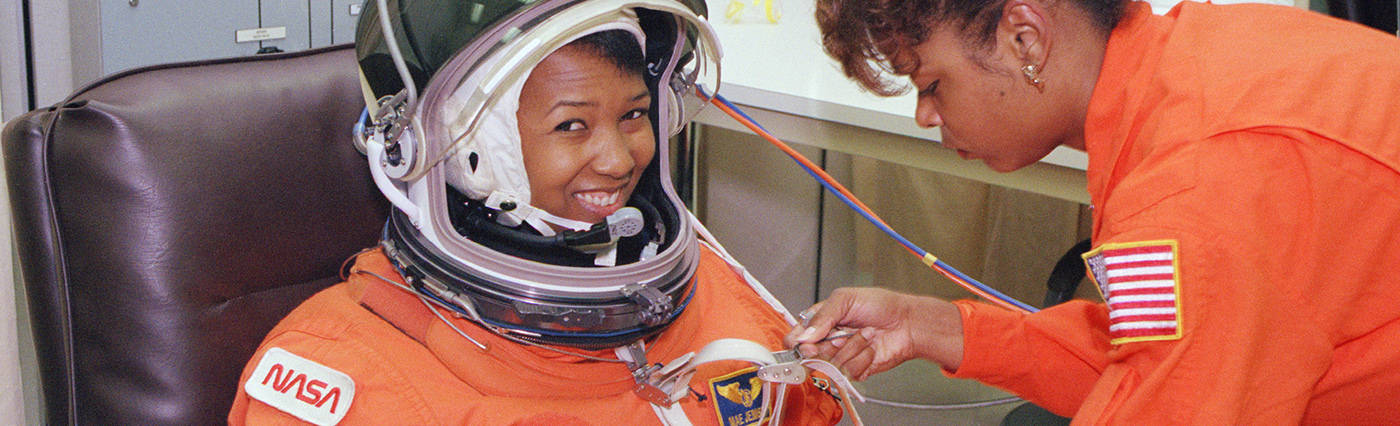
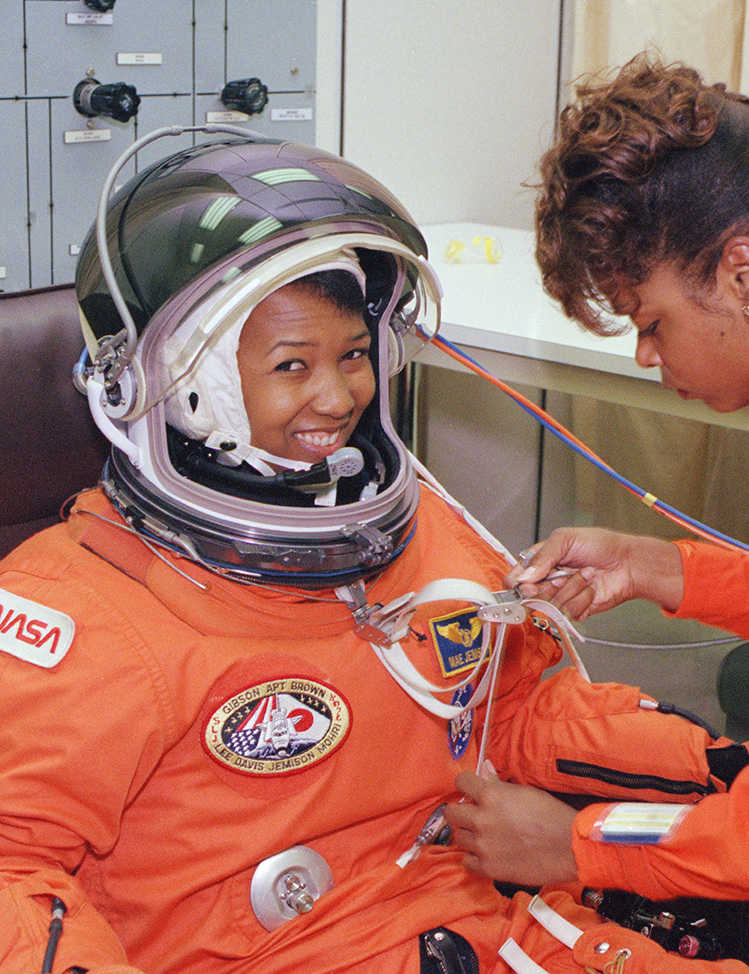
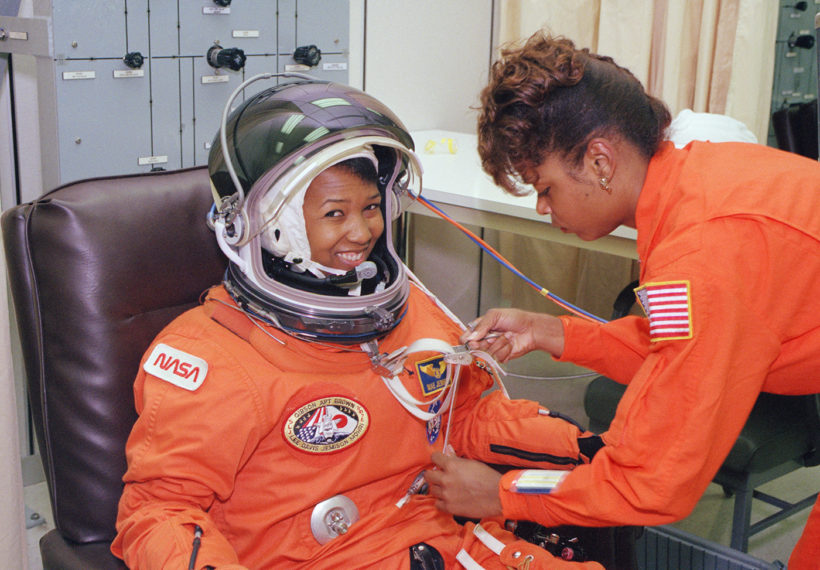
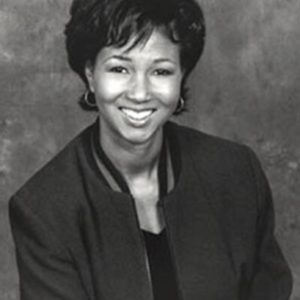
We explore Mae’s journey into space and why she was irritated when she first joined the astronaut program. Neil and Mae share why the end of the shuttle program seemed more emotional than the end of the Gemini program. Mae tells us why humans aren’t on Mars yet – and it’s not because of technological limitations.
Explore 100 Year Starship and their mission “to make the capability of human travel beyond our solar system a reality within the next 100 years.” You’ll learn how missions like these can inspire innovation, like President Kennedy’s promise to land on the moon. We look at some of the problems that face humans undertaking interstellar space travel, including sustainability, energy, and more. We discuss Mars and it’s “lack of difficulty.” All that, plus, Neil and Mae reflect on childhood school field trips and why science is better taught hands-on.
Transcript
DOWNLOAD SRT
Welcome to StarTalk, your place in the universe where science and pop culture collide. StarTalk begins right now. I'm Neil deGrasse Tyson, your personal astrophysicist. On rare occasions, I sit down to interview someone whose presence is so powerful, so...
Welcome to StarTalk, your place in the universe where science and pop culture collide.
StarTalk begins right now.
I'm Neil deGrasse Tyson, your personal astrophysicist.
On rare occasions, I sit down to interview someone whose presence is so powerful, so entertaining and so enlightening all at once.
And the conversation that comes out of that encounter is so inspiring that we have to depart from our usual studio format in exchange for some one-on-one time.
On just such an occasion, I sat down with former NASA astronaut, engineer and physician, Dr.
Mae Jemison.
And that interaction moved us all in StarTalk to break format for this particular episode.
So instead of our usual panel of in-studio expert guests and comedians and scientists, what follows is my uninterrupted conversation with Mae from start to finish.
Dr.
Mae Jemison has been to space, but that's not the only thing or even the most interesting thing about her.
From her early career as a medical doctor in Africa and Cambodia to her space shuttle mission and now her newest project, 100 Year Starship, she has literally aimed for the stars.
We talked about all of this.
So in this first part of the conversation, we get to know about Mae and the life that prepared her to dream bigger than most people will ever dare to dream.
So let's go to that conversation now.
So Mae, I feel like we go like way, way back, but it's only just way back, like to the 90s, the early 90s, I first met you at a conference where we were advising the head of NASA on where NASA should go.
And you were there and it was like, wow, this, wow.
She didn't only go into space, she's like has thought this through.
So, and you had a whole life after going into space.
I just say congratulations just on what you've assembled here.
Well, it's really kind of interesting because so many times people think of themselves and particularly people who are in the public light as having this single dimension.
And it's critically important to remember that there's a life before that that leads you up to the place you are.
And then you have to continue on afterwards.
And, you know, so for me, everything that I did before I ever went into space was just as important as going into space because that's what got me there.
The conference that you talked about was about, you know, where should the space program go?
And bringing that, thinking about it, I had to think about the work that I had done before.
I worked in West Africa for two and a half years as the Area Peace Corps Medical Officer for Sierra Leone and Liberia, two of the least developed countries in the world.
I had worked in a Cambodian refugee camp.
What I thought...
Wait, wait, and then you went into space?
There's more stuff before I went into space.
No, no, the reason why I'm bringing this up is because so many times people think, you know, you just appeared on the planet at that moment that they knew you.
Hatched in that circumstance.
And you weren't, right?
It's all the things beforehand.
So...
Hearing you speak at this conference, I knew there was stuff...
There was, like, some backstory there.
There had to be.
Because you were just on point in everything you said.
Your perspective you brought to the table.
So that's why I just want...
I knew that if I ever had a show, I wanted you on the show.
So back then, so you were already plotting and planning.
But isn't that the thing?
You have to plot and plan anyway.
But you know, the thing about the whole conference, when I was thinking about it, my idea was that space exploration has many uses.
And it will only come to fruition, we'll only know exactly how it should be used as we get more people involved.
And so it was literally, because of my background of working in developing countries, I was very excited about how you could use remote sensing in developing countries.
How you could use...
Satellites remote sensing.
Satellite remote sensing.
How you could use satellite telecommunications to be able to get to places where telephone lines don't reach.
And that's what I was very focused in.
I had just left NASA.
I was thinking about how do I use this incredible knowledge and blend it with other things?
Now, I talk about medicine, but I'm really an engineer at heart, right, because I did chemical engineering as an undergraduate and also majored in African studies.
So you can sort of see how those pieces blend together and how you think about things and how you think through life.
You put the pieces together.
So after medical school, I really wanted to work in a developing country for a long period of time because you get to learn so much about yourself.
So sometimes people think that, you know, when you go out and you work in these places, you're doing all this good Samaritan stuff and aren't you a good guy?
But for me, it's feeling something that makes me feel good.
Okay, so you did it for completely selfish reasons.
Yeah, I mean, let's look at the things.
We usually do things, no, you don't laugh.
I think we usually do things for selfish reasons, but that doesn't mean that that's bad.
And when I say selfish, I mean there's something inside of you that you're feeling by doing these things.
So sometimes when we look at selflessness, you know, because I believe it's important that other people in the world share in the bounty of the planet.
That fits with my internal compass, and I'm going to feel better when my internal compass is pointing, you know, true north through south, whatever it is, whatever direction you want to go.
That's pointing true.
So growing up, K through 12, where were you?
I grew up on the south side of Chicago.
I was born in Alabama.
We moved up to Chicago when I was before I started school.
So I grew up on the south side of Chicago.
I went to Chicago public schools.
Public schools all the way.
And the whole time that I was there, I was always involved in science projects, but I also danced all the time.
I wanted to be a professional dancer.
I loved dance.
I took lots of art classes.
I'm so glad you must have twisted your ankle at some point and didn't continue because somebody wouldn't have you as astronaut Jemison.
I didn't twist my ankle.
I had to make a choice.
So when I was graduating for college, literally, this is true, I had to make a choice between coming to New York City to try to become a professional dancer or to go to medical school.
And I always say my mother helped me solve that because she said you can always dance if you're a doctor, but you can't necessarily doctor if you're a dancer.
So when I came to New York City, I took classes at Alvin Ailey while going to medical school because it sort of fulfilled that energy need that I had for the creativity where you just put yourself into things just totally and completely physically and all that energy.
So it was a choice.
We have to make choices.
Sometimes people say you can do everything.
You can do a lot of stuff, but you can't do everything.
Let's get real.
Sometimes you have to make choices and those choices exclude some other things you might like to do.
Remind me, what shuttle missions were you on?
I flew once.
I flew on Space Lab J.
It was done with a Japanese space agency and it was a laboratory mission.
So we carried up a laboratory in the back of the space shuttle.
And which space shuttle mission was that?
It was STS-47, but it was actually the 50th flight of the space shuttle.
So they were numbered in order of when they were put on the manifest.
But then if the flight slipped or anything happened, then you may fly later than your manifest.
And you kept the number.
So STS-47 went with that payload and everything.
We flew on Endeavour.
So it was a great mission.
I think Endeavour now lives in Los Angeles.
Endeavour lives in LA.
So in LA, do you tear up when you see it on display at the California Science Center?
So I went to the California Science Center when they were actually unveiling it.
And yeah, it's a strange feeling because it's sort of, it's sort of saying goodbye to an era, but knowing that we have more to do.
And so it's really sort of this bittersweet, very poignant kind of feeling.
So it was a, so, you know, just sort of being around that as a, you know, it takes you back for a second, right?
But it also, I think, wants to move us forward.
And I think that's the issue.
How do we move forward on this?
I had strong, I had strong views on this.
So many people were tearing up when the shuttle mission ended.
And I said, you're not tearing up because the shuttle mission is ending.
You're tearing up, in fact, because we don't have a really well-developed plan to follow this.
Did anybody tear up when we retired Gemini?
No.
Because the mighty Saturn V was like sitting right next to, that's where we're going next.
Right.
Mothball this.
Let's keep going.
So that's why I think people tear it up, because there wasn't something right there.
Well, I mean, I teared up, I don't tear up.
But I was, you know I don't tear up.
All right, all right.
But no, but I think you're very...
I think you're spot on, because the problem was, is we were doing this in like, well, we're just going to stop doing it because we don't have enough money, and the shuttles actually were, they were on the path to retirement in 2004, and most people don't recognize that it was right after the Columbia accident, and that declaration that we're going to go to the moon, but we're going to do it at the same cost.
So it meant that the shuttle had to retire, and when they started mothballing that...
Reallocate the monies, and even station was going to go away, right, earlier on.
The space station, yeah.
The space station, so basically we sort of like said, well we'll try to figure out something, and we won't make a commitment to it.
So...
How's that?
Compare that to, we'll put a man on the moon, return him to Earth before the decade is out.
We'll say, we got some money, we'll figure it out as we go along.
And here's the thing.
Very different times.
I was really irritated when I joined the astronaut program, because I figured when I was a little girl, by the time I got old enough to be an astronaut, I'd be hanging out at least on Mars.
At least.
At least on Mars.
And I wouldn't have had to be a crew member.
I could just be a scientist working on stuff.
And so the reason we're not on Mars now has nothing to do, from my perspective, with the engineering.
It has more to do with the public commitment.
And that's the reason why we have to bring all those pieces and so many different people in and include them in things.
It was a lack of public commitment, as people didn't see why it made a difference.
I was a little girl.
I grew up on the south side of Chicago.
I'm running around telling grown folks why it was important for us to be in space.
No, I'm serious.
I was running around telling grown people, and you see we could do this on the moon, we could do that and stuff.
But so many folks were left out.
When you look at the space program, there were lots of people involved, but publicly, when you viewed it, a lot of people felt like they didn't belong.
I grew up in Woodlawn, the south side of Chicago, African American community.
So many people, they were proud.
They thought it was cool.
But what did it have to do with us?
Right?
And that's the piece that's really important.
How do we make sure people know that when they pick up their smartphone and they have their mapping services on it, that here's this GPS, Global Positioning Satellite Systems, right, that they have a space receiver in their hand?
That's the job we have to do.
That's how you get public commitment when folks understand that this is not just for this peculiar group of folks, right?
It's much deeper than that.
We've got to wrap up this segment of StarTalk.
Coming back, more of my one-on-one conversation with physician, engineer, and former NASA astronaut, Dr.
Mae Jemison.
Thank I've been following my one-on-one conversation with former astronaut Dr.
Mae Jemison.
After she went into space, she continued to aim for the stars with her project 100 Year Starship.
This is an inclusive, multidisciplinary project to get humans, not robots, but living, breathing, squishy humans to another star system within 100 years.
It's like a moonshot, but a whole lot harder.
Mae and I discussed some of the challenges that we humans must tackle before we plan for such a launch date.
And these include not only the obvious demands on energy and technology and propulsion, but also medical and anthropological needs.
So let's get back to my conversation with Mae.
100 Year Starship is about making sure we have the capability for human travel beyond our solar system to another star within 100 years.
It's about pursuing an extraordinary tomorrow in order to create a better world today.
It's by doing those things that we don't know how to do.
It's about using interstellar travel as a platform to push radical leaps in knowledge, technology, and public commitment.
Dr.
Mae, we haven't been out of low Earth orbit since 1972.
And there's a problem.
And you're talking about traveling between the stars.
So here's the deal.
When you look at interstellar travel, we're not looking at a specific launch day.
We're talking about how do you make the capabilities exist?
No one organization can do it.
But can we create and help to form in an environment where people try to do bigger things?
So this is not rocket architecture, is it?
It includes rocket architecture.
It includes human health and human behavior.
It includes sustainability.
It includes civilization design.
It includes how do you get financial commitment to something that you may not see the results of for many years?
So you've got medicine, economics, engineering, biology.
Behavior.
Human psychology.
Human governance.
So our motto is we pursue an extraordinary tomorrow in order to create a better world today.
By doing things that no one thinks you can do, we know how it changes things.
That's what the moonshot did for our country and the world.
Absolutely.
Just think about it.
In 1901, when HG.
Wells wrote First Man and the Moon, it was less than 70 years later that we actually had a human on the moon.
And back then we knew so little about anything.
So our technological arc right now is much steeper than it was back then.
We know a lot more.
So it's not unreasonable to imagine that in 100 years we might be able to have the capabilities.
Now, I'm not talking about Star Trek and Warp Drive and bending space-time and all of that kind of stuff.
Maybe, maybe.
Might be.
I mean, I may be limiting us, but we may be able to have the capabilities to think about it.
And 100 Year Starship is about providing a platform to think outside of those ways we usually do stuff.
Right now, staying within our solar system, we can do a lot of incremental kinds of technology to get there.
But getting to another star requires that you open things up.
And now we've got Proxima Centauri b.
We have a planet going around the nearest star to the sun.
So that helps you out, I think.
That helps out.
That helps out.
But just think about, think about the platform this provides.
And some people say take humans out of it.
But no, leave humans in because that pushes the platform.
Imagine what you have to do with sustainability, right?
It's not just the rocket engines.
We'll talk about the rocket engines.
But it's sustainability because if you get to going fast enough that you could get there in 100 years or 50 years, you're not going to slow down to pick stuff up, right?
You're going to have to carry everything with you.
There's no filling stations.
No filling stations, no grocery stores, no stop-offs.
No Quick Mart, no nothing.
No, uh-uh.
You're going to take it with you.
So here's the thing.
So you can get, and once you get there, you're probably not coming back.
So everything you take has to be sustainable, which means we have to understand things like the microbiome in the soil, which is what fixes nitrogen and other things for plants to grow.
Because we're going to have to grow our own food.
We're not going to be able to, you know, store enough food.
You can't freeze dry and all that kind of stuff.
You're going to have to have a whole bunch of people on board.
You can't bring silos on your trip.
And it doesn't make any sense, right?
So you're going to have to, because every silo you bring, every extra packet you bring, is more energy that's needed in order to get you to.1 lightspeed, right?
So think about it.
What does that mean?
It means we have to make tremendous strides in understanding sustainability in terms of our own bodies, how we digest things, because people's microbial system inside, it's, you know, your body has to carry these microbes with it.
And they're essential to our health.
What did I hear recently that is it 10, 20, 30% of our body mass are other living organisms?
Yeah.
Is that creepy?
Isn't that neat?
It's creepy.
Is that creepy to you?
But that's neat.
So it means that we're...
I gotta be me.
You are, but you have buddies to help you out.
I can't be microbes.
Look at you.
You have billions of buddies to help you out.
Right?
I gotta be me.
You're being you, but you have buddies to help you out.
So it talks about how we're in this balance with our environment.
But we have to understand that.
So the whole thing around the microbes, sustainability, materials, right?
Clothing.
You can't right now when we go up into space, people carry the clothing with you.
We had a textile and design professor, Carl Esplan, who came in and said, how many people in this plenary session can sew?
We got a few hands up.
He said, the rest of you all can't go.
Because we're going to have to make our own clothes.
Because we're going to have to look at material and ruggedness.
You're not going to be able to carry a box cars of clothing for people.
You're going to have to be able to reuse and recycle the materials.
So it changes our relationship to textiles.
Everything that we do starts to change.
Space pilgrims, pilgrims had to do everything themselves.
Pilgrims had to do everything themselves.
There was no quick mart.
But everybody, I mean our history of every society.
They got help from the natives.
But the natives were here doing stuff for themselves.
For themselves, exactly.
Yeah, yeah, yeah, yeah, yeah, and all over the world.
But you see, we had this wonderful planet that supplies us with so many things.
So now we're going to have to understand enough about it to be able to recreate some of that.
So it helps our understanding of our own planet.
Let's just talk about energy, right?
So how fast can you go?
Currently, I mean I did the math on this.
You take the fastest thing we've ever launched and it doesn't even have people on it, all right, and you aim it towards Alpha Centauri.
It would take the Alpha Centauri system.
It would take, you know, 50, 60,000 years.
Exactly.
Somewhat longer than a human lifespan.
It's somewhat longer than we've been able to cave paint well even, right?
That's longer than since we've been cave painting.
So we have to go much faster, which means that we have to generate these tremendous amounts of energy, store them safely, and control them.
But that means you can't do chemical.
Chemical energy will not do it.
Chemical energy is out.
All that fire and flame that comes up under the shuttle or blue origin.
It looks good.
But it's not going to do it.
So we're going to have to do...
Just to be clear, so chemical energy are molecules that have energy stored in them.
You break apart the molecule or you bring together atoms and energy is released.
Exactly.
And then you aim that in a way so that you thrust forward.
Exactly.
So that's everything you see.
But if we were going to try to generate the kinds of energy that we would need to get to another star in 50 years or something reasonable in lifetime...
A tenth the speed of light.
At four light years away, it's a 40-year trip.
So we're going to have to do in minimum fission safely, which powers atomic plants and things like that where you break atoms apart.
Or you're going to have to do fusion, which is what runs the sun, right, which the sun generates energy, which we don't really know how to do well.
Or we're going to have to use antimatter.
Each one of these are orders of magnitude more energy.
So if we started to be able to do even a little of that, look how it would change life here on Earth.
If we were able to do it safely and story.
Access to energy.
Access to energy was just one of the things that's fundamental about people's quality of life.
It's one of the things that the futurists got wrong in the 1940s, 50s and early 60s.
They're imagining the year 2000.
And everyone is in a flying car and motorized sidewalks.
And they were thinking that somehow energy would be unlimited because all that takes energy.
But they got that wrong.
Energy is rather finite, but information is unlimited.
And so our lives have been changed by access to information.
The whole IT universe.
So I'm intrigued by that.
So you're going to need a future that's kind of like the one people dreamt of, unlimited access to energy.
We're going to need a future with a lot more energy, right?
But that's going to be needed anyway.
Information will not take the place of some fundamental physical properties.
And this is where we have to balance things out.
And I think that we've gotten a little confused as we start to look at IT, right, information technology, and assuming it's going to solve everything.
Because there's some fundamental physical things that living, breathing beings have to do.
And that is, they require energy.
So whether it's being able to cool vaccines to deliver in places, to keep food safe, to move from location to location, maybe you can decrease that with IT.
But we need energy and it's something we need to put money and effort and research in.
And that's what, again, 100 Year Starship is about how do we start to push things forward.
One of the things that we have to think about as well is even in health.
That's the reason why I bring humans in.
We work on something that we're calling crucibles.
This is forging thought into reality.
How do we jump start new disciplines?
And these crucibles are subject matter experts working on a tough problem that you need for interstellar travel.
One of those problems was how do you create a health care infrastructure that travels with you?
Biology evolves in space, and it's going to evolve over 50 years, right?
And when you get someplace, right now, our health care system, our health care infrastructure depends on clinical trials, pharmaceutical development, looking at the epidemiology of what's happening around the world.
And it sits in lots of different places, and you bring in folks, you do things, and it's a big old system.
But you can't carry that with you, nor are you going to be able to radio back to Earth or get supplies.
So how do you create something?
There's no supply ships.
It would have to catch up with you, right?
So how do you do that?
And if it could do that, why not get on that ship and get there faster?
Well, that's something called the weight equation, but let's do this.
So how do you do it?
Have you ever noticed physicists, they always want to jump out of the bio stuff?
They want to jump into the energy and how do you go faster?
I'm guilty about that, too.
Yeah, I know.
So I'm going to keep you honest.
That's good.
So if you, if we did something called Virtual Human, a crucible, and it was done in Graz, Austria in a castle, right?
You know, we got to do it right.
But it was being done with a number of different people.
And we're looking at how do you wholly model human physiology and health?
By being able to do a model that includes epidemiology, behavior, the physiology and stuff, because that's the kind of infrastructure system that you'll need to carry with you.
But how are you going to do this?
When I've seen the thickness of the physician's desk reference, okay, the PDR is this thick and it's filled with prescribable medicines, you're not going to have every one of these medicines on the ship.
That's exactly the point.
And the medicines will evolve.
So you need to be able to figure out a way to generate your own medicines.
So you know those microbes that you're so averse to, that are on your skin?
I'll take them, that's fine.
If I've got to live with a...
Well, some of them become bad actors when they go into space.
Oh, is that right?
Some of them become more pathogenic when you go into space.
They get pissed off.
Where'd you send me?
So there's this evolution.
Your body, you know, there are a lot of things that may happen.
So we need to be able to understand epidemiologically what's going to happen.
So your body's flora changes...
It may change a little bit and we don't know exactly what's going to happen.
But so this is the reason why you need to be able to do your own investigations.
You need to be able to do your own infrastructure.
What's going to happen when you go there?
You know, things happen to your immune system, but there's lots of stuff that go...
It's really good stuff.
But there are lots of things that happen.
Very exciting.
But how do you understand that?
How do you put it together?
And it's by starting to...
Being able to model it, right?
And being able to carry that model with you.
So you're going to have to have a way of really understanding, like, yes, the information that's in the PDR, but the PDR is just the...
I mean, that's like just a star chart, right?
Right?
That's all that is.
You actually have to go and understand all the stuff that's back behind the stars, right?
So you have to understand all the numerous reactions and the, you know, pharmacokinetics and the kinetics of enzymes and all of these other things that go on.
And then you have to understand how one's behavior affects your body and your physiology.
You have to understand.
I mean, there's so many things.
That's what part the health infrastructure is.
So what we're doing with Virtual Human is bringing in people in genomics, proteomics, people who do tissue cell culture growth, gaming, people in gaming, quantum computing, and all of those things to bring them together to start to think about how would you create that model.
That would not have happened if we didn't say, let's think about going interstellar and let's bring other people in.
It's a non thought without that goal.
Right now, we have to close out this part of the show, but stick around for our final segment when we wrap up my conversation with former NASA astronaut, Dr.
Mae Jemison.
Welcome back to StarTalk.
We've been following my conversation with Dr.
Mae Jemison.
She's a former NASA astronaut.
She's a physician and engineer, and she's also the founder of 100 Year Starship.
We've been discussing the dreams and challenges of taking humans interstellar.
Let's get back to that conversation now.
So 100 Year Starship, we proposed an inclusive, audacious journey to transform life here on Earth and beyond.
And I was fortunate enough to lead the team that won the modest seed funding from DARPA.
DARPA?
DARPA.
Cool.
The modest seed funding from DARPA to create this independent organization.
But you notice the first word is inclusive?
Because we have to include not just over gender, ethnicity and geography, but across disciplines.
And so we brought in people who had not been involved with space exploration, the amateurs and the experts.
Because there's so much expertise out in the world, there's so much knowledge out in the world that may not have been applied to space exploration, that if you give people permission to be involved, if you give them a way to participate, tremendous things happen.
Plus, you know and I know that if space is the carrot, you can attract some of the brightest minds in the landscape.
Absolutely.
We found that there were so many people who wanted to be involved who just hadn't had a way to be involved.
And in fact, I'll have to get you a t-shirt that says, space isn't just for rocket scientists and billionaires.
That's our other motto.
Because by bringing in other people, they bring these perspectives in.
So when we opened it up to life scientists who were never involved with space exploration, there was this little cabal that occurred where they just sort of took over and out of it came virtual human.
Because they said, you know, the deal is the infrastructure.
It's not about space countermeasures and, you know, lower body negative pressure and all these things where folks try to do stuff.
It's really about how do you create a system that will evolve over time?
And that's where it started from.
And so we're working to continue to move those things forward.
We're looking at things around design as well.
And even how do you become an advanced civilization?
You know, there's this thing called the Kordashov, you know, scale on civilizations, and it's all around energy.
And that's all, even physicists have been doing the work.
They say it's about energy.
But you know, there are people called anthropologists, right?
And psychologists and historians and stuff who study civilizations and how they evolve.
So I want to get them into that because using all the energy of your star may not be the marker of an advanced civilization.
Draining your planet of all of its energy may not be the marker of an advanced civilization or a civilization that can hang around for a long period of time.
So what we want to do is to bring other people in and really have this trans-disciplinary look, letting other people be involved.
Because that's how you're going to get these radical leaps in ideas and design.
That's how you do it.
So I guess I had just not fully understood the whole mission statement.
Because I'm imagining, because what else could you expect someone to think?
All right, here's Mae Jemison.
She's been in space, and now she wants to go to the stars.
That's just kind of weird.
OK, we'll let her.
OK, fine.
But what you're doing is you're not building a spaceship.
You are saying, here are the challenges that such a mission confronts.
Wouldn't it be interesting to solve those as a thought experiment, or really solve them, and look at how it applies back to the rest of our lives?
And so you would have a moonshot without actually going to the moon.
Well, you know, yes, let's be clear.
We want to do it with the stars, because if you pretend that it's not for the stars, then people lose interest in some ways.
But it's about capabilities.
We can't set up a launch date until you know some things.
Like, I've had people sort of say, well, what's the technology roadmap?
I don't know, because we don't know what the hell the technologies have to be.
I mean, let's be serious.
We could have a capabilities map, right?
Which we know certain things have to exist in order to do that trip.
And so let's work on the capabilities we'll reassess in 10 years, or 20 years, or 30 years.
And then you might be able to start this other thing.
But it's really about how do you transform life here on Earth?
How do you use this as a platform to push?
Because again, we would be on the moon.
You and I would be sitting having this conversation on a lunar base, our Mars, right?
If there had been commitment and people understood how this could affect our world.
But it's really, again, about the capabilities, creating a capabilities map and engaging people.
No one organization can do all of this.
So if we could help to start to change the environment, the first thing I had to do was to get the woo woo out of it.
That's a technical term, get the woo woo out of it.
Right.
You know what it is.
Like you said, Mae Jemison wants to go to the stars.
That's the woo woo.
So to really start to think, why might this be a reasonable proposition?
But my task has really been to get other people involved, to change the way people think about things.
Right?
We do things like we have a Canopus Award for Excellence in Interstellar Writing.
So this is science fiction.
It's science fiction and nonfiction.
So, how you tell the story is really important.
How do you communicate the story?
Canopus is one of the brightest stars in the sky.
Visible mostly from the southern hemisphere.
It was a navigational star for so many civilizations, including NASA, I think.
It's a navigational star.
It was for people on land, right, along with the North Star.
And it's the star that's used for deep space probes, right, along with the sun.
And the other thing about Canopus, it was used for planting in the cradle of humans, right, in the Great Rift Valley.
And people use it for figuring out when planting season started.
And the interesting part, it is the star about which the Spice Planet orbits in Dune, Arrakis.
I had forgotten that in the novel Dune.
In the novel Dune.
So what we wanted to do when we chose that one is this incredible connection from our past to potential futures.
Because it really is about this longevity.
When we look at all of this, it's really about who we can be and getting people involved, giving them a path forward.
That's what I believe I can help uniquely with just from my perspective and my background.
I'm comfortable with other folks coming in.
I like cats.
I have a lot of cats at home.
So I don't mind hurting cats because I'm good at it.
You had practice.
I had practice.
I had practice.
Hurting and feeding cats.
Yes.
Hurting and feeding of cats is dangerous.
I have scars from it, but it's a very worthwhile venture.
But really, 100 Year Starship is about how do we really push for something better?
How do we really do something that we don't know how to do?
I figured out if you need more darker money, you say some of our top researchers established that en route to the nearest star, the aliens are going to want to intercept our food supply.
So we need weapons to take out the aliens, then they'll just give you more money.
See, that's how you do that.
We don't have to tell anybody, we keep that in mind.
I have no idea what to do with that.
I'm going to pretend I was not in the room.
I was not in the room.
I had nothing to do with it.
You got to protect the Starship Enterprise and Star Trek.
It's on a peaceful mission to explore new worlds, but it's got photon torpedoes.
It can kick some butt if it has to.
Well, I mean, I think...
That's just not its point.
But...
I'm just saying.
The defense budget is like a gazillion dollars.
You get this much of it and just keep the engineering going.
That's what I'm saying.
Well, I mean, you're right.
Just say thank you.
You're welcome.
You're very...
I don't know.
I'm going to extricate myself out of it.
But you know, it's this whole thing that we have to look at about when people talk about science.
They so many times see it as something that's outside of them, that it doesn't have anything to do with their world.
And yet so much of our world, we're looking for how do we get out of these difficult situations, just assuming that science and tech is going to take us out of it.
But it's not.
It depends on who's involved.
And if I can't do anything else, I should be able to bring people and get them involved.
When you look at it, I do a lot of work with our own science literacy.
I started international science camps.
When I first came out of NASA, that was the first thing I did, a start.
International science camp called The Earth We Share.
Why?
Because I believe science literacy is vital.
Science literacy is not becoming the next professional scientist.
It's about being able to read an article in a newspaper, a magazine, and figure out what it has to do with it.
Knowing how to vote relative to those issues.
Being able to vote.
We ask people to vote for all kinds of things, right?
That have science as a basis for it, right?
We need to be able to do that.
I tell people, you know, you want your hairdresser to know a little pH.
Guys don't get it, but all the women do.
You want your hairdresser to know about pH acid-base balance as they're putting the colors, the perms, the relaxers, and all those things in your hair.
Yeah, I've never had that conversation with my barber.
I can tell you that right now.
But it's true, right?
But you also, you want folks who are working in their gardens when they're sort of drenching everything with insecticides to understand stuff.
When we put statistics about folks' health care, right?
And oh, you ought to do this, and you need to be your own health advocate.
If you don't have any numeracy around what what these statistics mean and how to interpret it, how in the world are you going to be an advocate for your own health care?
You're disenfranchised.
You've disenfranchised yourself.
Right.
You've disempowered yourself.
And that's one of the issues that's really important.
How do we get more people involved?
And people also have different perspectives.
When they come in, you ask different questions depending on the experiences you've had.
Well, you're a living example of that.
I want to tell you one other reason why interstellar.
I love Mars.
Nobody doesn't love Mars.
Love Mars.
But think about Mars and the generations that are going to be working on these things.
Even since we were kids, we've had something on Mars.
We've seen Mars close up, right?
Everybody who, most of the people who are alive today were born after we landed on the moon.
It's no big whoop, you know, while we say, ooh, the moon shot, you know, ooh, we went to the moon.
A lot of kids, you know, when I talk to college students, they say, yeah, yeah, that's cool.
It would be like me saying, you know, they're airplanes when I was a little kid.
People are like, yeah, they're, you know, everybody.
We had jets.
We had airplanes.
Like the John Denver song, I'm leaving on a jet plane.
Why'd you have to specify that?
A jet plane as opposed to any other plane?
Because they were a big deal at the time.
Right.
So, but for us as little kids, it's like, it's a plane.
You know, why are you thrilled about it?
So the idea that the moon is something too far or that Mars is really going to push.
We've had stuff roving around on Mars since most people were born, right?
Up close.
We did samples.
Vikings did samples when I was in school.
It's not really the next frontier.
It's not the next frontier.
Even going, we've had, you know, we saw the pictures of Saturn, right?
Remember the first time Saturn's ring?
They've seen this, that's just like a regular old thing.
It's just a thing.
That's just a thing.
Yeah, just Google it.
But going outside of our solar system, doing something that we can't do, that's what grabs you.
You know, I would go to Mars in a heartbeat, right?
I'm like, but it's not the most difficult thing that we can think of doing.
Okay, time for the final part of the show.
Dr.
Mae Jemison had a question for me about my experience as the director of New York City's Hayden Planetarium.
And we chatted about why there's no substitute for hands-on learning and why you probably still remember all your elementary school field trips.
Check it out.
Actually, a question I have is, as the director of the Hayden Planetarium, what do you consider some of the big challenges in terms of public engagement, and what kind of a platform does it give you to impact, say, for example, students in New York City and their parents?
That's a great question.
Oh, my gosh.
Great question.
Okay, you ready?
As a museum, what would be true for any museum?
We're competing with high-value, high-quality video media that you would have access to at home, on your computer, on your TV screen, and so the museum experience has to continually be something that absorbs your entire mind, body, and soul.
Viscerally.
Viscerally.
So you walk in, oh, my gosh, there's a meteorite, I can touch it.
What's this behind me?
What's this above me?
And you engage all of your senses simultaneously so that that kind of experience calls to you away from the TV screen or from your device.
It's not virtual reality, it's reality.
It's reality.
And so I think it's a challenge that museums should rise to, not acquiesce to, rise to, to create an unforgettable experience for anyone who visits, no matter the age.
And I look at kids, second graders come in, whole school groups come in, and I just watch them, and I say, yeah, that was me when I was a kid.
Okay, so we got, we're still at it, we still have this.
And it also remains true.
Research and education has shown that we will remember school trips from elementary school.
Research and education has shown that we will remember trips taken in elementary school long into adulthood.
Don't you remember school trips?
Oh, I mean school trips are fascinating.
And so what is it?
You're not looking at a textbook, you're not listening to a lecture, you are experiencing something.
Experiential education.
That's what I always worked on, experiential education.
And if a museum can't do that, then get out of the business.
The best way to teach science is hands-on, is experience by touching and feeling things and by watching it grow, right?
And that's what, so I remember my trips to the museum, I grew up in Chicago, so I was at the Museum of Science and Industry, Natural History Museum, the Planetarium and all of that.
And you know, it was just like, ooh.
And even when I was an astronaut, I went to Chicago.
How many people get to say that?
Even back when I was an astronaut.
That's just a cool sentence.
I just want to pause and reflect on that sentence just for a moment.
Okay, continue.
I went to the Planetarium in Chicago.
The Adler Planetarium, the first one in the United States.
And they had this, this exhibit, this hall where you went into and they said it was, I can't remember how they were, the visual field you would have when you were, I can't remember if it was like you were a million miles from the sun and how it would just fill up the entire view.
I don't remember exact distance, but they had mirrors and different things.
And so, I mean, I was an astronaut.
I'm cool, right?
I got it going on.
It was something that just sort of like touched me and said, Oh, my God.
Just to be clear, a million miles from the sun is only as far away from the sun as the sun is large.
So, you know, the sun is like about 900,000 miles across.
So, if you're a million miles from the sun, the sun is half your field of view.
Yeah.
Oh, they didn't tell you that you would vaporize instantly.
Ignoring that complication.
No, no, no, no.
We actually have special shields.
We have special shields, right?
We're good.
But it was just, you know, that whole visceral feeling that you can still be moved.
Or when I go outside at night.
Like, in the cities, it's so sad because we don't see the stars the same way.
When I was a little girl growing up in Chicago, I could see the stars.
We don't see them the same way.
But I remember being in South Africa and stopped and you looked up at the stars out and you see the Milky Way and everything.
And it's just like, all right, and I get that same feeling from, you know, being under the ocean or looking at a beautiful flower close up.
So not virtual reality, reality.
Absolutely.
It's time to wrap up this episode of StarTalk.
I hope you enjoyed listening to this conversation with the one and the only Dr.
Mae Jemison.
If any of her contagious energy, passion, and audacity came through on this podcast, then the world will be better off for it.
For me, when I think of the people who shake and move the world, deep down within them, they're dreamers.
But they don't dream things that have no connection to reality.
They're tap roots there.
They're tap roots in what is possible, but also branches that reach for what has yet to be discovered, for what has yet to be imagined by anyone before.
It's kind of what genius is, really.
It's seeing what everyone else sees, but thinking what no one else has thought.
You've been listening to StarTalk Radio, and I've been your host, Neil deGrasse Tyson, your personal astrophysicist.
See the full transcript



 Unlock with Patreon
 Become a Patron