Transcript
DOWNLOAD SRT
Welcome to StarTalk, your place in the universe where science and pop culture collide. StarTalk begins right now. Welcome back to StarTalk Radio. I'm your host, Neil deGrasse Tyson. I'm an astrophysicist at the American Museum of Natural History, right...
Welcome to StarTalk, your place in the universe where science and pop culture collide.
StarTalk begins right now.
Welcome back to StarTalk Radio.
I'm your host, Neil deGrasse Tyson.
I'm an astrophysicist at the American Museum of Natural History, right here in New York City.
And I also serve as director of the Hayden Planetarium.
Come check us out sometime.
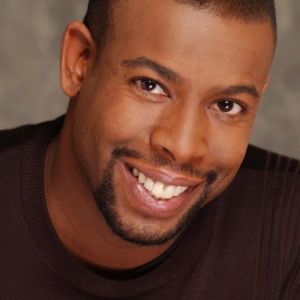
I got with me in studio, the one, the only, the inimitable Chuck Nice.
Yes.
Welcome back, man.
Hey, Neil.
Love having you.
I love being here, man.
And you get into all kinds of stuff.
First, you're tweeting at Chuck Nice Comic.
At Chuck Nice Comic.
Other Chuck Nicers were taken, I'm told.
Yeah, screw the rest of those Chuck Nicers.
You were just slow.
Put the comic on there.
Also, I was checking your bio in Progress.
You're doing a show where you're just invading people's homes, which sounds creepy.
Yes.
Imagine that.
A black man home invasion show.
Yeah, it's called Home Strange Home, man.
Home Strange Home.
Me going around to some of the weirdest and most unique homes in America.
And calling them out.
And calling them out, yeah.
Yeah, and what network?
Home and Garden Television.
That is my sister's favorite network.
I love her.
Every speed dial button goes to that network.
Knock out a woman.
I'm not going to tell her.
She's going to find you by accident.
Fantastic.
And she's there.
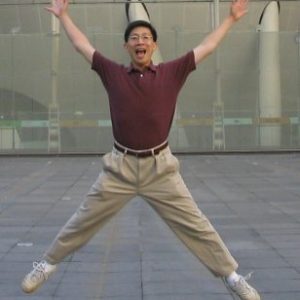
I got with me also my friend and colleague, Charles Liu.
Great to see you.
Professor Liu.
Excellent.
Thank you so much for having me.
Excellent astrophysicist at the City University of New York on Staten Island.
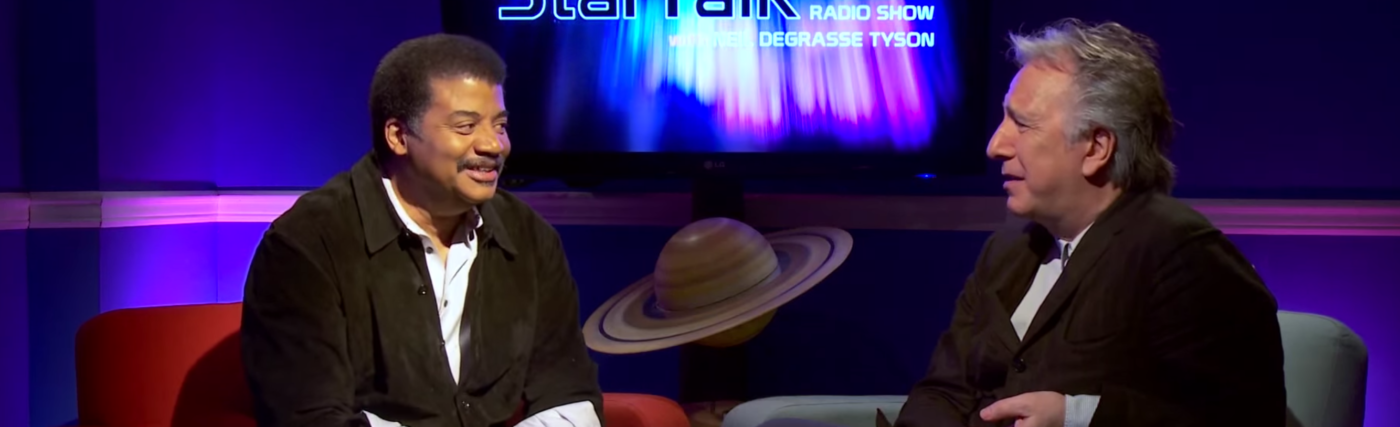
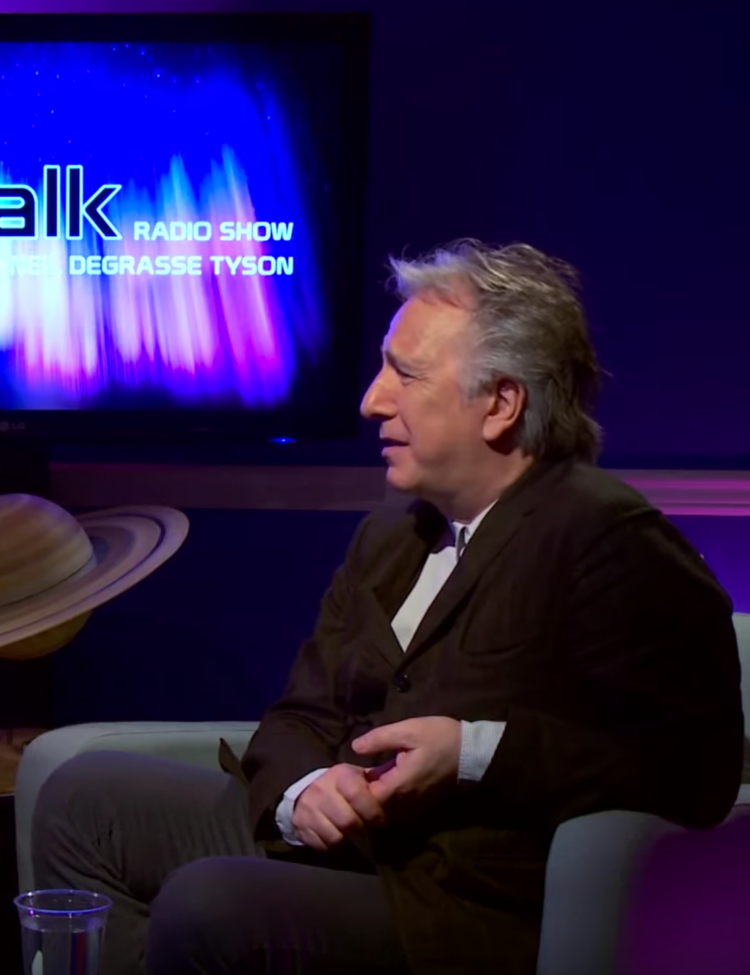
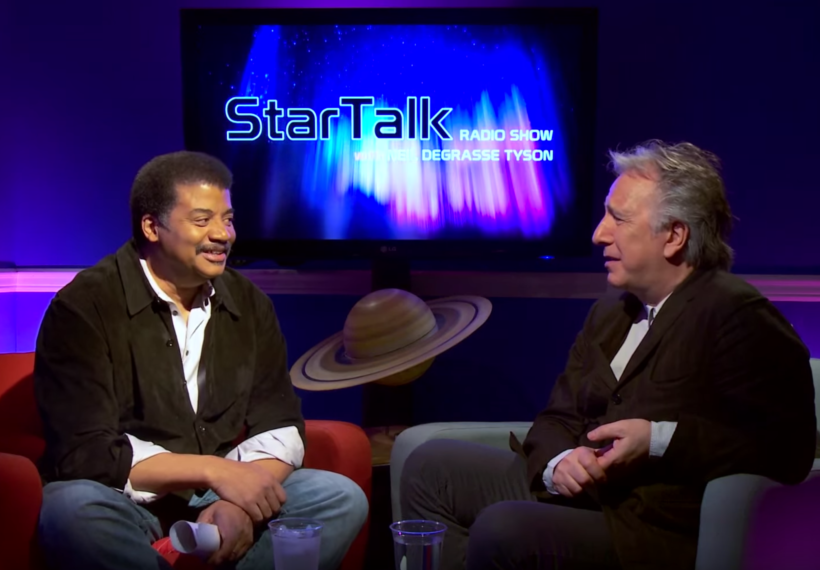
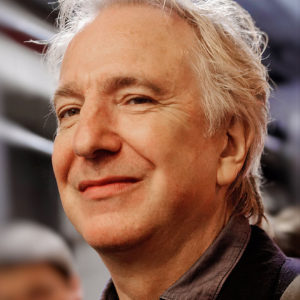
And I've got you here because we're featuring my interview clips with Alan Rickman.
Yes.
Alan Rickman.
Alan Rickman.
By Grand Thar's hammer, you shall be avenged.
And I didn't know this in advance.
That was it.
Good or bad.
You'll find out.
So Alan Rickman, you may know him from his role in Harry Potter.
He was snake, creepy, defined the word creepy.
He's it.
And Harry Potter, of course, he was in Die Hard, one of the greatest villain roles ever.
He was in Galaxy Quest, how it can't be a movie as there ever was, in Dogma, many other films.
And he was also in Bottle Shock.
Bottle Shock.
Yeah, wine film, a big fan of that.
And for folks who are sort of A-list guests like that, I always like knowing what role science might have played in their lives.
It's not always good.
So I just like knowing, just so I know what I'm dealing with, you know, in the interviews.
Let's find out what Alan Rickman tells us about his life experience learning science.
So Alan, I have to ask, because you've been in some intriguing science fiction films like Galaxy Quest, I always wonder, do people who end up in those roles, do they have some science background that leads them to it?
How is science flavored in your life, in your years in school?
Put it this way, when I did my very last physics exam, I got 4%.
That would be 4 marks out of 100.
96 because you lost 4.4?
I got 4 marks.
In your physics?
And I think they used to give you 1 mark for getting your name right.
On the top of the paper.
And the teacher wrote a hysterical paper, and he didn't mean that it was funny.
So what's the corresponding year in school in America that that would be?
It would be when I was about 15 or 16, something like that.
Yeah, and it's before you choose which subjects you're going to do what we call A level when you're 17 and 18, and then you go to university.
So physics or science was never ever going to be part of my life.
So that's when you said, maybe I should be an actor?
Well, at least I had an option.
It makes me wonder, had you done well in physics, we would have never had you as an actor.
I don't know how these forces operate.
No, actually there was somebody in my year, it was a good school in that sense, they didn't try to trap you or type you, and somebody in my year did...
Which is a very UK thing to do, right?
Well, I don't know about UK, it's world over, get a label on people as quickly as they can.
This guy in my year did for his three A-level subjects, i.e.
leading up to university, he did physics, maths and art.
And he wound up being an art teacher.
And I'm sure all the better for having had science in his life.
Wow, so yeah, we got 4% on this.
I'm not going to ask you what percent you got on your physics.
Chuck, I'm turning to you on this one.
That's funny he says that because I remember...
Now, we had physics in the 9th grade, the school that I went to.
Was it a private school?
It was a prep school.
And it was academically advanced.
I was not academically advanced.
And so I failed physics.
Now it comes out.
That's when he said, I think I'll be a comedian.
And put fun on a physics radio show.
But I loved science and I really felt like, man, I can't believe I failed this class.
And I blamed the teacher.
That is the right thing to do.
I'm so in favor.
I blamed the teacher.
So you're an educator, as am I, of course.
But you think a lot about this.
So I'm intrigued that he could fail a class, but still embrace the meaning of science.
Because when Alan Rickman said he got 4%, he wasn't bad mouthing science.
He just got 4%.
One thing that he said that was so telling, he said that most places in the world, you get tracked into places.
Oh, you must be the science guy.
Oh, you must be the art guy.
But the bottom line is, especially in this modern world, you can love anything and be anything at the same time.
The information...
Without the metrics of an exam to tell you whether you should do either.
The information that used to have to be forced into you as training for something is no longer that constrained in the classroom.
You can get it anywhere, like all over the world, online.
Oh, so we live in a time where the teacher is not the sole source of your enlightenment.
So the teacher's role becomes whether or not you learn how to think about things in a positive light, whether you understand things in a way that makes sense for you in your life.
If the teacher fails to do that, it is the teacher's fault.
It is not the student's fault.
So I tell all my students, I might teach astronomy, I say, look, if you don't like math and science by the end of this class, don't blame math and science, blame me.
And I'm totally comfortable with that.
I'm really glad to hear it.
What did it for me, though, was...
So you were burned in effigy recently.
That's fine.
Did you do well in any science class?
I did well in most of them.
I just really, I don't know what it was.
I don't think we had a communication thing.
But then another, my chemistry teacher gave me a book called Introduction to Astronomy.
Your chemistry teacher?
My chemistry teacher gave me this.
Good for your chemistry teacher.
Because the chemistry teacher said, there's no way you can be doing this well in chemistry and failing physics.
And when I started, this book was really fascinating.
So the teacher figured something else must be operating on that.
And I found the book so fascinating that it inspired me to continue going.
That's great.
And you became a comedian.
But astronomy is often a gateway science.
When we come back, we've got more of my interview with Alan Rickman, the actor extraordinaire.
And I've got in-studio Chuck Nice, Charles Lew, we'll be back in a minute.
Thanks We're back, StarTalk Radio.
By the way, you can find us three ways.
First, just simply on the web, it's startalkradio.net.
We have an archive of all of our old shows, check it out.
But there, you can also download us as a podcast, as you can on iTunes.
We're also, in video form, on the Nerdist Network of YouTube.
So find us there.
And not only that, we're on broadcast radio.
And so Chuck, with a lot of roots in broadcast radio, it's so great to have you participate in this adventure.
Yes.
Yeah, I feel the same way.
And my roots are deep in broadcast radio.
Yeah.
Yeah.
So thanks for that.
And Chuck, you were a radio broadcaster in college.
Yes, I was.
Excellent.
So let's put on our radio voices.
Punk rock.
So in this edition of StarTalk, we've got my interview clips with Alan Rickman, who's actor extraordinaire.
I mean, when he speaks, you can only just be silent and listen to the words as they come out of his mouth.
He first has got the British accent, which means he has access to vocabulary that Americans can only dream of.
And just the roles he's played have been so compelling and so absorbing.
And in this next clip, it came off of our discussion of his exposure to science and what about science might intrigue him.
He didn't do well on that physics class.
He got 4% out of 100.
I thought it was 4% off, 4% in.
So, yes, that's bad.
That would be an F minus.
Minus, minus, minus.
So does that influence what roles you might play?
Is it good or is it bad?
Is he still curious?
Turns out he's quite interested in human physiology.
Who isn't?
But to know that an actor is brings an extra dimension to it.
Let's find out what he tells us about that.
How do people retain their physical abilities?
I don't know.
I don't know.
I don't know.
I don't know.
I don't know.
How do they then not look at what their hands are doing?
And how is that message going from the brain to 10 fingers and dividing that information up?
And also operations now where the edges get blurred, whereby people can operate with a tiny camera inside people's bodies.
And apparently, the way they train themselves to do that is by getting really good at computer games.
Yeah, I mean, that's a fascinating frontier.
So I'm curious then...
I mean, you're intelligent, you're a deep thinker, we've spoken earlier.
You even think philosophically about the world.
It seems to me that that could and would play some role in what drives the roles you select in your acting career.
I mean, why wouldn't they?
If someone had an idea, they say, we're going to cast doctors.
Consider in the 1960s that movie, that Ozygazimov story, Fantastic Voyage, where the vessel, the proteus, I think it was called, there's some important diplomat that has a brain tumor and he might die, but they found a laser that could fix it, but they have to shrink down the laser and get inside and do it.
So they take this vessel, put people in it, shrink it down to the size of the confidant syringe and then you go inside the body.
And then the whole movie is what is inside the body and what they see and the red blood cells and the ventricles of the heart and the veins and the arteries and they get to the brain and they pull out their laser, which was a big thing back in the 60s.
I'm just curious, those sound like intriguing roles and if you feel that...
Just means I have to do a lot of background work to catch up.
No, that's enjoyable too, I like ambiguity in roles because that's interesting because it means there's no rules and it means you can pull people into a private storytelling space and they're not being manipulated by outside forces.
Their imaginations are allowed to work along with mine, but at the same time, I did actually do a film playing a heart surgeon and I was on really big catch up there because I was now forced to try to understand how the heart even works and then to mime doing a heart operation because it was about Alfred Blaylock who did the first blue baby operation.
Yeah, so when you're an actor, you don't know what you're going to be called to do.
And there he is.
First, he's intrigued by the moto neuro kineticism of a piano player.
Who is it?
Do you play the piano?
I do play the piano.
Do you play the piano too?
No longer.
No longer.
I did.
I took lessons for a little while, but I sucked.
Now, my daughter is way better than I am, but the reality is that indeed when the human body programs itself, the reason we practice is that we're able to train our bodies to do things beyond our ability to think consciously.
It's the same for playing piano as it is for, say, a football player.
If somebody is coming in and trying to sack you as a quarterback.
You run the other way.
What kind of training does that take?
But you literally don't have enough time to think to move.
Your body has to know to move before you think, oh, somebody's going to come hit me.
So you're training yourself all those years.
You think, oh, I can play quarterback or, oh, I can sack the quarterback.
The reality is your body has to react faster than you can think and command your body to react in order to be successful.
So you're training.
Yes.
So you train.
I feel the same way at the Source Awards.
It's like if you hear pop, pop, you don't even think.
You're just, wha!
So you've done this.
This has happened so often.
Your motor neuro kinetic response.
You would think that it would occur to me just not to go to the Source Awards.
Hundreds of hours, thousands of hours of that kind of practice.
But what is very cool is that the human brain, even with a few hours, can make it so that other humans looking at that person suspect that there's the appearance of ability, even though the true ability is not yet revealed.
Also, the actor doesn't have to then be the 20,000 hour expert.
The 20 hour expert.
And again, that takes a bit of skill.
Exactly.
And that itself has its own brain, not a neurocognitive thing.
So different people are good at different things.
It could be, for example, that the maestro piano player particularly can arrange his or her fingers to become very good at playing the piano.
Whereas the actor or the comedian has the moto neuro ability to find a way to reach those specific aspects that appear to be excellent to others and be able to communicate.
You know, when I was hosting Nova Science Now on PBS, we did a segment on your brain learning while you're asleep of something you had done the day before.
OK, so you do a task that you've never done before and you it's hard at first and you get a little better at it and you keep getting better.
But there's a point where you're just not getting better.
Your fatigue, I guess, is how you we would normally describe it.
You go to sleep, wake up the next morning, kick in, you start at a higher level than you left off the day before.
Because your brain added the information kept going.
And it's not just knowledge, it was adding kinetic of memory of what you were doing.
And so when they say sleep on it, that actually has meaning.
And I was able to confirm that I did this with multiple I did with a video game that required kineticism.
I did it with a typing sequence.
I did it with a memory sequence.
The next day I was better.
And so the brain is working.
So, is your brain like making new neural pathways so that you're better at that?
It's just, I mean, we're not growing new neurons, right?
It's just the rearrangement of the chemical pieces that we picked up.
It all kind of settles in during that time when you're not doing anything else.
So all just sacks of chemistry is what you're telling us.
Oh, chemistry, alchemy, magic.
Magic.
But as well, you know, Neil, all scientists throughout history who have reached intractable things have at first ascribed them to perhaps magic or divinity.
But knowing that that's just a gap until we fill it with more knowledge.
What's interesting is it works that way historically.
And there's the famous edict or adage from Arthur C.
Clark, where any sufficiently advanced technology is indistinguishable from magic.
That's right.
So take an iPhone back to colonial America.
No, take it back ten years ago.
You'd still be burned at the stake.
So for an actor to learn to be another whole person, I'm intrigued and heartened, well, of course, because we see it and it's real.
Actors who are good pick it up, they capture the essence of it to the point where you, the viewer, even if you're an expert in what they're acting, you think that they are what that is.
You want them to be that.
On the other hand, I watched the Big Bang Theory and I'm certain those actors are experts in all the fields that they talk about.
On the other hand, doesn't it rankle you when, I don't know, maybe Chuck, you know this, when you're watching somebody pretending to play the piano on the movie and their hands are over here and you know that the sound is coming from over there, and you're going, oh, forget it, man.
I'm twitching the channel.
I'm not taking you to the next stage.
Or the next taping of Big Bang Theory.
Yeah, and some actors will actually want to learn the piano so that, you know, like they want to be that real.
Well, they'll gain the weight or lose the weight.
No, you're right.
Denzel Washington played a trumpet player in Mo Better Blues and literally learned the fingering, not to play the trumpet, but the fingering.
So you check the cheek to see if it was...
More of our interview with Alan Rickman when we come back to StarTalk.
We're back on StarTalk.
Today, we are featuring my interview with Alan Rickman.
Listen to that guy all day, huh?
No, that is not a good imitation of Alan Rickman.
I don't know, he sounds a little smug when he talks.
Yeah, but then you want that, you know?
Irene, poof, poof.
But his last line in the last movie, you have your mother's eyes, such pathos.
You just want to shed a tear for the two.
Yeah, I wanted to shed a tear for that impression.
That's why you're the comedian and I'm the astronomy professor.
No, I'm glad you did it, because mine sucked, but that wasn't it.
The movie I'm thinking of right this minute is he was one of the lead characters in the movie Bottle Shock, which chronicles an episode in the history of American ornology.
Ah.
That's one of those OE words.
Well, Neil, I hope it's okay that I reveal to the world how much of an enophile you are.
This man, folks, is one of the maybe two or three most knowledgeable people about wine in the whole world.
No, that he knows.
You'll have to let me finish my sentence.
Well, thank you for those kudos, but I'm just saying, so I had to go see that movie and I find out neither of you saw that movie, so I had to do all the talking in the same-
Didn't see Sideways either.
So, Sideways is another good one.
So, I'm just impressed that there's a wine movie out there and it chronicled this chapter in the history of American wine making, where California is trying to make a name for itself.
It's got the grapes of the classic wine growing regions of France, from Bordeaux, especially Bordeaux in this particular case.
And so, they grow their Cabernet Sauvignon grape.
And so, the most expensive wines ever at auction from France are this grape.
You put the plantings here in America and the China compete.
And there was a contest in 1976, our bicentennial year.
It was all up with America, and the French said, let's have a contest.
You guys are so uppity.
Let's put some of your wines against some of our wines.
And some people were a little skeptical that maybe the French were trying to embarrass us on our...
Because, by the way, the only way you can conduct that experiment is if you taste the wine blunt.
Right.
You can't know in advance because then you don't trust the judges.
Especially the French.
Why don't we have a contest where you bring your still?
Right.
So you got to work that and play it right.
And so Alan Rickman plays, was he one of the judges?
I forgot the exact role, but he was there as part of this contest that would be conducted.
And so let's check out this clip and we'll talk more about wine when we get back.
All right.
So you study your roles as any good actor does, which tells me then in Bottleshock, you had to do a lot of wine tasting.
Had to do your homework for Bottleshock.
No, well, the real problem with that was we were shooting it all in Sonoma.
And so when we came to the scene where there's a, it's about a blind wine testing between French, a true story between French and American wines.
We taste the wine and you're not told in advance anything about it.
And this was set up in Paris 30 odd years ago by the character I was playing to publicize his wine academy.
And this all happened and his judges were very eminent French, all French chefs and wine experts.
And snobs basically.
I think you were talking about horror of horrors, the American wines won.
That's an extraordinary story.
The departure from anything to do with the reality is when we shot that scene of the actual wine tasting, it was in about 90 degrees of heat outdoors in Sonoma, where of course you couldn't possibly have done that because it would have ruined all the wines.
Right, right, right.
But it was visually stunning.
Yeah, so he was the British merchant who organized this tasting in France.
And yeah, America won.
And in fact, I have tasted the wine that won that contest.
1973, Stag's Leap.
Stag's Leap?
Cask 23.
Wow.
And was it actually that good?
Stag's Leap, 1973.
Now, back then, and still, California wines tend to mature sooner than French wines.
So when the French lost this contest, they would then say, oh, well, the American, this is 1976, was the contest.
The other French wines were in the early 70s, right?
So they would say, oh, ours has not shown well yet.
Come back in three years.
By then, it was too late.
Genie was out of the bottle.
Time magazine was present at the tasting and they ended up writing about it.
No other American press was interested in covering it.
You know, there is a California wine called Rocket Science.
Yes.
In fact, I had some of that yesterday.
As good as Tagsley?
They're coming along.
But actually, I'm a sucker for a wine label that has cosmic themes.
And there's a lot of them.
In fact, I think cosmically themed wine labels are like second behind like nature stuff, like flowers and cute animals.
Just check it out.
There's some with moons and planets and stars.
All night.
It's the lucky charms of life.
The Yellow Brick Road.
That's the next one.
So I'm quite sure that cosmic themes have infused the winemaking.
People might have done well in their Astro 101 and showed up on their labels.
When we come back, more of my interview with Alan Rickman.
Alan Rickman.
We're back with StarTalk Radio, featuring my interviews with Alan Rickman.
Both of you guys cannot imitate the man.
Okay, you're right.
My co-host.
Doesn't stop us from trying.
Doesn't stop you from trying.
And we just came off of that segment with a bottle shock.
We're at American Wine, won this prestigious French competition, set up to showcase how far California had come.
And the science of wine is fascinating.
In University of California, Davis, there's an entire school there that specializes in the science of wine.
And so what I like is that the Americans were saying, whatever you guys do in France, because you want to raise it to an art.
In California, they're saying, we're going to bring it down to a science.
We will kick your ass with science.
Blind?
Draw some science on them, son.
So Alan Rickman didn't only do bottle shock, he also did one of the campiest, funniest movies ever, Galaxy Quest.
Dr.
Lazarus.
I don't know how many people out there saw the film.
I don't think it was a number one in the charts, but definitely it's certainly a rentable film.
It was about a TV characters from a science fiction show, that actual aliens came who had to protect their civilization or something, but they want them to help them because they thought it was real because they got the television signals from the went out into space.
We have seen your history on the podcast.
It was every Trekkies' fantasy come true.
Every Star Trek fan.
Every Star Trek fan.
Because you want it to be real and the aliens thought it was real.
So Alan Rickman played Dr.
Lazarus, right?
In the Galaxy Quest, I think he showed...
By Grabthar's hammer, you shall be avenged.
Let's go straight to that clip.
I just asked him, how does this fit into your acting repertoire?
Well, I mean, of course, in Galaxy Quest, I'm trying to think if I've done any others, but that was very particularly about a bunch of actors.
Who were all trapped in a really bad TV show.
So that's really all I had to know.
You were portraying an actor on that.
That just didn't occur to me.
Possibly a bad actor.
Who had aims of having been in Shakespeare and found himself in a sci-fi show, which then finished 12 years ago and now these actors just go to conventions.
Right.
Right.
And the real aliens showed up.
Real aliens showed up unnoticed in the crowd of people wearing my costume.
The premise is just so crazy.
I mean, it's a fun, crazy premise.
I'm glad you did it because it's there.
So, this is in his portfolio of acting roles.
You know, I just remembered my notes.
Forgive me, I had to reference my notes.
The aliens in the movie are called the thermians and octopoidal creatures, right?
That is what they were.
They had humanoid form when they were interacting with us.
Yeah.
But when you saw them in their true form, they were disgusting.
So, they did it for our benefit.
So, they wouldn't completely.
No, they're awesome.
Completely freak out.
Yes.
So, Alan made an interesting point, that there are actors there who may have trained in Shakespeare and find themselves on a hit TV show that has nothing to do with Shakespeare.
Rickman played that part to perfection in a sense because.
He looked a little grumpy in that role.
Yes.
He was supposedly Sir Alexander Dayne, a distinguished Shakespearean actor who winds up on TV and not only looks like a moron.
Come on, in one scene in the movie, he had to go stand in front of a Wal-Mart-like box store with his friends and say, by Grabthar's hammer, what a savings.
At the store.
And so, the whole point of it is that you can take a role and play with it as much as you want or you can disdain it and say that's not part of you, right?
In modern Star Trek lore, people are still going around doing exactly the same thing.
In my one cameo on the Big Bang Theory, I chatted with the Raj character, right?
Because he's the astrophysicist on the show.
And I said, oh, so what is your background?
He's classically trained in England and he studied Shakespeare.
And then I thought to myself, did he ever imagine that he would be best known for like a geeky science kid in a TV sitcom?
And so I guess surely it all folds in, but maybe you've got to go where the, you got to roll with it.
And you hate every minute of it until you get a check.
Funny how that just makes everything okay.
I'm just really selling my soul here.
This is awful.
There is no artistic integrity to any of this.
My God, I'm stealing money.
More in my interview with Alan Rickman, but we come back to StarTalk.
We're back at StarTalk Radio, featuring my interviews with Alan Rickman.
Alan Rickman.
Oh, it's just awful.
That's why he's Alan Rickman and we're not.
So I got Chuck Nice here.
Chuck, you're tweeting at Chuck Nice Comic.
That's right.
And you're tweeting too?
I am, I am at Chuck Lu, Chuck, C-H-U-C-K-L-I-U.
Chuck Lu.
So education things and cosmic things.
Pretty much.
We'll have to find you there.
And we talked about some of the roles Alan Rickman has played.
And so in his role in the Bottle Shock, he had to know something about wine.
So he had to do some wine homework about that.
In fact, that film featured chemical changes in wine because as they portrayed it, although I don't think it actually happened this way in real life, but it added to the drama.
The wine, when it was shipped overseas, went through a chemical change for having been sort of jostled because you have to move the wine to where the tasters are.
And wine doesn't like being moved any more than you like being moved, bottled up.
And so the wine has to recover from this.
And so there's a little bit of chemistry in the film as well.
And if you don't know the chemistry, you have no feeling for it, you can't embrace it, and you're an actor trying to say convincing chemistry words, it doesn't play.
And Alan Rickman seems to have pulled this off each time.
We talked about what is to learn science and what might prevent you from learning science.
So I've got a question.
You scored so poorly on your physics exam, I don't know if that scarred you.
Often in America when people say they get scarred, it's not from an exam score, it's from a really bad teacher.
But in either case, they're turned off from science for life.
You've had several occasions for science to work its way back in your life, not only in some film roles, but in your role as a heart surgeon, and there's a little bit of chemistry and bottle shock, you're thinking about what goes on inside the wine.
So I'm curious, did those forces help you regain an appreciation for science or the role of science just intellectually or even in society?
Absolutely, yeah, and you're right.
I wish, I don't want to criticize the teachers I had, but-
Go for it.
But clearly, there are other ways to teach it, and maybe you have to figure out what kind of child you have to find out how to get this information inside their heads or bodies.
The key for individualized teaching, I think, is what that comes down to.
Yeah, and maybe, you know, I've stood on a platform and I've been zapped by computers from every direction so they can reform me in a computer.
You were talking earlier about, you know, we won't need to act anymore.
But they did get enough information from me to then put me into the background of a shot without me having to show up.
Oh, my God.
So that can be done.
So why can't you take a child, put it in a machine and zap it from every angle and figure out which would be the best way to teach it about a subject that it finds difficult?
That's the modern actor's version of what we all said in the 70s and 80s.
If we could put a man on the moon, we can fill in the rest of the sentence.
You know, why is this person dyslexic?
What's going on?
If we can digitize an actor and put him in a scene, why can't we train people to understand the world?
Yeah.
I love it.
I like that.
Because I find it fascinating.
There's just something in my brain that refuses to accept the information and doesn't know what to do with it.
It just goes...
as soon as you start talking.
But okay, but that's one thing to turn yourself off.
But it doesn't mean, I don't think you're saying, that you don't still stand in awe or appreciation of science.
Yeah, so I like the fact that he still is impressed with what science can do.
Because so many people in America, they hate science forever.
Then they become anti-science.
We try to prevent that in the classroom.
There's some really interesting projects.
We talked about computer mapping and trying to get people to learn science differently.
It's right on.
In fact, in the University of Central Florida, there is a project called the Meteor Project.
Meteor as in meteors that come into space.
It's an attempt to teach people about gravity science using computer simulations.
You put electrodes and sensors on a kid, bring him into a room, and he or she pretends to be an asteroid trying to go through and set into orbit, for example, around the planet.
Actually, they're using their body as a kinesthetic method to learn science.
This is all from cinema, from movie magic.
Right, movie magic type stuff.
And there are scores, and they're trying to find different ways to get people to not just learn on paper how to write stuff.
Okay, I'm thinking of the video game Asteroids, where you shoot them out of the sky.
So who's shooting the asteroid kids as they're going around?
That might be in phase two, past the National Science Foundation, what they're going to fund.
This is legitimate science education research, as well as just having a good time.
Isn't that what's important?
Don't we all learn best when we're having a good time while we're doing it?
It doesn't have to be something that's easy.
It's hard to make a jump shot.
It's hard to do a mute grab on your board.
But people will work on it for hour after hour, day after day, year after year, because they're having a good time.
Because they're having a good time.
And when he described his role as a surgeon, he was operating on a child that had a condition, what was it called?
A blue baby condition.
And so he had to think about how the heart worked and all that.
Well, we got to wrap up this hour.
But great having you guys here, my God.
Such a pleasure.
This was a good time.
You were listening to StarTalk Radio.
You can find us on the web, startalkradio.net.
Where else would that be, of course?
And we're brought to you in part by a grant from the National Science Foundation.
Let's give a shout out for the NSF.
Yes.
Keeping science flowing through the river channels of our nation.
And by extension, the world.
And by our radio signal, the universe.
As always, keep looking up, Neil deGrasse Tyson, signing off.
See the full transcript



 Unlock with Patreon
 Become a Patron