



 Unlock with Patreon
About This Episode
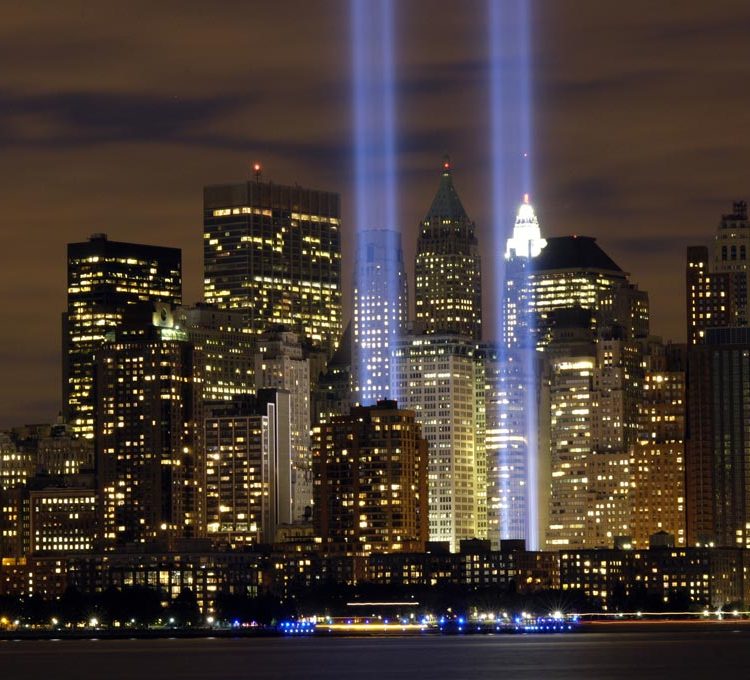
On September 11, 2001, The United States was hit by the biggest terrorist attack in our nation’s history. Now, ten years later, we take a look back at the events of the day, talking to people from different professions — from a New York City firefighter to the creator of a TV comedy show — to discuss how the event affected them then and now.
NOTE: All-Access subscribers can listen to the entire episode ad-free here: 9/11 Memorial.
Transcript
DOWNLOAD SRTWelcome to StarTalk, your place in the universe where science and pop culture collide. StarTalk begins right now. Welcome to StarTalk Radio, I'm your host, Neil deGrasse Tyson. I'm an astrophysicist with the American Museum of Natural History here in...
Welcome to StarTalk, your place in the universe where science and pop culture collide.
StarTalk begins right now.
Welcome to StarTalk Radio, I'm your host, Neil deGrasse Tyson.
I'm an astrophysicist with the American Museum of Natural History here in New York City, which is where I also serve as director of the Hayden Planetarium.
For this episode of StarTalk Radio, we're going to commemorate the events of 10 years ago, September 11th, 2001.
Then and now, I live three and a half blocks from what would later be known as Ground Zero.
I was home that morning and the entire series of events unfolded outside my dining room window.
I'm not going to go through those details here or now, but you can find them.
They're online.
Just Google Tyson WTC.
That'll get you there.
You'll see photos.
You'll get my first hand account of my effort to escape lower Manhattan with my family.
It's all there.
Like I said, I don't want to retell that now.
What I'd rather do is try to measure the magnitude of the events of that morning.
Consider, for example, that one of the buildings of the WTC complex, WTC 7, is 47 stories.
Later that morning, it would catch fire, and that afternoon, it would collapse.
Most people haven't even heard of this event.
It didn't make it to the headlines, because far worse things happened that day.
But consider, if that were the only thing that happened, that would have been headlines in every newspaper of the world.
You can see it now.
A 47-story building catches fire and collapses in lower Manhattan.
That would have been across every newspaper's headline the next morning.
It wasn't even a footnote, because more tragic things would happen that day.
Plane hits the North Tower.
That's bad enough, killing everyone on board, killing people in the offices of the floors that it hit.
Now that's on fire.
That's bad.
Now, a second plane hits the South Tower, killing all on board of that plane and people in the office space of those floors that it hit.
That's tragic enough.
Not one plane, but two.
Then, a sound, the likes of which I have never heard or experienced before, came upon my ears.
It was the sound of the South Tower collapsing, a mixture of acoustic frequencies, the likes of which I have never experienced.
Low frequency sounds that rumbles your chest, high frequency sounds that force you to twist your head in reaction to it.
Oddly, minutes later, another sound would unfold and I would say to myself, I've heard that before.
I'm familiar with that sound.
That's the sound of a 110-story building collapsing.
The fact that I could even have that thought is one of the most depressing moments of my life.
Two buildings down, each 110 stories, each an acre of office space per floor.
You know, I'm not the same person I was before 9-11.
I don't think any of us are.
How am I different?
You know, I hug people more often.
I used to just be content in shaking hands.
I hug people.
Perhaps that's my effort to embrace life more deeply.
I also feel the full range of my emotions more deeply.
These are sort of permanent effects on who and what I am as a person.
But also, and maybe more importantly as a scientist and as an educator, I've redoubled my efforts to try to bring sanity to an insane world.
I have with me in studio Dr.
Erwin Redliner.
He's director of the National Center for Disaster Preparedness of Columbia University.
He's a medical doctor and advisor to governments and other municipalities on the response of emergency support in the face of catastrophic failure of the grid of the electrical system, of transportation, of food distribution.
Erwin, welcome to StarTalk Radio.
Thanks, Neil.
Glad to be here.
And this center is in the middle of what school of Columbia?
Well, we're the School of Public Health, the Mailman School of Public Health at Columbia University, and we've been at it since about 2003.
So how does September 11th affect your profession?
Maybe it's a new profession, disaster preparedness.
I don't know if it even existed.
Yeah, interesting that you mention that because the fact of the matter is there were a lot of people that were working on disaster planning and response and so forth.
And most of those people were in the community of first responders, so firefighters and police officers and emergency managers and so forth.
The people who run to where everyone else is running away from.
Exactly, those people who put themselves in harm's way no matter what the situation, and that we depend on typically to help us and protect us in the face of catastrophic events.
There were a few centers prior to 2001 that in fact studied disasters in a limited way, including one at the University of Delaware, another one in Colorado.
But after 9-11, there was an explosion, literally, so to speak, probably bad choice of words here, but a proliferation of academic centers that were beginning now to take a different kind of interest in disasters and try to figure out what is the information most needed to guide responsible policies and procedures to make sure that we could survive as well as we possibly could any kind of disaster that we might confront.
Here's a question I have for you.
September 11th, almost everyone who was injured was killed.
Correct.
And so, there's a disaster where the hospitals that were gearing up, once they knew the towers had collapsed, a couple of dozen people needed to be hospitalized.
So what kind of a disaster is this relative to the others that you said?
It was very, very bizarre in many, many respects.
But the fact of the matter is exactly as you say, the hospitals were completely geared up throughout New York City.
They were discharging patients that could be discharged to make room for what was anticipated to be hundreds, if not thousands and thousands of injured individuals.
And down in lower Manhattan, in the piers, they had set up triage centers.
My other...
Manhattan used to be a very active port for ships, and so we have these piers that are there left over from this period.
Exactly, these large, Quonset Hut type buildings, and all sorts of people were gathered there, and literally hospitals were essentially set up inside these pier buildings.
My other organization...
That's an example of C-APA response...
Exactly, the Children's Health Fund has mobile pediatric clinics.
We sent two of them down to the piers to assist in the triage, and what again was expected to be just hordes of injured people being brought out.
Those places were absolutely empty.
It was amazing.
And there's another point that I wonder, and I wonder if you address this in your studies.
Here you have a place, the Tray Tower Complex.
There was this underground veritable city of shopping and transportation.
The buildings collapsed into this big mound.
The emergency responders are all trying to help.
They're all trying to go to this one spot.
How do you organize, from a sort of municipal sense, of a rescue effort when everybody has to go to the same spot?
Well, first of all, what happened on 9-11 probably will never happen again, which is that we got thousands and thousands of people rushing to what was then ultimately referred to as, as you said, ground zero.
The people that were the organizers, the professionals, that is, our firefighters, our emergency managers, our police force, et cetera, and eventually state and federal officials as well, were actually accompanied by volunteers who were coming in from all over the place.
And it was quickly apparent, and you'll hear more from other guests, I think, about how this was actually done, but it was quickly apparent that more controls needed to be exercised over who was coming, who was doing what.
Right, because you've got the police, you've got the fire department, maybe you have structural engineers trying to advise.
Oh yeah, you have national guards.
City officials.
Who decides who's in charge?
It's got to be some part of your study.
Yeah, not only is it some part of our study about 9-11, but it's some part of our ongoing studies, because the problem is for very large scale disasters, this question that you just very much put your finger on, Neil, which is who is actually in charge of large scale disasters, there's not a really good answer for that.
Because there's no precedent.
So you make it up as you go along.
But even when we think about a disaster in the future, we still don't have a good mechanism for figuring out who's in charge.
Because there's political jurisdictions.
Is the city in charge?
Is the state in charge?
What happens when federal assets get brought to the scene?
It's a very complicated reality.
So we're ill-equipped for such a thing.
That's what you're saying.
I believe we're terribly ill-equipped for such a thing.
Oh, sorry, not enough adjectives for you.
Yeah, I have some more adjectives.
Well, let's start with terribly.
Terribly, you've got some better ones, I'm sure.
Yeah, I do.
Some not for broadcast purposes, but yes.
Okay, and so it's a bridge not yet crossed regarding when you have the interplay of multiple first response agencies, as well as others who try, federal agencies that try to make a difference on the scene.
We're not ready for that.
And then, you take it a step further in your business.
You're talking about mega disasters, where the grid is out, transportation is out, you don't even have hospitals.
From my profession, that's an asteroid strike.
Is this the kind of stuff that your research takes you?
Well, last year, for example, we held a conference on what would happen in the aftermath of a nuclear detonation, not a dirty bomb, but the actual detonation of a nuclear bomb.
Traditional nuclear bomb.
Which is unfortunately acquirable by...
Just to clarify, a dirty bomb is a bomb that is primarily radiation affecting...
Well, a dirty bomb would be a conventional explosive that has been laced with something radioactive.
It could even be something as simple as medical materials that we use for studies.
So most of the damage is a secondary effect of the bomb.
Exactly, and then the radiation, even if it's minimal, causes a tremendous amount of panic, but the radiation itself is not the issue.
In an actual nuclear detonation, a la what we saw in Hiroshima and Nagasaki, which is now doable by somebody with enough scientific education and the wherewithal to get the radioactive material.
And education you get on the internet, basically.
Education you get on the internet, I'm sorry to say.
But that kind of scenario is one of the 15 planning scenarios that the federal government thinks that major cities should be planning for, except it's just been overwhelming to most of our cities here in the United States.
And in your planning, you've got all the whole tree of decision making and response functions that have to then come to some coherent plan.
One would hope.
One would hope.
And then you have a plan and then somebody says, well, that's your plan, I'm going to read your plan and then I'm going to do something different.
Well, right, and it's almost impossible in a large scale disaster to plan for every possible contingency.
Part of the planning benefit is for the people that don't have to work together to get to know each other, to know what skills and what assets they can bring to the table, and to try to establish some order in terms of who's in charge, who's running the emergency operation centers, who gets to make the final decision, who says where we're going to place a mobile hospital provided by the armed forces and so forth.
So, a lot of complicated decisions and good leadership is absolutely essential to that.
Right, so all these are lessons.
Is there hope for the future?
Well, there's always hope for the future.
I'm saying yes, when you get that question, you say yes.
I know, I'm looking at you.
As a father and a grandfather and as a pediatrician, yes, there's always hope for the future.
And I've been at this kind of public health work though for several decades now.
And I would like to say that I wish this hope would materialize sooner than it seems to be right now.
But we are getting better, we're learning more, but it's awfully slow and we're spending billions and billions of dollars.
And as far as I'm concerned, we're not getting our money's worth just yet.
Those were the words of Dr.
Erwin Redliner.
He's the director of the National Center for Disaster Preparedness, Columbia University, and you're listening to StarTalk Radio.
I'm your host, Neil deGrasse Tyson.
When we come back, I will bring into this conversation a fireman who was in the North Tower when it collapsed, none other than Mickey Cross.
Join us when that segment returns.
Welcome back to StarTalk Radio.
I'm your host, Neil deGrasse Tyson.
This is a special 10th anniversary edition, commemorating September 11th.
September 11th in New York, and how it has affected the nation and the world.
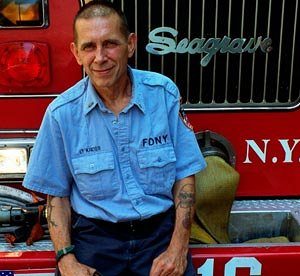
For this segment, I want to introduce Lieutenant Mickey Cross.
He was a member of the New York City Fire Department, and one of the first responders on September 11th to the World Trade Center site.
He was inside the North Tower when it collapsed.
Mickey Cross, welcome to StarTalk Radio.
Oh, thanks for having me.
I didn't even know people survived that collapse.
What's your summary of what happened to you that morning?
I was working in my firehouse.
It was just a typical morning.
It's a couple of miles away.
My firehouse is four miles from the site.
Four miles, yes.
I was the officer on duty that day.
I was in my office.
There's always a lot of paperwork in the fire department.
And I heard on the radio that a plane had hit the North Tower.
But the chief that gave the transmission, he wasn't excited or, you know, he said it very calmly.
And I didn't think it was going to be what it was.
I thought it was a small plane.
Yeah, who did?
It was a terrible situation, but I didn't even think we'd be affected because there's dozens and dozens of firehouses from where we are to the Trade Center.
But then two minutes after, we got the alarm came in on our firehouse to respond to the North Tower.
So we jumped on the engine and we got downtown and I saw the North Tower for the first time.
That was a huge hole with black smoke.
So I knew when I saw that this is going to be a really bad day.
And then we got down by Church Street.
I was right next to the South Tower and there's a fireball over the head.
That was the second plane.
I did not see the plane.
This guy just exploded.
And now we got the North Tower burning, second tower.
So we just followed the procedure.
We parked the engine.
We headed into the lobby of the North Tower.
I get ordered to the 23rd floor.
We walked up the stairs and we got to 23.
The firefighters were exhausted.
They're carrying about 80 pounds of equipment.
You know, me as the officer, I carry a lot less.
One of the reasons to become lieutenant is to carry less.
So I told the guys to take a break, and I did a search, and then the building shook.
Really shook badly.
I actually fell over, and that was the South Tower collapsing, but I could not see that.
So you had evidence of the South Tower collapsing without knowing that that would actually happen.
I did not know it collapsed.
All I know is the North Tower shook, and I knew something had happened, and then I got an evacuation order.
I don't remember how I got it, and I got back to my guys to get them out, but they had already self-evacuated.
The second-in-command took control.
Very experienced guy.
Got the guys out, and so I started down the stairs, and remember, I started down from 23.
I got down to about three, and the building started vibrating.
The staircase was just vibrating, and tremendous roar, and that was the building pancaking down, and I know something's happening very bad.
Very bad, I don't know what it is, and basically it fell down on top of me, and I was buried for about three hours.
So it was a pocket that protected you?
Yeah, it was a little pocket, and it was 14 of us in it.
It was a stairway between second and fourth floor, and after about three hours, we saw a little light, and we actually crawled out.
Yeah, it's like in a movie, there's a light and you follow the light.
But who would expect that, because you got a 110 story building falling down, and you actually saw sunlight momentarily, and we crawled out.
I ended up leaving Lower Manhattan on September 11th, not because the tower's collapsed, but because the fires that were very high up were now at ground level, and I found it very hard to breathe.
And so I was really looking for better air.
You are in the collapsed tower, where the smoke is burning.
Well, actually, air was probably cleaner where I was than outside.
Because the smoke was headed out straight out, okay.
But nonetheless, over the days, the weeks and even months that followed, many firefighters were on site.
I was one of them.
Digging through the wreckage.
Yeah, I was one of them.
What are the consequences of the air that was?
I'll tell you the truth.
I didn't think about it at the time.
It just didn't enter my mind.
But do you have a mask or do you have breathing?
I think they gave us these.
These medical.
Yeah, I didn't wear it too often to tell you the truth.
I would put it on when I saw the green smoke.
Green smoke, that can't be good.
Green smoke has to be bad.
Because you know, you had to smell.
We found body parts by odor.
And if you had your face totally encapsulated, you can't smell anything.
So you're removed from the environment when that happens.
Yes, yes.
You know when you're in an area where somebody is.
Now you had dogs there too, I presume.
They had the dogs.
Must have been tough on the dogs, because there was sharp edges and steel everywhere.
Right, and they got the little paw pits.
In fact, one of the guys that was trapped with me, it was a police officer, he lost his dog Cyrus.
It's like there's a little monument to Cyrus in the north.
The sergeant lived, but his dog died.
And he really was broken up after that.
Now the fire went on for months.
I remember it wasn't out until February or January.
Oh, it went on for quite a while, yeah.
Yeah, is it because it smolders deep down and as you open up a new layer, oxygen goes in and it flames up again?
Well, yeah, you could pretty much say that, yeah.
It was so hot that it just kept burning.
And every time you open up a new layer, as fresh oxygen.
Yeah, as we would peel material off, oxygen would seep in.
I remember walking around and seeing like a little tiny mini earthquake and steam would come out, like a little, maybe two feet long.
A fissure.
And you'd say, oh boy, what's going on down there?
That's scary.
Like some alien landscape.
Yeah, it was very eerie to see that.
Surreal.
What kind of protective gear did you have going into the World Trade Center?
Well, it's changed dramatically.
When I came on the job in 77, we pretty much wore raincoats and dungarees and rubber boots.
Just to keep water off of you.
Basically, that's what it was.
Now, they came out with something called bunker gear.
It's very thick and salated.
Completely encapsulated, your trousers and your jacket.
And then you have a hood over your head and then you put your mask over that.
So you actually have no skin exposed now, which in a way, some guys are a little troubled by because you don't feel the heat.
Does it impede your rescue efforts to feel what it is you're doing?
No, you get used to wearing it.
Let me get back to Irwin Redliner.
So Irwin, is there a science of, I mean, surely the military has something to offer this?
Sure, yeah.
And I think that what Mickey's talking about is the result of a lot of study of what people need to be protecting themselves from, not just fire, but chemicals and other kinds of noxious materials that may be in the environment that they're in.
Either because it's the product of a dirty bomb or because of a fuel tank.
Or chemicals or whatever.
As we found out from 9-11, there were a lot of people that were exposed to or inhaled materials of really unknown substances from this combined explosion and fires and everything else that was going on there.
And we've seen quite a few health effects, especially pulmonary and some deaths that have been attributed to what people were exposed to.
Lungs, right.
In fact, I was just talking to a fireman the other day.
He was an old time guy and he said in the old days, they put out wood fires.
Everything that burned was wood.
Now, it's mostly plastics and chemicals.
So it's changed a lot.
You asked an interesting question too about does it impede their ability to do what they have to do, the work they have to do out of fire.
And these guys are fantastic.
They're the best in the world.
They get used to working in it.
On the other hand, the EMS, the Emergency Medical Responders and docs who might be on scene trying to treat people, it is very, very awkward to, for instance, you can imagine trying to start an intravenous drip in a baby with a small needle.
It's a nightmare actually.
Right.
I heard a rumor that the communication center for the walkie-talkies had problems.
Is that right?
There was a problem, yes.
There's a repeater which boosts the signal and for some reason it wasn't turned on.
So it's not just, are you equipped, but is Command Central equipped?
And are the repeaters working?
And all the entire pyramid, if I can call it that.
Well, that's a big issue.
They're looking at the communications.
In fact, that was in the 9-11 Commission recommended that they make changes, dramatic changes in the way we communicate.
Erwin, communication is everything here.
Communication is absolutely everything.
And unfortunately and sadly, communication problems between even the New York Police Department and the Fire Department was not functional.
So warnings that could have gone to have some of the firefighters exit didn't get to them.
And one of the saddest days in New York's history was the loss of firefighters.
And just the thought that they might have been saved if they'd gotten the message to evacuate sooner gives me the chills even now, 10 years later thinking about that and I can't even imagine what kind of impact that had on the brethren of those who were lost.
Yeah, I was called for federal inquiry into this communications issue and I don't remember if my radio worked or not because they asked me that.
Because I know I was ordered to evacuate, but I sort of have a vague memory of a chief telling me to evacuate, a face-to-face order.
But other people said we got it over the radio.
But I don't have clear memory of that.
Now Mickey, down at Battery Park City, there's a very solemn and very beautiful memorial to the fallen firefighters and-
Also to fallen police officers.
In Battery Park City.
Yeah, and so there, as I looked at the names of all the firefighters that New York City had lost, I kept thinking to myself, I bet for every situation where many firefighters were lost, there's some new technology or new rule that might have been put into play.
So after September 11th, are the firefighters doing anything different today than they might have back then?
Well, they do a lot more training in terrorism.
Basically, our equipment is pretty much the same.
We get new stuff periodically.
But what is the science of firefighting?
I want to comment on that.
It's very, very new.
It's in its infancy.
In fact, one of the pioneers of fire science, he worked right down the street here in 3rd Division, Chief Finney Dunn, and I was his driver for a while, very brilliant guy, and he actually pioneered fire and sciences.
He led it along to take it.
Well, that's good to know, because the old-fashioned run with the hose and put it at the base of the fire, you'd think there might be other ways by now, you know, suffocating the fire or...
No, no, now they're coming out with a lot of different techniques and how to fight fires.
But it's not just that, Neil, as you pointed out before, it's like the communication equipment, it's so-called interoperability, meaning the ability of one unit, one frequency to speak to another and so forth, say police and fire and EMS all communicate with each other.
Well, that's interesting, because you can't everybody on the same frequency at the same time, you can't have that.
You can't, but you need to have a way that's infallible, so that the police, for instance, can communicate a message to the firefighters or vice versa, so that the situational awareness is consistent and it's predictable.
And we still haven't quite implemented a system that has solved that problem.
Mickey, correct me if I'm wrong, but I'm...
No, I understand the problem.
It still exists to some degree, yes.
This is an issue, but this is rampant throughout the science of disaster response, even in the technical field.
So, for instance, radiation detection, to see whether we got terrorist-smuggling radioactive materials into the city, that has been a major struggle.
We still haven't figured out a way of setting up radiation detection that it's reliable, and that's really scary.
So, Erwin, an implication here is that part of why we're so behind is that we've actually been really safe over the years.
You go to Europe...
Sure, you go to Israel, you go to England...
Yes, especially Israel, right.
So there are countries that are thinking about this a lot more than we are.
But on the other hand, we view these events, whether it's Katrina or 9-11, as so-called wake-up calls.
And in my book, I said, well, they're not really wake-up calls because they're more like snooze alarms, because we get all aroused and agitated, and there's a lot of coverage and attention when the thing is happening.
Our attention span, however, expires shortly, and we hit the snooze button, and we're back into a sense of complacency.
Who spoke of terrorism prior to 9-11?
Or we had to a little bit in 1993.
We gotta take a short break.
You're listening to StarTalk Radio.
More on our special edition of the 9-11 show when we come back.
And that was a very treacherous day.
I remember I flew in, I was flying in from Japan, I had some gigs on that.
My brother-in-law called me early in the morning, he said, man, are you watching this?
I said, what?
He said, turn on the TV.
I said, man, what channel?
When somebody say, any channel, I mean, I have a GED and I'm sure I'm not as bright as many other people in charge of our intelligence agencies.
But I'm going to give you a shot.
If four dudes from the Middle East go down to Florida to learn how to fly, and don't nobody want to learn how to land or take off, some may say.
Now they got the terror alert, and the terror alert, man.
It's orange, it's yellow, it's red.
Who the hell is protecting the Skittles?
What type of **** is that?
That was DL.
Hughley giving his comedic reflections on 9-11.
You know, when I think of comedy, sometimes it's in good taste, sometimes it's in bad taste, or some comedy has no taste at all.
But when it's done well, it offers you a new perspective on the world.
Probably anyone can make you laugh at happy things, but in due course and at the right time, comedy at its best can get you to laugh at even sad things as well.
And when it accomplishes that, it serves as a kind of an emotional therapy, a drugless therapy to help us all make sense of the world.
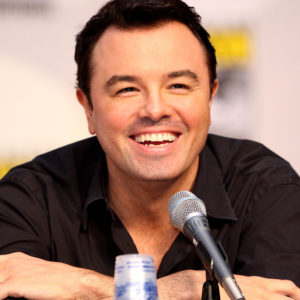
Next up, an interview with Seth MacFarlane, creator of the hit TV show Family Guy.
We talked about his personal 9-11 experience and how that day has influenced how comedy is presented on his show.
So Seth, what were you doing the morning of September 11th?
I was on my way to Logan International Airport.
I was giving a lecture at my college, Rhode Island School of Design, and was supposed to fly out of Boston.
And I was running late and had a few drinks the night before.
You know, my driver was racing to get to the airport on time.
I got to Logan, walked up to the counter, and the lady behind the counter said, you're too late, they just closed the gate.
And I said, all right, well, listen, why don't I just take the 11 o'clock?
Went and dozed off in the lounge, woke up about 40 minutes later to a commotion and went into the next room and saw the image of the tower after the first plane had hit.
Sat there, stared at the TV, and then the second plane hit.
And at that point, they announced what flight number, both flights, had been.
And I realized, oh my God, that was a plane that I was supposed to be on.
Just missed by seconds, essentially.
Yeah, yeah, by minutes, really.
First, that's extraordinary, because how often you even know someone for whom that's the case.
Second, that's the kind of life experience that makes people religious, you know?
And so, what went through your head?
How did I dodge that bullet is what you're saying.
Yeah, what was your state of mind?
Well, I was delighted to find that, not on that day, but much later, delighted to find that my rational convictions were pretty much intact after that happened.
When I really sat down and thought about it, I thought, well, you know, I've missed flights before.
I've missed a lot of flights before for being late.
And had, what, too many drinks before?
Yeah, yeah, done a lot of that, too.
And also, when you think about it, I mean, there's people who miss every flight that takes off.
I'm sure it's rare that a flight takes off with everybody on board.
There are people that are late for whatever reason or another, they have to cancel.
So, if not me, it would have been somebody else.
With all those things added up, pointed to a rational processing of what happened, and there's no need for a radical alteration of my life's philosophy.
I think that takes strong will, because many people use circumstances just such as that as a life altering mission statement that they must do good in the world.
When you think about it, how often does that happen on a daily basis, and we don't know about it.
I mean, the only thing different about this for me is that it was a national incident.
Who knows, the day before, I could have been in an instance where if I had crossed the street five minutes later, I would have been hit by a car and killed, but I just never knew it.
Or if you were on the freeway a little earlier, that might have been you in the car wreck instead of whoever you saw.
Exactly.
So here's something I'm curious about.
You know, you're not only a professional writer of comedic lines and comedic storytelling, but surely you're an observer of the comedic community.
You've hosted or at least organized comedic roasts, for example.
And I remember distinctly in the months that followed, the evening comedic talk shows did not have their shows.
Neither did Saturday Night Live, as though they were afraid to try to be funny in this tragic aftermath of September 11th.
And I was wondering, what's your take on that?
Well, part of it was network choice and the political choice, and part of it was just genuine shock.
You know, when I got back to Family Guy a few days after September 11th.
You mean back to the routine of what you were doing?
Yeah, yeah, back to the routine of writing the show.
I mean, that was an instance where, you know, we were writing shows that wouldn't air for a year, but even that group of comedy writers sitting in the room, staring at each other trying to come up with jokes didn't really feel funny at all.
Everybody was just in sort of a state of shock.
So even in that space that's outside the public eye, there was sort of an inability to write comedy.
Everyone was just too thrown for a loop.
You have to be unfettered and you have to be in a mental state where you're able to throw out jokes and just be in a good upbeat funny mood.
Okay, so there are two sides to this.
One is just, can you be funny?
Another one is, are there things about the incident itself that could serve comedic fodder much later down the line?
Either about the response to the event, President Bush, religion.
Yeah, you do start to wade into that territory.
And there was a lot of really interesting conversations when a few years had passed and we were just starting to be able to make very, very carefully constructed jokes about certain parts of it.
I remember one of the jokes was, there was a gag on Family Guy about a mentally challenged terrorist who rides a 10-speed bicycle into the World Trade Center.
And that was a visual slapstick gag that was funny and it was also somewhat justifiable and the terrorist was the source of the comedy and no one was making fun of the victims.
I think now enough time has passed that you are starting to see people get a little bit bolder.
You know, it's not like the Titanic where you can say whatever you want.
But with each year that passes, you just kind of feel it in your gutter or you don't.
You know, is this something that we're ready to joke about or not?
I mean, it surprised the hell out of us when we started to make little jokes here and there and it was received by the audience.
And I think people had started to certainly not put this behind them, but reach a point where they're able to see a lighter side of certain things and while at the same time, acknowledging the tragedy that was.
Is there a line between what's therapeutic for people and the perennial question of does it cross a line?
And obviously, really great comedy has to tread the line if not cross it every now and then.
Otherwise, you might as well just play patty cake and go home.
Yeah, exactly.
Yeah, it's something that you kind of get a sense of.
What's the mood of the country?
Are they able to handle humor about this yet?
And you reach that point with anything.
It took a while with 9-11 and there are still many things about 9-11 that you just can't joke about at all on television, certainly.
But we have over the years made several jokes on the show that are 9-11 related and they've gone over just fine.
It's really just being careful about what the substance of the joke is and to make sure that you're not wholly insensitive to what happened, but at the same time, it's an event in history that happened.
And we make jokes about all events in history, good or bad.
There are plenty of Nazi jokes, for example.
When you're in the Family Guy series.
Yeah.
And a lot of times, the rule of thumb, too, is that if it's skirt in that line and it's right up on the edge of that line and you're gonna upset some people, it better be hilariously funny and clever.
The trickier the area that you're joking about with regard to national tragedies and whatnot, the funnier the joke has to be.
Now, at what point do you indict the individual terrorists versus the religion that they represent?
Is there a trade-off there?
Because obviously, a terrorist on a bicycle, that's an individual, right?
It's not a billion people, it's a person.
So, when do you say, we'll now go for the entire community?
Again, it depends on the joke.
Adam Carolla has a pretty funny remark in his book that says, is there that much difference between religions and cults?
Every cult starts with peace and love and harmony and eventually ends with, bring me all the teenage girls.
You do have to blame the institution of religion to some degree.
Who are the most religious people on those plans?
Well, the guys slamming into the buildings.
Family Guy has certainly been pretty bold about making that observation.
I don't know that there are a whole lot of atheists going around doing that, but I could be wrong.
All right, so what are you gonna be doing this September 11th on the 10th anniversary?
Anything special or you're just gonna chill?
I guess to commemorate it, I'll do what I was doing then, getting drunk.
Anytime, anytime, Neil.
That was my phone call with Seth McFarlane, creator of Family Guy, getting his reaction to 9-Eleven.
When we come back, more of our StarTalk commemorative show of 9-Eleven.
But first, let's find out what Louis Black has to say about the tragedy.
If I learned anything from September 11th, it was that I survived trauma through my sense of humor.
That's how I deal with it.
A lot of people are lucky because they have religion.
But, I had a dreidel, so that was out.
Then, of course, there's patriotism, which I think is good in a lot of ways, except for a three and a half hour chunk before the Super Bowl.
But patriotism and religion are only good and only in balance when they have a sense of humor.
And when they don't, things go awry.
All we have to do is look at our enemy.
That's a group that does not have a sense of humor.
That's a group that is just snapped.
And that's what happens when you don't laugh.
You get all wound up in what you're believing in, and nobody's going, eh, and you're screwed.
But you can't deny the faith of these people that we fight.
It's absolute.
They believe that if they kill themselves, they will be met in heaven by 70 some odd virgins.
Imagine that kind of faith, to think that that would happen, when I haven't met one on Earth.
Welcome back to StarTalk Radio.
You can find us on the web at startalkradio.net, or like us on Facebook.
Where else but StarTalk Radio.
No show on September 11th would be complete without some comments and reflections from an architect.
For that, I chose Renette Riley of Renette Riley and Associates.
She's a New York City architect that's done all kinds of buildings here, and she's, you'll learn, is quite opinionated about building codes and what effect they have and don't have on the safety of buildings.
New York allows something called scissor stairs, which means that your two means of egress or three or four means of egress, which is what the World Trade Tower had, can be back to back, lined up, so all of your stairs were in one location.
So what happened in World Trade Tower one, the plane hit, went right through the drywall of all four stairs, so not one person survived above the impact floor.
I remember discussions about how they would do things differently given the challenges of getting people out of the towers.
One of them, I think, was build wider stairs.
Yes, someone somewhere said, people are 22 inches wide, all right?
Is that their butt?
Is that their shoulders?
I think it must have been after the depression or something, they hadn't eaten a lot, but if you take a standard person, a woman with a purse, you're much larger.
Now you take a fireman who's got equipment and a belt and carrying 70 pounds of stuff, they're not 22 inches wide.
So they've changed the code and they're now requiring 44 inches minimum width.
Well, if you divide 44 by two.
You're back to 22 inches.
Yeah, it's silly.
So that matters because in the trade towers, there were people coming down while rescue workers were going up.
One of the important things to think about is all of these codes were based on the fact that you would evacuate one floor above and below a fire floor.
There was never taken into consideration in the code a complete and total evacuation of a building.
If you'll notice in New York, there are not a lot of stair towers sort of outside of the building like you'll see in other parts of the country, and that is now going to be allowed more.
Broadway theaters have a lot of exterior stairs for rapid access.
Right, and that is designed knowing that the entire theater is going to be evacuating either after the performance or in an emergency all at the same time, which is not how high-rises have been typically designed.
So right now they're building the Freedom Tower.
And it looks like it's structurally different from other buildings I've seen constructed.
Is there some code now that says that the I-beams have to be at an angle or some kind of cantilevering?
There's a whole series.
One of the problems with World Trade Tower is that it was a bundled tube, which meant all the structure was on the outside, and it had very long spans back to the center of the building where those clustered stairs.
So everything was supported in the center of the building.
Right, and then there were long webbed trusses going to the exterior of the building, and the weak connections melted in the fire, and the buildings collapsed.
And one of the problems is that there was a pancake effect, and the entire buildings collapsed, I think, under ten seconds.
I don't know precisely what's going on at the Freedom Tower, but I believe that they are trying to intermittent stopping of that pancake effect, and they're also no longer allowing open web structural members.
Structural members are anything that's actually load bearing.
Right, the frame of the building.
One of the beautiful elements of the Twin Towers was how open the ground floor was.
Today, what you're telling me is you can't build a building that tall that could be that open.
I believe that you can, but one of the problems is, for instance, at World Trade Tower 7, is they have 200 feet of concrete around the perimeter of that building to stop car bombs.
And in fact, the developer said, oh, we went to the police department and they advised this.
Because the 93 bomb, it was a car.
It was a car bomb in the garage.
I just don't think that the police should be dictating the visual looks of a building.
And I think that that was what I considered extreme reaction to an event that was already preceded by a more extreme event.
So I think that architects will always try and find ways to create beautiful buildings, despite the codes.
But there are certain codes that you just can't compromise.
So after 9-11, I presume some codes were added to the New York City Building Code.
And were these added across the country?
The kinds of codes that were instated after 9-11, some of them are as minor as putting photo luminescent markings in the stairwell.
So when it's dark and there's no electricity, you can actually find your way out.
It's not that attractive, but it was an inexpensive fix.
The other thing that's major is the requirement of sprinklers in every building by 2019, even existing buildings.
So going forward, is there any way a building can protect itself from an airplane?
At what point are we going to say we're going to be airplane-proof in the architecture?
Well, I don't think that we should be airplane-proof.
Stuff happens.
More people are killed on the roads driving their cars.
So I think that there's a certain amount of risk.
I don't want to turn into a police state where we can't go anywhere without showing our ID and going through magnetrons and doing all these things.
I think the World Trade Towers, we're not that pretty.
I don't mind that we're doing new buildings.
I wish they were prettier.
But it's the loss of life that's important.
So if we can keep that to a minimum, then I think we've done our job.
That was my interview with Renette Riley of Renette Riley and Associates, an architectural firm here in New York City.
The World Trade Center Twin Towers rose a quarter of a mile into the sky.
I lived three or four blocks from them.
I saw them on fire.
I saw them fall, all from my dining room window.
Within seconds of each tower's collapse, I had no more than one inch of visibility outside my window as the opaque, thick dust cloud of pulverized concrete rolled by.
Right now, you look out those same windows, blue sky sits where the towers once were.
You know, these towers were like their own universe.
And I think about it often.
Think about the people who worked there, the tourists who visit the observation deck, the diners at Windows to the World.
I've eaten there many times.
They had one of the world's best wine lists.
I think of those who lost their lives.
And I try to find a peaceful way to remember the towers.
You know, when I do, I think of them as observatories.
On the top floor, I don't know if you knew, but you could type greetings onto a computer that would transmit that message into space by way of the North Towers radio antenna.
Who would listen?
Any eavesdropping extraterrestrials who happen to be looking our way.
You know, the towers were so tall that for someone at the top, the horizon was 45 miles away.
That's far enough along Earth's curved surface so that in fact, the sun set two minutes later for that person than it would for someone on the ground floor.
So in other words, if you could have run up the stairs one flight per second, you could literally have stopped the sunset.
You keep running all the way to the top and either you run out of breath or run out of floors.
In either case, the moment you lose the sun for the night, it would have gently set below your horizon wherever that horizon happened to have been.
Or take comfort in knowing that even though we lost the towers, that the sun will rise again each day.
That's something it's done a trillion times before.
This is Neil deGrasse Tyson signing off for StarTalk Radio, as always, but especially today.

 Become a Patron