Transcript
DOWNLOAD SRT
Welcome to StarTalk, your place in the universe where science and pop culture collide. StarTalk begins right now. Eugene. Hello. StarTalk veteran. Yes, yes, welcome back. And Jeff Jarvis. Jeff! You're a professor of journalism at the... City University of...
Welcome to StarTalk, your place in the universe where science and pop culture collide.
StarTalk begins right now.
Eugene.
Hello.
StarTalk veteran.
Yes, yes, welcome back.
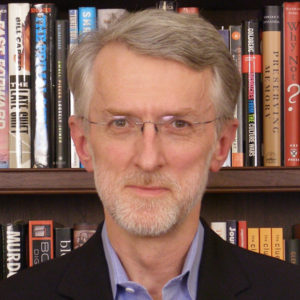
And Jeff Jarvis.
Jeff!
You're a professor of journalism at the...
City University of New York.
At CUNY graduate school.
Yes.
Yes, and this is not your first rodeo with us.
I am honored to be back.
Well, no, we love having you, because journalism is such a big part of what we think of as today's culture and society.
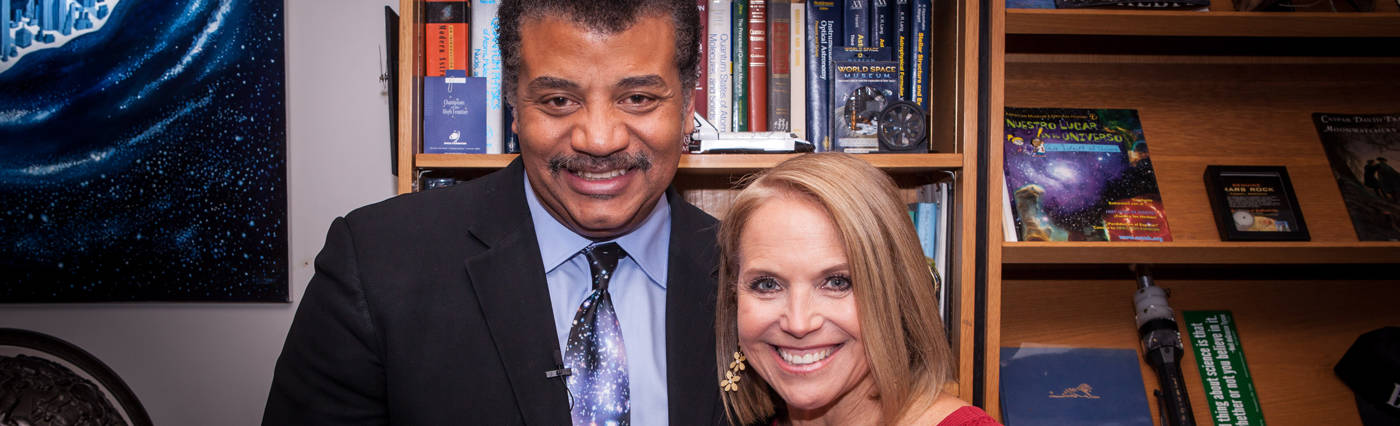
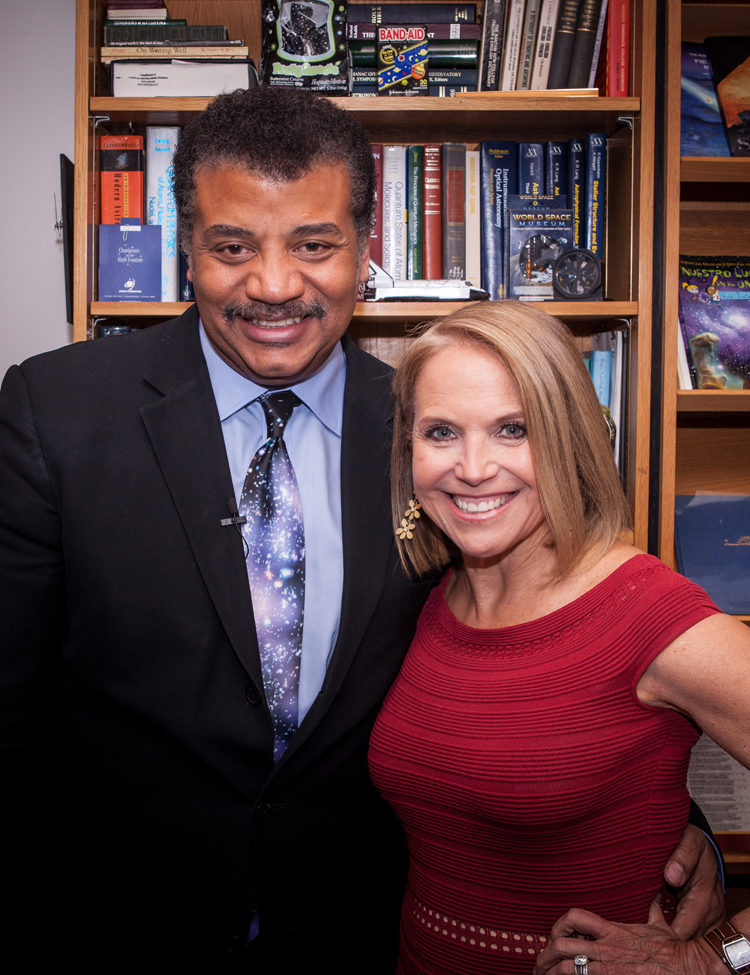
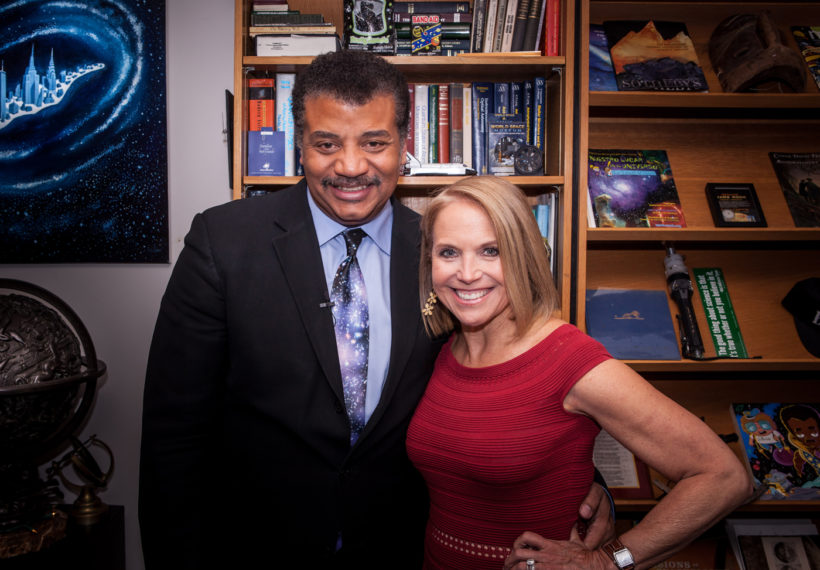
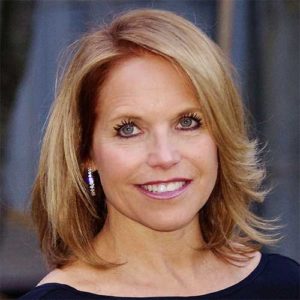
And we're gonna be relying on your expertise tonight, because of course my interview is with Katy Couric.
And let me ask you something.
I speak as a scientist that our goal is the search for what is objectively true.
And it seems to me that would be what a journalist seeks.
Would you agree?
It should be in theory, but life's too complicated, I think.
And we're not as smart as you.
Well, so, but clearly there's resonance between the two, at least in principle.
One hopes that we become more fact-based than we are today.
So I asked Katy whether her early life experience in school, whether her classes in science might have, knowing that science is trying to find out what is real in the world, whether that had any effect on her becoming a journalist.
So let's check it out.
Were there any memories, good or bad, with science teachers, math teachers?
Oh, yeah, actually I have a bad memory because Miss Poland was my eighth grade science teacher.
I got a D in science and kicked off the cheerleading squad.
Temporarily, I think I got kicked off for smoking in the bathroom once too.
So I probably had a very checkered cheerleading career, Neil, but I was a bit of a goof off in school.
All cheerleaders have a little bit of bad in them.
Yeah, that's right, we're a little naughty, Neil.
All cheerleaders are a little naughty.
Wait, so you were upset not that you got a D in the class, but that you got kicked off the cheerleading squad.
I was upset about both actually because my parents had high expectations for all their kids.
I was the youngest of four, and I think got by on my charm and personality a little more than my academic prowess, and.
Does charm only get you so far on the math test?
Yes, it does, you're right, you're right.
I still have nightmares actually that I am about to take a math test, and I haven't studied, or somehow I didn't go to class the whole semester, and suddenly I have a math test, or some other subject, and I haven't studied.
Do you have those dreams?
It's the old recurring math nightmare.
Do you have those ever?
You probably don't.
No, never.
You dream that you ace every math exam.
No, here's the difference.
I don't dream that I ace the exam, because I don't think of my learning in terms of grades.
I think of my learning just in terms of learning.
The pleasure, the sheer joy of learning.
Exactly, exactly.
Okay, I'm going to throw up.
No.
Really?
Yeah, no, no, yeah, just, but okay, so that's a bad memory.
Yeah, yeah.
So, how early was journalism on your sites?
You know, I always loved to write, and I was always a pretty good writer, and I also was a master procrastinator, so I wrote well under pressure.
And I remember when my teacher in junior high read my essay in eighth grade, and I was so full of pride.
And I forget exactly what it was on, but I remember the feeling of being appreciated for my good writing.
I love words and language.
I think also I'm a very social person.
You know, I'm very outgoing.
I like talking to people.
I like meeting new people.
And so I think it was the affinity for writing, but also for just human interaction that made journalism really a very good career choice for me because it satisfied both of these things.
Cool.
So she got a D in science, but she loved writing.
So that's a good thing.
And she became one of the most successful news anchors of all time.
She hosted the Today Show for 15 years.
Yeah, which is actually 5,475 todays.
10, 8 years, is that how that worked?
He's good at math.
Yeah, the new news anchor arithmetic.
She anchored 60 Minutes for five years.
CBS is 60 Minutes.
And she's hosted major programs on all the three major news gathering networks, broadcast networks, ABC, NBC, and CBS.
So let me ask you, Jeff, she said at the end she's a people person.
And I think she credits that, at least part of her success for that, in your experience teaching journalism, is that as important as she says?
People who know me today would not believe this, but I'm actually very shy inside.
And journalism forces you out of a shell.
You've got to pick up the phone, you've got to ask people questions.
Strangers.
Strangers.
And what it really requires, I think, is curiosity.
If you don't ask questions, if you're not curious to find out what the answers are, you probably need to be a good listener.
And frankly, journalists could be a lot better listeners than we are.
Yeah, I agree.
Yeah, you all suck at that.
Yeah, we do, yeah, we do.
Just to be clear.
But of course, you could have all the curiosity in the world, but if you don't know how to write, no one can use you.
It's about communication, but now, journalists will always say that they're storytellers first and foremost.
I don't agree with that.
Does it matter if the story is true or not?
We've got a whole segment on what is true and what isn't.
Yeah, we'll get to the truth later.
For now, no.
Yeah.
But I think we're more than storytellers now.
I think that journalism properly conceived is a service to a community.
And it has to understand how to give that community what it needs to know to function properly.
An important point now is, most people are not getting their news from a journalist who's speaking to them.
Most of them find it in a trash can, and they believe it.
Wow.
Look, they get the news off of a smartphone.
Right?
And so there's not a personality involved in that.
So I asked Katy about the evolution of news in the digital era.
She had thoughts about that.
You used to wait until the end of the day for the local news to find out what was going on in the world.
The evening news, maybe the morning shows, right?
Maybe your local newscast at noon, if they had one.
And it just wasn't everywhere.
And now it is constant, nonstop, 24-7, just boom, boom, boom at you all the time.
You're not breaking the story someone's iPhone is.
Well, no, someone's breaking the story that is then getting broken on an iPhone.
But now there are also so many, a whole panoply of media outlets and individuals who can also be reporters, right?
So it's just, I think, the sheer volume of information.
I always call it a tidal wave.
It's like a tsunami of information that washes over you every day.
That I think it's all happening so quickly, so fast and furiously.
It's hard to, I think, gain a really proper perspective and to think about events rather than just have them kind of go by you in a nanosecond.
So would you say that the ubiquity of information has diluted your profession?
With the profession you cut your teeth in?
I think it's made more opportunities for people who want to be journalists.
And I think it's, in some cases, ushered in less thoughtful journalism because of the time crunch.
That was so polite the way you said the less thoughtful journalism.
But you know, I think speed has trumped accuracy and people, I think, as a result, have shorter attention spans.
So, you know, I think it has definitely changed it dramatically.
Having said that, there's still a lot of very good journalism going on.
Incredible reporting, investigative reporting.
I think what's challenging for the consumer is there's so much of it.
Too Much News.
That's the name of my band.
It's not very good, but it's very informative.
Ha ha ha.
So Jeff, Jeff, is there such a thing as Too Much News?
There's a thing of too much information without context, too much information without some sense of why it's there.
I think right now with 24-hour cable news, we are bombarded constantly, not always with new news, with news that's repeated over and over and over again, but acting as if it's new, acting as if it's always breaking.
When that itself is a lie, it's not.
We need some way to pull back more and understand the context and have smart people explain to us what's going on, answer questions.
Maybe journalists should spend less time breaking news and more time fixing news.
Or maybe more people should become addicted to heroin and really just relax.
We're just probably a hundred million people found heroin away from everything being fine.
I remember I must have been in high school.
The local news declared that they would no longer be a 30-minute broadcast to lead into the evening news.
They would expand to an hour.
And people said, whoa, there can't be that much news in the world.
That's a lot of news.
And I remember they said, you think that might be too much time?
In fact, we had to cut things out.
And I knew they had to be lying.
And then a few years later, CNN would show up 24-7.
And now we have infomaniacs who can't get enough news.
But the problem too, Neil, is the business model behind.
We're taking the old mass media business model, which is built on eyeballs, eyeballs, volume, more of you than we can get, rather than a model of the internet, which is built on relevance and value and knowing you as an individual.
And so these two things are clashing horribly.
The old business model in this new world will inevitably lead to one place.
Cats and Kardashians.
And sex.
Not terror.
Just like a little bit of like, ahhhh!
A little of that, right?
We'll see.
I don't know that you can.
Well, so contrast for me this tension, I have no other way to describe it, between the actual content of an article and the headline that gets you to click on it, or in the old days to get you to read the story.
Clickbait.
Clickbait.
I'll tell you clickbait.
You want to hear clickbait?
I'd love to.
I will tell you clickbait, okay?
January 21st, 2000.
2001.
January 23rd, 2001.
What should have filled the paper's headlines that day?
Inauguration.
Inauguration of George W.
Bush, of course.
Because that would have been the day before.
That's not what was in the lower half of the New York Times that day.
Yes, it was.
In the New York Times, Pluto not a planet.
Only in New York.
You just can't get away from the story, can you?
That doesn't sound like clickbait.
That sounds like information being passed on through the New York Times.
No, no, just don't get me started.
It's more like, cats, cats, cats.
And when you click on it, you're like, there is collusion with Russia.
And then you're like, no.
He's got an idea.
Yeah, that's how we'll get real information to people.
Title everything, cats.
So, cats.
So, I wouldn't mind too much information.
Even if it's slightly out of context or in no context at all, provided it's at least true.
Yes.
But that's not what's going on right now.
So, it's not a tidal wave of news and information.
It's a tidal wave of disinformation or misinformation.
Well, it's a combination.
The problem is you have information, you have speculation, you have disinformation, and the problem is telling them apart.
I like that song.
It does.
Your band can do a very good cover.
I asked Katy about the sort of alternative media realities that people thrive in.
Let's check it out.
I can type any crazy idea into Google, and I will find every other website in the world that resonates with my crazy idea, and then I create a bubble without any countercheck on whether I'm connected to reality at all.
I think you can form your own reality today, right?
Your personal reality, and I think that's really scary, because you can find conspiracy theorists who believe that Sandy Hook never happened or it was a government plot to have better gun regulation.
I mean, all sorts of, the moon landing never happened.
It's crazy.
Flat earth, yeah.
Right, right, flat earth.
And so I think it's quite scary that you can find affirmation for all kinds of wild ideas, but more commonplace is that you find people who agree with you politically, who see the world from a particular point of view, and it's very black and white.
You know, you're Fox or MSNBC.
And it's, I think, as a friend of mine said, people are looking for affirmation, not information.
And I think in a democracy, you know, you have to have your ideas challenged.
You have to have a healthy debate, right?
But if you're just listening to people who agree with you and have the same opinion, how are your notions going to be challenged?
So Jeff, in my field, we call it confirmation bias.
Well, any field, presumably, we call it that.
It's the same issue, right?
You believe something is true.
You find things that support it.
You discount, discard, dismiss things that don't agree with it and you live happily in what you think is a reality.
So how do you deal with this?
I think it's a problem, and the argument is made that social media makes it worse, but I'm not sure that's true, actually.
I think that there have been some studies from the Pew Foundation that have found out that people who got their news online in the early days were more likely to know of an other side's argument than people who got their news offline.
The problem was...
Offline like broadcast TV.
Yeah, the problem was, of course, that way back when in a city like New York, we had tremendous diversity of voices, if not diversity in the newsrooms.
You had a dozen, 20, 30 papers.
Then you got down to one or two.
Then you got down to three networks.
And then you got down to cable news that just all repeats each other.
So we lost, I think, a certain diversity of perspective and viewpoint in this myth of objectivity in news.
But do you have a test to know if you're in a bubble?
An echo chamber?
How would you know?
Because people who are in a bubble don't know they're in a bubble.
You know, I've been thinking about this with Facebook.
What do you do?
How do you drag them out of the bubble?
Or out of the airplane.
If you push them into a lake and they float, they're not in a bubble.
Okay.
I think that what Facebook could do for us is to introduce us to strangers and make them less strange.
If you look at the kind of panic...
I think you're thinking of Grindr.
But I understand the spirit of what you mean.
What's scaring him so much is that the politicians come along and say, there are strangers coming across our borders.
They're going to steal your jobs.
They're going to steal your wives and your children.
And we let that happen.
And if we could just meet people in other circumstances and understand their world views and understand the perspective.
How do you prevent it?
I think diversity matters.
I think understanding that you have different perspectives in the world and how you serve those perspectives.
So education.
Education.
How about just, why don't we just say, for every hour of Fox News, you watch an hour of MSNBC.
Then you could have two wrong opinions.
Wait, so, Eugene, how do you get...
That's not an opinion.
How do you get your news?
I get my news through...
I have no, based on everything you said in the last 10 minutes, I have no idea where you get your news.
Any faith is...
I get my news from carrier pigeons.
So coming up, we will discuss what fair and balanced actually means when StarTalk returns.
Welcome back to StarTalk from the American Museum of Natural History, and we're talking about the intersection of science, science principles, and journalism.
Featuring my interview with renowned journalist, Katy Couric.
Check it out.
Why is it that today, we still have journalists who will give a fringe view half the column inches compared to the non-fringe view of science, leaving the public confused about what is true and what is not?
No journalist I respect does that.
I mean, I think there was a school of thought for many years that you did have to give equal weight to two sides of an argument.
And sort of on one hand, on the other hand, according to this expert, but according to that expert, it's a search for truth, right?
The truth is ultimately our goal, not one opinion versus another.
Now, there are areas where good and smart and well-meaning people can disagree.
As you said, politically, if they believe in more government, if they believe in less government, if they believe in higher taxes or lower taxes, I mean, there are areas of honest disagreement, which I think in those cases, it's fair to do that.
But when one side has no credibility and no basis in fact, then you do not give that person equal weight, if any weight at all.
So Jeff, when I think of this issue, I think, all right, you're gonna give 50, 50 column inches if it's on religion or politics or things that are strongly opinion-based.
If it's anything else, no, you don't do that.
And so I have to assume you agree with this.
So we had the-
The answer is yes.
The answer is yes.
Okay, fine, now speak, okay.
How liberal.
We don't have that methodology in journalism at all.
We certainly don't have that methodology in politics.
How do you bring that way of looking at things?
So we get to facts, we get to understand an extension of language and not just emotion.
I got this.
So let me add, I don't have an answer to you, but I have a element.
So in my field, in science, I do research and I have a result and I publish that result in a peer-reviewed journal.
That is not the truth.
The truth is only what emerges if other people duplicate that experiment and get kind of the same result.
And if all these experiments align and come out with the same general idea, we have discovered a new emergent objective truth in this world and there'll always be outliers because that's the nature of experimental measurements.
So now watch.
But what you guys do is, I publish one research paper, you come running to it and report that as the new truth.
And without any sense that no-
Confusing the heck out of the public because it doesn't agree with yesterday's truth.
Is cholesterol good today or bad tomorrow?
Right.
So maybe if we could take away healthcare from 22 million people five times, we would know if it was effective.
We'd have to try a few times not doing it.
That would be the experiment.
We would pick, we would divide the country in half.
We would kill some and let others thrive.
And then we'd be like, yep, that works.
Wait, so would you consider the case where, if we take climate science, for example, where there's the old world, by the way, when I speak of an emergent truth, if I ever use the word consensus, I'm not referring to opinion.
I'm referring to a consensus of observations and measurements, okay?
So it's not at that level about opinions at all.
So now you're going to report on climate change and you have the urge to bring in the climate denier.
Now you're not going to bring in the 99 others because there's no room in your studio.
So how do you go about doing this?
So let me tell you a little story about Google.
Six months ago, if you searched-
That's not what I thought would be the next thing to come out of your mouth.
I surprise you, don't I?
I hope it's a dirty story.
If you searched, you wait a while.
If you searched Google six months ago for climate change, you would have gotten, in our view, good results.
If your query was, is climate change real, you got half hinky results.
Why?
Because Google valued relevance.
People who asked that question clicked on that.
That must be good.
Well, what was happening?
There was a manipulation occurring.
The 99 crazy guys outside were raising up the bad results.
Now, if you ask Google, is climate change real, you don't get bad results anymore.
Bad in the scientific view.
Why?
Google has sided with science.
That's a big deal.
And they're doing it very quietly, but that's a big deal.
That's a new thing, I didn't know that.
It is.
So, this devaluation of facts, are you prepared to accept some of that blame as a journalist or is there some emergent other thing going on in the world that the rest of us should be paying attention to?
Oh, I think we should stand first in line being at fault.
Really?
Yeah, I think the journalists...
That's brave of you.
Look at it this way, Neil.
If our job is to inform the public conversation, and I'm not even saying which side you have to agree with or disagree with, but if you looked at the quality, the credibility and the civility of the public conversation in the last election, we failed the public.
Somehow or another, we have to figure out how to get the conversation away from pure emotion, though emotions matter, back to facts.
So it got so bad that people marched.
In support of objective truths.
Science.
There was a march for science.
But this is a stunning...
Did you march?
That that should even be necessary.
Russell what did you think about that?
So you're a scientist and people are marching in favor of my job.
Wow.
What is the world that we got to march for something that is true?
So coming up next on StarTalk, we talk about the bane of journalism today.
Fake news on StarTalk.
Welcome back to StarTalk from the American Museum of Natural History right here in New York City.
And we're talking about facts and journalism with renowned news anchor, Katy Couric.
And I asked her, if you're a young person today, can you even tell what is real news and what is fake?
Let's check it out.
Here's news and here's other news.
And one of them is invented in someone's basement and it's fake.
But I do not have the capacity to judge that.
And I think they're both journalists.
Who am I to judge?
I think it's a big, complicated issue, especially right now with fake news everywhere, with less ethical journalists, journalists with a small J putting things out there.
So I think it's a very complicated issue and I think it's one that the journalistic community is grappling with.
I talked to Marty Barron, who's the editor at the Washington Post, who's been behind some of the best journalism that's been done, I would say in the last couple of years.
And I said, what's wrong with doing a good housekeeping seal of approval or something along those lines that will say to people, this story, we followed certain rules, we had certain, we double sourced our things, or we didn't use anonymous sources, or we did, or this went through an editor.
Like certain values and certain protocols that are followed that will let a reader know this is a real news operation.
But then I guess it raises the question, well, who's going to make those decisions, right?
Who's going to say what news organizations are worthy of the good housekeeping seal of approval or good reporting seal of approval?
Jeff, so should there be a stamp of approval?
And if there is, who does the stamping?
No, because of the second answer, which is...
No, I don't trust you for a second.
What if it was myself in conjunction with Aerosmith?
Would that be at all helpful?
What we need instead is dialogue.
Democracy is discussion.
Now the problem today is, fake news is a terrible label.
Some of it is economically motivated, some of it is politically motivated.
But what I've come to see more and more is that much of what we're seeing today is outright manipulation.
So can you define fake news in this moment?
There's no one definition.
Some of it is economically motivated, click bait, I'll just get you to click on anything, the Pope endorses Donald Trump, that's fake news.
Some of it is downright manipulation.
Some of the Russian papers.
I had one.
There was, I commented on some news, I don't know how to get the details, but the headline was Tyson endorses Scientology.
That was, yeah.
Did they just spell it wrong?
That was the click bait.
And then the article was actually serious and got general facts right, but then people laid into them in the comments section.
Because all they read is the headline.
Yeah, well, those who went further down.
Yeah, yeah, yeah, laid into them saying, I'm never gonna come here again, because you guys, what the hell are you doing?
Was it MTV?
Yeah, no, no, yeah, something, no, no, yeah.
So, because we used to call the comedic evening news the fake news.
And we were, everyone was content.
It had some real stuff in there and some comedy and they would twist it.
But you knew exactly how, when and where they're twisting it.
And now, no, we can't call that fake news.
That's legit news compared to anything else.
Indeed, their job is to call BS.
That should be the job of the journalist.
Exactly.
So now, comedians, with exceptions, do a better job.
Of interpreting the world for us.
I do a pretty good job.
Go on.
Well, to help us assess the severity of fake news in our lives, we go to data journalist, Mona Chalabi.
Mona.
I'm told you've got some numbers for us.
I do, but this is kind of tricky because with thousands of news articles being published every single day, it's practically impossible to figure out exactly what percentage are fake.
And that's part of the problem, right?
This deluge of information.
But I do have some numbers for you.
So a recent study by Columbia University attempted to assess this by taking the most read articles during the US presidential election.
They took the top 20 that were fake and the top 20 that were real.
And when they compared the two...
They get this from Google data?
Like all websites, including The Guardian, have all kinds of analytics about how many people are reading our stuff.
So they used this data to take the most read ones that were real and the most read that were fake.
And when they compared the two, they found that the fake news had a huge presence, particularly on Facebook.
So to give you just one example, completely fabricated story, the story that Pope Francis had endorsed President Trump.
Now that story alone received almost a million likes, comments and shares on Facebook.
And it was believed by two thirds of adults who were showing the story.
Whoa.
Yeah, it's sad.
So tell me then about, was there an age dependence in this?
Because the younger generation has only ever known the internet.
Maybe they've got some inoculation.
Yeah, I can understand why you think they might fare a little bit better, but they actually don't.
So another study from Stanford University spent a year testing students' ability to sniff out fake news.
And they found that students got it wrong with, quote, stunning and dismaying consistency, unquote.
So for example, in one test, they were showing Photoshopped images with absolutely no attribution.
And most of the students simply accepted the fake images as real.
My advice is basically just don't trust anyone.
There's kind of a responsibility on all of us to research every single news source that we come into contact with before we simply accept it as fact.
Yeah, Mona, you're bumming us out here.
Is there any positive?
Sounds very doable.
What hope is there for society?
Well, I would say that actually, democratically, we should have always been doing that stuff.
And actually, the pursuit of this information is interesting in and of itself.
When I'm producing data journalism, I try to make the methodology interesting to readers, too.
So by talking through the steps of how I got there, hopefully that's kind of compelling.
Oh, there it is.
That's what I would try to do as an educator, so that a person becomes self-empowered.
Oh, OK.
Thank you, Mona.
Mona Chalabi.
So, Jeff, in my field, we have a built-in mechanism to ferret out people, scientists, who are guilty of fraud or neglect or sloppy work.
Do you have anything built into your system, a journalistic police force?
No, but we do have the public, and the public is now armed with the internet, with Google, with fax, when they want to use them, and they can come after us, and they do.
They do?
In what way?
Comments.
The problem is it's hard to separate real news from fake news.
It's hard to separate trolls from good critics sometimes.
But there are people there who I think will be on our case and will correct us.
And that's what we have to count upon.
It's the public itself.
Mona's right.
The public has a role in the dissemination of real news.
We also have, like, foreign powers and trolls and, like, conspiracy theories.
I mean, it isn't just, like, there's a concerted effort to mislead people, to create.
And then business interests.
There's a lot of stuff.
It's not just, like, people randomly believing things.
This is where empowerment of mind matters.
Yeah.
So then you have been inoculated against all these forces that would otherwise have the...
that would otherwise hand you their opinion without you even knowing it.
Yeah.
Yeah.
Coming up next with my interview with Katy Couric, we will discuss that line between opinion and fact on StarTalk.
Part two, StarTalk, from the American Museum of Natural History.
We're talking about presenting the news, and I asked veteran journalist, Katy Couric, where the line is between opinion and fact.
Let's check it out.
It's getting very murky, Neil, because now in social media, journalists often express their opinion, you know?
They'll just blog it out there.
Yeah, or they'll put something in a tweet that clearly has a point of view, or sort of a kind of undercurrent of snarkiness.
And I think there's much more latitude on social media to kind of express your opinion, which was really kind of considered a no-no when I was coming up through the ranks.
I remember in that era, I'd be watching the local news, you know, the six o'clock news or whenever it was, and at the end...
The opinions?
Yes, yeah, at the end, it was like, okay, we are now going to bring an opinion to you.
Sit down, get ready.
Or the opinion expressed is not necessarily the views of our station, right?
Exactly.
Yeah, that's what it said.
It was like a really big deal that you were breaking ranks there and framing whatever comes next as opinion, and now there's no such distinction.
Jeff, what have we lost?
Or is it still there?
Who does it?
Why?
The question to end all questions.
Answer me.
We've always had opinion in fact.
I think the journalists have to become more transparent about their own worldview and then judge them whether they are actually honest and truthful.
I think we lied to the public too long that we were objective, that we weren't liberal or conservative.
No, we all have our perspectives.
And indeed we need more perspectives in news to be able to understand more parts of this country and how the world operates.
So what you're saying is, in the era where you pretended you were neutral, even though deep down you weren't, that was an era where we actually trusted, we had more trustworthy news.
I mean, I'm putting what you said on its head because now we live in an era where you've been outed as a liberal source of commentary.
And okay, let's say that's a good thing, but now everybody gets outed and now everybody's just screaming what their political angle is.
But it's also turned opinions into facts.
Like it's everybody has like sets of facts.
Many communities feel they are not represented in media.
Thus media doesn't understand them.
Thus media can't speak to them.
And thus we don't have the opportunity to inform their worldview.
Yeah, but that means that all the news that they're seeing they think is against them because they don't think it's pure fact and objectively true.
All right, so should the future journalists say, here's the facts, now here's my opinion?
Should they do that?
Or should the opinion be infused in how you deliver the facts in the first place?
I think the world view was there.
I think it says, this is where I'm from, this is the respect of I have, judge me on that basis.
I think that's okay.
I once tweeted, this was like an amazing litmus test because the tweet had no point of view.
It just contrasted two facts.
And so it was after one of the horrific shootings in the schools and I said, Walmart, the world's largest gun seller, at Walmart, you can buy an AR-15 rifle.
But company policy prevents them from selling rock albums with curse words.
That's all I tweeted.
That's all I did.
And the people said, yeah, they ought to be able to protect kids from their, how could you say they shouldn't?
Well, I never said they shouldn't.
They said, it's a Second Amendment right.
It was First Amendment versus Second Amendment.
Freedom of speech, freedom of the carry guns.
And everybody started fighting.
I just sat back.
Everybody's got their own amendment.
And watch, they have their own amendment.
So we're primed to fight right now.
Here's the real question.
And he's yelling at me about it.
Yes.
He's agreeing with you so loudly.
I'm just saying this was just information.
Yes.
And people chose sides over the information.
So how do we get back to civility?
I don't know.
Maybe getting back to a point you said earlier, the task should be not handing someone an opinion.
Maybe not even handing someone processed information.
But go on an exploration with them.
Yes.
To then find knowledge together.
Yes.
Or insight and wisdom together.
By the way, Katy Couric is a master of this craft.
And she recently hosted a documentary on the National Geographic Channel that tackled one of society's most complex topics.
And I asked her about the success of that project.
Check it out.
I was noticing that virtually every day there was a headline involving gender in some way, shape or form and how it was impacting every aspect of society.
And yet I thought, gosh, I'm confused.
Like, what's going on here?
Gender identity.
I would be confused with that and sexual orientation.
And, you know, I made a few missteps.
I made a mistake on my talk show where I asked a transgender person an inappropriate question.
And people were very upset about the way I handled it.
And I feel like I'm a very open-minded, fairly well-read person.
And if I was really grappling with these issues, I thought a lot of other people probably were too, especially people of my age and generation.
So I thought, you know, let me explore this.
Let me try to understand it better and really kind of explore the origins of gender identity, how science affects our choices or our feelings, something deep within us that makes us identify a certain way, how intersex people have been treated throughout history.
Intersex are babies that have...
Oh, sorry, male and female sex organs, either externally or internally.
And then it's up to the doctor to decide where you send, which way you operate to commit.
More often than not, it's transforming a baby into a female because it's easier to remove something than to develop or create something.
And so anyway, it was a fascinating topic for me because I was learning in the process.
So what she did was she had a shared learning journey with the viewer.
Yeah, the role of the journey was...
By the way, when I teach a class, I try to do it that way.
Exactly.
It's an exploration.
If I'm just master of all knowledge and dishing it out, there's no shared experience there.
Neither is it good to yell at somebody and say, you're wrong, right?
No, but to yell at information.
Looks like you've done that before.
That works.
Just the way you did that, you've done that before.
You basked.
In my heart, in my soul.
You basked in that.
Right, and so that doesn't do any good.
It is a matter of mutual respect, of trying to get somewhere and understand someone's worldview and understand their perspective.
Again, I go back to this idea of the mass media.
The mass media presumes that we are all the same.
Needs us to be all be the same.
Same with mass marketing and mass manufacturing.
The internet takes us out of that.
Gigantic Google and gigantic Facebook are personal services companies.
They're not the same to any two people on earth.
But we still try to treat everybody the same.
We have to get past them.
So here's an interesting point.
I know in science we can come up with discoveries that may or may not impact culture and civilization.
If it does, then sometimes there's a dialogue that is kicked up in response.
Is it your goal to kick up a dialogue?
Yes, that's what democracy has to be.
And democracy, by the way, is a cacophony.
Part of the problem is we didn't hear that cacophony because it was filtered through very few channels.
We have to learn how to have the dialogue again.
We have to learn how to understand each other in our diverse viewpoints.
We have to learn how to value facts again.
We have to learn how to find people we trust to give us those facts.
I also think journalists have to break out of this presumption that everybody has to come to us and read our thousand word article to be enlightened.
I think we also have to go to Facebook and Twitter and Instagram and wherever people are having conversations and bring journalism and facts there.
Find out what they're wrong about, what they're confused about, what they want to know, what they need to know, and bring journalism to them.
We've got to be reaching out more as a service rather than as the manufacturer of an old product called content.
Do you think Facebook doesn't have any journalists on staff?
I've argued that Facebook should hire journalists not to create content, not to edit, not to compete, but instead to bring that sense of public responsibility to what Facebook does.
And Mark Zuckerberg has said this, that he wants to move from just connecting people face to face or among friends and family in a bubble to a community.
Yeah, I'd love to argue with strangers, not just people who are relatives.
I'd love to take the argument of climate change and bring it to a random person in Ohio.
Coming up, journalist Katy Couric shares a powerful personal story of her own.
Next on StarTalk.
Welcome back to StarTalk, featuring my interview with one of the world's most successful news anchors, Katy Couric.
In 1998, Katy Couric's husband, Jay, died of colon cancer, and Katy shared that experience with millions of people publicly on the Today Show.
And I asked her about that decision.
Check it out.
It was such a horrific experience, as you can imagine, and I think I felt so powerless during the course of Jay's illness.
And you know, I think we're both can-do people.
You see a problem, you fix it, or you try to come up with a solution.
But there was nothing, nothing, absolutely nothing that I could do.
I mean, I tried.
I tried.
Yeah, and I think after Jay died, I realized how much we didn't know, how not only how much we didn't know about this disease, but how little people knew about how to prevent it.
And so I thought if I could use this bully pulpit, the Today Show, and share with people who watch that show, not only really, I think they understood the pain that I had experienced, but help them avoid what had happened to Jay by sharing information, which is really what a journalist is trained to do.
So I decided that I was going to talk about it and use this very personal experience to change hearts and minds and to educate people.
So Jeff, should this be a responsibility of journalists?
Or is this an outlier here?
No, I think that journalists are human beings too.
I have my own personal experience, not as bad as Katy's certainly, but I wrote about my prostate cancer online and the operation, which means I told the entire world about my malfunctioning penis.
You cannot get more public than that.
Yet good came of it, right?
People gave me advice, they gave me support.
I got to encourage other men to get tested for PSA.
Have you done yours yet?
No, I'm looking forward to it.
And actually, Katy Couric got an on-air colonoscopy after a night.
On-air, I forgot about that, that's right.
Yeah, which increased the number of colonoscopies that people got by 20%.
Wow, so she did this and it was very warmly received by her audience, but also like ratings go up, right, when this kind of thing happens.
Is this, what is the ethics of that, would you say?
Oh, I can't believe for a second that someone would go through that kind of pain and exposure for cynical reasons of ratings.
And so I think that it was done only and strictly as a matter of generosity.
I mean, I've met Katy Couric too, and she's someone that people trusted, and she knew she could use that trust to convince people.
We know how many more people got colonoscopies.
We don't know how many lives were saved, but I have to believe some were.
That's worth it.
She used the public pulpit to inform people about something that mattered in their lives.
Isn't that the essence of journalism?
So if you're trying to communicate, let's say, try to communicate risk, all right, because this will kill you, colonoscopy.
You don't get your prostate cancer check, it can kill you.
So how do you distinguish communicating risk as a measured phenomenon from just fear mongering?
Right, and there's a continuum here, Neil, I think, where we see a lot of studies that come out where scientists, doctors say, get tested, don't get tested, and they're looking at it as a collective risk.
But I look at it as an individual, right?
I think that we journalists made ourselves kind of unhuman, not inhumane, but unhuman.
We thought we were above and apart from the world so much that we put ourselves in a role that said we're special.
No, we're not.
We're just people like any other people trying to learn life.
We have a job to do, which is to go and try to find the facts to inform that process.
So why is it that when I grew up and I watched the local news, and I'm very serious about this, in my single-digit year lives, so, you know, age four to nine, every night I would see the local evening news and it would begin with a house burning.
And I was certain I would not survive to adulthood that I would die in a fire, simply because of the statistics that...
And I even, when I was old enough, I did the calculation.
I said, all right, every day there's a house that burns.
How many houses are out there?
And when will that house be mine?
You would calculate that, wouldn't you?
Yeah, when will that house be mine?
Then I realized, okay, there's still a risk, but it's not as bad as I thought.
Meaning it's barely anything?
Well, no, yeah, but it was more than zero.
And because this was delivered to me every single time.
We go back to the business model.
This is why I concentrate my time now in journalism, trying to worry mainly about new business models for news.
Because the old business model, which worked pretty much okay in the old world, is a disaster now.
So local television news right now is fire after fire after fire, because of pretty orange flame.
Right, right.
What's cable news?
If it's not missing women in the islands and the old days are missing planes, now it's let's ruin democracy.
You know, what do we see happening to news because of the business model?
We've got to figure out new mechanisms to support journalism.
And it's not going to be just charity, and it's not going to be government.
It's got to be new ways that we are more efficient as a business and that we use our power responsibly.
And one of the dimensions is, in that power, is every now and then, if not most of the time, make it personal.
Not all the time, but when it is relevant to do so and not self-centered and egotistical, yes.
I asked Katy about that.
Let's check it out.
We know from psychology that you can give statistics or you can tell a personal story.
And the personal story has way more impact than just handing people numbers.
Oh, definitely.
I mean, I think that's-
Unfortunately, that's the case.
But if we recognize that's the reality, then let's do it.
And I think that's one reason my gender documentary worked.
I told stories of real people going through real situations.
And as Dr.
Oz said to me, it's hard to hate up close.
When you get to know people and our differences kind of start to dissolve.
So is it hard to hate up close?
Yeah.
It's an interesting concept.
Probably hard, but if you're maybe, I don't know, but if you're like four feet away, you're like, eh.
So what I learned from psychologists is that they have a term for this, the vividness effect, where your personal retelling of a story can overwhelm what might otherwise be numerical statistics to the contrary.
Or even if it's the same, you might not have paid attention to it, but you do when there's a personal story.
So like if like Pluto, you say Pluto is not a planet, but if I was like, Pluto's my son, people would be like, all right, it's a planet?
Yeah, basically, yeah, yeah.
You gotta keep bringing up the Pluto.
You gotta let it rest.
You gotta let it rest.
Yeah, get over it, get over it.
Pluto had it coming anyway.
It's my son.
Oh, so is it a bad thing, a good thing?
Is it just a reality and then you work with that?
Well, but here's what I think, as I've talked to you in this show, I press you to bring scientific method and facts and discipline to journalism.
But we can't forget that in the end of the day, journalism is about people.
Imperfect, screwed up, striving people.
And so we have to remember the humanity of that.
Not exploit it, not play just to the emotions, but remember that we're more imperfect than the world you deal in.
Jeff, you make a very good point.
I think no matter who you are, you can benefit by learning what science is and how and why it works.
Because there are methods and tools that are invoked to establish what is objectively true.
In the sciences, if someone comes up in front of you in a conference and says, you gotta believe me, this is what happened in the lab, I swear it's true.
No, bring me data.
Bring me the cold hard data.
And that matters for everything.
In fact, we shouldn't even call it science.
We should just call it life.
That is a cosmic perspective.
You've been watching StarTalk.
I've been your host, Neil deGrasse Tyson, Jeff Jarvis, always, Eugene Mirman.
Until next time, I bid you to keep looking up.
See the full transcript



 Unlock with Patreon


 Become a Patron