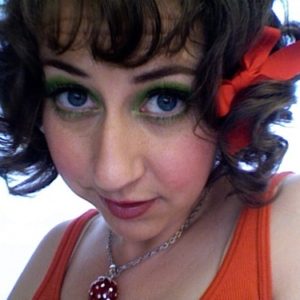
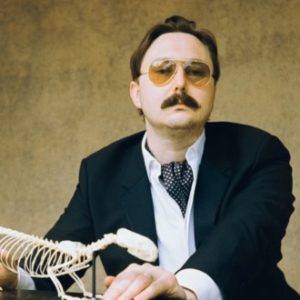
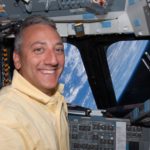
StarTalk Radio returned to the Bell House in Brooklyn, New York on December 18, 2011 for our second show in front of a live audience. Co-host Eugene Mirman was joined by fellow comedians Kristen Schaal and John Hodgman, while host Neil deGrasse Tyson interviews his buddy, astronaut Mike Massimino. Astro Mike talks about his two Space Shuttle missions to fix the Hubble Space Telescope, and Neil describes how Hubble changed our view of the universe. Learn about the history of Hubble, as well as the future of the James Webb Space Telescope. From astronaut diapers, to the dangers of pop rocks, to the importance of Lagrangian points, we explore how spacewalking above the Earth can be an extraordinary combination of comedy and cosmic discovery.
Transcript
DOWNLOAD SRT
Welcome to StarTalk, your place in the universe where science and pop culture collide. StarTalk begins right now. Hello, everybody. Welcome to an awesome evening of StarTalk Live. It is my great pleasure to bring out the host from the...
Welcome to StarTalk, your place in the universe where science and pop culture collide.
StarTalk begins right now.
Hello, everybody.
Welcome to an awesome evening of StarTalk Live.
It is my great pleasure to bring out the host from the planetarium, a fan of asteroids and dismissor of Pluto, the star of the show, ladies and gentlemen, Neil Tyson.
And now...
It's, and now...
I thought you might want to say hello.
I guess not.
Ladies and gentlemen, you know her from the television and bit parts in films.
Kristen Schaal!
And he was once known as that guy from The Thing, but now he is just himself the right...
Oh, this is a terrible intro, but it was fun to do.
Ladies and gentlemen, the amazing John Hodgman!
There's one empty seat.
There is.
May I bring my guest out on stage?
From outer space.
Literally.
No, he's from Long Island, but works in outer space.
Yes.
Ladies and gentlemen, two-time shuttle astronaut and hometowner, Mike Massimino!
Welcome.
It's Brooklyn in the house.
This is our second live taping of StarTalk Radio.
And thank you, Eugene Mirman, for the space, for your audience.
Sure.
We wanna bring the universe down to Earth.
And we've got an astronaut in the house.
I said, where's your astronaut outfit?
You can't wear that for us?
It's hard to get around on Earth.
It's all, only wear it in space.
I thought maybe have like a NASA hat or something.
No, I do have my flight watch.
That's been in space.
It's been in space.
My wedding ring's been in space.
Wedding ring, okay, your wife is actually in the audience.
She's out there somewhere.
Yeah, so no flirting, Mike.
And you're about to show me something on your back.
I do have an aviation related shirt.
Okay, so.
Oh, I thought you were gonna have like a shuttle like weird slutty tattoo on your butt.
No, no, no.
On Mike Massimino's back.
Don't stick your butt out, just stand up.
I'm not, this is the way it is.
I love the smell of jet fuel in the morning, all right.
So, this is StarTalk Radio.
You can find us on the web at startalkradio.net.
Starting with a Hubble Space Telescope.
I'd love me some Hubble.
Because Hubble actually was a man before it was a telescope, just so you know.
He discovered...
He was transformed into a telescope.
His spirit energy became the telescope.
Well, he was just like a nosy guy.
That's not why we named it after him.
A notorious peeping Tom.
Yes, the peeping...
Yes, who wanted to see people doing it in outer space?
So he discovered that the Milky Way is not the only galaxy in the universe, that we are just one island universe among many swimming in the cosmos.
One.
Two, he discovered that the universe was expanding.
When this telescope was designed, conceived and built, we knew that it would give us the data to tell us exactly at what rate the universe would be expanding.
And that was the very first scientific experiment that it conducted.
But there was a problem.
Uh-huh.
The telescope got launched, and it had a bad mirror.
In fact, it was a good mirror, it was just the wrong mirror.
It had a perfect shape, it was just the wrong shape.
That's like the mirror in my bedroom.
Oh, is that right?
Wrong?
What is it?
Is it a fun house mirror?
So when you set up a $2 billion telescope, and it has the wrong mirror, every sentence in the paper that talked about Hubble mentioned its price.
When stuff goes bad at NASA, they remind you how much it cost.
The $2 billion Hubble telescope.
And at that point we said, we got to put in some corrective optics.
But we need the right stuff.
In comes Mike Massimino, all right.
So you strapped like a two-way police mirror onto your back, and you just put it up there with some duct tape.
Yeah, it's like a space optometrist.
Duct tape, yeah, we'll get to that in a minute.
But let me just remind you, just some of the things Hubble discovered.
So it confirmed what we'd known all along, that there's super massive black holes lurking in the centers of galaxies.
It could find this out, because it could measure the speed of stars deep within, near the centers of the galaxies.
And they were going really fast, and you look at something that's tugging on them, and you don't see anything.
And you infer how much mass must be there in that small volume, you get a black hole.
We have a black hole in our center.
600,000 or so times the mass of our sun.
Other galaxies have, like, bigger black holes.
Some have a million times the mass of our sun.
Others have, like, a billion.
And so, I wanted a bigger black hole.
I mean, up ahead, like...
You have black hole envy.
Black hole envy is what, really, I've always had for our galaxy.
How powerful is the one here?
Well, no, I forgot the exact number.
It's several hundred...
It's about several hundred...
You don't want to go near it no matter what.
But Hubble confirmed that.
And also, it looked deep inside of gas clouds and confirmed that these are the locations where stars are being born, where they live out their lives, and they scatter the gas into the rest of the galaxy, revealing their families of planets.
So these are stellar...
Are you flirting with the universe?
Plus, Hubble nearby discovered extra moons orbiting Pluto.
We thought Pluto had one moon.
It's got two or three other moons going around it.
And then that resurrected the Pluto people.
Right.
He put the end to Pluto, basically, right?
I didn't do it.
I just...
I had the hammer and the nails for the coffin.
But how did the moons affect our appreciation or depreciation of Pluto?
Not in the slightest.
Oh, okay.
Very well.
People want to invoke the moon clause for resurrecting Pluto's planet status.
Right.
The problem is there are asteroids, very rocky looking, that they themselves have moons.
So, moon is not the prerequisite.
Venus, the size of Earth, our twin planet, itself has no moon.
You can't invoke moon status for a planet.
I don't know, not convinced.
So, Mike, they strap you on to the space shuttle.
At the outside?
Sorry, they strap you in to the space shuttle.
Thank you.
Thanks for that.
Thanks for keeping it a secret.
Jesus, cold.
I was going to go along with it, it sounded okay to me.
All right, so you go up there.
Space Telecom needs help.
Were you on the first servicing mission?
No, no.
The first servicing mission was back in 1993.
And you were just a babe.
I was just a babe.
Other guys went up there and did that.
And gals.
Okay, so...
I'm sorry, what was the problem with the mirror?
It had a beautifully...
It didn't reflect anything?
It was actually a piece of black velvet.
It was the wrong shape.
Like it was a rhombus?
What was the shape?
Was it like the spoons?
Everything was coming in upside down?
I remember when that thing went up there, and everyone on the news saying, those idiots did it again.
They threw some junk up there.
They can't reflect the thing.
But what was the problem exactly?
What was the wrong shape?
There's a shape for the optics of the telescope.
To work?
To work.
You seem to be dodging my question.
They had a perfect shape, but it was the wrong shape.
What made it wrong?
Perkin-Elmer.
Perkin-Elmer messed up.
It was probably the grinding of it.
First of all, let me just say, thank you for answering my question.
When they made it, it was like an aberration, they call it.
It was a slight aberration.
It was slightly off.
So the curvature of the mirror itself was wrong?
Just by a little bit.
That's enough, right?
It was enough to screw up the optics of it, so the visual spectrum, what you would see, what you were hoping to see was clouded.
Did that scraper guy get fired?
I don't know.
This is a government operation.
It's very hard to fire people.
Thank goodness.
But they had you fix it.
You went up and repaired it.
So they flew a $10 billion toilet up there to polish a mirror?
Wait, wait.
So, no, here's the thing.
In all defense of Hubble, just to put this in context, Hubble was ready to fly in the mid-1980s, okay?
But then we had the Challenger disaster.
So that put a delay.
By the time it did fly, it had computer chips from three generations earlier.
So not only did it have a bad mirror, it had computers from a generation you didn't even want.
It was like an Atari.
It was still Pong, and we already had Nintendo.
Exactly.
I get it.
I get it, Neil.
So no one ever thought in 1988 should we check the mirrors?
So in the first servicing mission, they not only put in corrective optics, they swapped out the computer chips and put in, back then...
They put it in in television.
We mean Mike.
Let's make it a sink.
No, no.
So Mike...
This is 1993.
Right.
So now Mike came in later.
He was eight years old.
Hubble was designed to be serviced by the shuttle.
Sure.
Because when new technologies, new detectors, something goes wrong, you send up the right stuff.
So, one of these five servicing missions was his first.
And tell me what you had to do.
Well, my first one, we replaced the solar arrays.
We replaced a power control unit.
We put a new instrument in there that...
You mean a PCU?
You sound like a guy ripping...
Like a car salesman ripping people up.
Really?
And there was this weird thing with the...
We checked the oil.
I really advise...
But this true code is going to protect it very well.
And we added rust proofing.
We got Congress to sign off on the rust proofing.
What year did you go up, may I ask?
Your first year.
It was 2002.
Years early when they fixed...
You mean this thing wasn't fixed yet?
No, it wasn't fixed.
They fixed it in 93.
And one thing about this mirror, Neil, is that even though they had this little problem with it, so it was kind of screwed up when they got the images back, oh, man, this is terrible, they were able to measure how bad it was.
Now, even if it would never actually been perfect, no matter how hard you try, it wouldn't have been exactly perfect.
But now they knew how bad it was, so when they made the correction, the correction was pretty close to perfect.
So if you want to be an optimist about it, because they were able to get this opportunity to fix it, they were able to make it better than it really ever could have been.
And what they did is that an instrument, what they did, they took one of the instruments out, about the size of a refrigerator.
Have I lost you yet?
So we pull this thing.
We pull the refrigerator.
We put the refrigerator out of the mirror.
I'm not selling the refrigerator.
There are a lot of things the size of a refrigerator.
Was this the PCU?
Was this the power?
No, that's something else.
You like that acronym, don't you?
I do, I do.
What was this?
This was, the instrument they pulled out was, I can't remember the name of it.
It was a refrigerator.
It was a refrigerator.
Oh, you know what it was?
It was the TCB.
Good enough.
But then when they put in was something called CoStar, which had corrective optics.
Just a second.
CoStar.
It put a bunch of lenses in the light path and corrected, just like those glasses you're wearing now.
Corrects the light that goes inside your eyes to your brain right now.
What are you, a witch?
So that corrects the light coming into your head.
And that's what we did with CoStar, corrected the light going into the telescope.
So they sent up a refrigerator called CoStar that shot a bunch of contact lenses in front of this thing?
Yes.
Perfect.
That's all I wanted to know.
We got to bring this segment to a close.
You are listening to StarTalk Radio live at the Bell House in Brooklyn.
StarTalk Radio, I'm your host, Neil deGrasse Tyson.
We're continuing the broadcast of our second live show, recorded at the Bell House in Brooklyn, New York, on December 18th, 2011.
Joining me that night were my co-host, the comedian Eugene Mirman, the comedians Kristen Schaal and John Hodgman, and Mike Massimino, a NASA astronaut who flew on two space shuttle missions to repair the Hubble Space Telescope.
2002, a young man named Mike Astronaut.
Did you walk to the spaceship in slow motion before you got on it?
Yes, because it was very scary.
You came out of the hangar, like the right stuff.
That's it.
Yeah, you try to look cool, because they're going to take your picture, but you're actually shaking in your boots.
But you want to try to look cool.
So which shuttle were you in?
The first one I flew on was Columbia, before the accident.
That's the one we lost.
We lost that one.
That was the next time it flew.
We lost it, right?
Right.
Yeah, the mission after ours didn't come back, unfortunately.
The second mission I had was on Spatial Atlantis.
So let's talk about the first one, if you don't mind.
I just want to know your mission.
What was your role on the shuttle?
I was a space walker.
Star captain?
Star captain, yes, I was a star captain.
Why didn't you?
I liked star captain better.
I wish there were whatever it was.
Why don't they call you sky walker?
I was the star captain.
Why don't they call you sky walker?
They could, they could call you that.
You were a space walker that was on your business card that year?
No, it wasn't.
You have all these great ideas now.
Where were you years ago?
This is a good idea.
I never, I never even thought.
Your role in the mission was to walk in space?
That's right, yes.
And otherwise you just sat back and read a book?
Like I can't help you with any of this stuff.
More, let me know when it's time to walk in space.
Everyone has their job, you know, an intruder.
You're an astronaut.
Why don't they call it walking in, you're floating.
Why don't they call it space floating?
That's really what it is.
I think it doesn't sound as cool as, what do you think sounds cooler?
Space walking or space floating?
Space floating sounds a lack of control.
Right, so space walking.
The guys on the moon got to walk.
They did the moonwalk.
But you're absolutely, we don't really walk.
The moonwalk.
Use our hands.
You're treading space.
No, you move around with your hand when you're floating.
You could try, that won't work so well.
You gotta grab stuff.
Right, you use your hands more than your feet, right.
Yeah, gravity's not working.
Space grabbing.
Space grabbing, see, but again, that doesn't sound as good as space walking.
Cosmo grabber.
Cosmo grabber, what was the first thing you said you said, StarCaptain, you should have stopped there.
StarCaptain.
Because the rest of this stuff now, it's not working.
All right, so you train, I understand, you train in a huge swimming pool in Houston.
Yes.
Because that's your kind of buoyant, neutrally buoyant, as they say.
Right, right, and you learn how to kind of move around.
You're floating, but not really, you're neutrally buoyant.
You got the idea?
Okay, okay, all right, so you know what that's like?
Yeah, I don't wanna brag, but I've gone snorkeling before.
Right, yeah, all right, but we're in a big spacesuit.
You've never been in a swimming pool in a spacesuit, probably, have you?
I don't wanna brag, but I've gone snorkeling in a spacesuit.
Have you really?
Okay, all right, so kind of like what he did.
That's what we do.
That's what you did.
But at the point.
All right, so I want you to understand, it's not just to hang out in the swimming pool.
There's a mockup of the shuttle and the Hubble telescope submerged in this pool.
Yeah, but he knows that.
He did that too.
That's why he went snorkeling in his.
No, I didn't know, but I didn't know that there was a phony shuttle down there.
So if they have a mockup.
A phony shuttle and a phony, that's gotta be a big pool.
It's big, it's big.
It's 200 feet long.
It's the largest pool in the world.
Longest pool in the world.
200 feet long, 100 feet wide, and 40 feet deep.
So what's the name of the shuttle that's on the floor of the pool?
The Nautilus.
Is it?
We don't have a name.
We're looking for one, though.
You come up with so many good names.
What would you call it?
That's a good name for the shuttle.
That's fantastic.
Sally.
Space shuttle Sally.
But you're, but see, here's, here's the thing that.
Davy Jones.
I got it.
Here's the thing I have to speak to and then I'll let other, other humans speak.
You're trying to spin this, like, I went swimming in a giant space pool with the Nautilus.
Did I ever say that?
No, sorry.
You guys are spinning like they have a huge swimming pool, as though that's exciting.
You went into space.
That's more exciting and terrifying to me.
So as someone who...
I was getting there.
I was just trying to find out how he figured out what to do in space.
No, I understand.
Okay.
Go ahead.
So now, so now you're in space.
And there's your task at hand, but meanwhile, Earth is floating by.
Yeah.
That was not happening in the swimming pool.
No.
So there's Earth.
How do you concentrate on fixing the Hubble when Earth is going by?
When at 17,200 miles an hour sideways, you get how many sunrises in a day?
16.
So, 16.
Yay!
16.
Sunrise, sunset, light.
Star.
Sounds very romantic.
Heat.
Cold.
And you have to be the repairman.
How does that work?
You really have to try to focus and not look around like, oh jeez, look, there goes Madagascar and there goes the telescope.
You know, there goes your tool.
You're not allowed to look?
No, you are, but you have to pick your moments.
So, my first spacewalk, I didn't look around very much, but my second spacewalk I did.
And looking at the planet is what you really remember.
But you have to also get your job done.
So, you have to pick your moments.
It's the most beautiful thing I've ever seen.
That's the stupidest question I have ever heard in my life.
How is he going to answer that?
Oh, it was ugly.
Earth from...
He might have said it's the second most beautiful thing, maybe as children, he'd be like, it's the fourth most beautiful thing.
Mike, I happen to know that Hubble is higher than the space station.
That's right.
It's like 300, how many am I?
It's 350 up.
It's 100 miles higher than when a space station flies.
So space station, they got nothing.
No, it's like an airplane.
They're down here low, they can hit clouds.
No, they're above the Earth.
But no, what we can see at the Hubble altitude is you can see the curvature of the Earth.
You can see it in its entirety.
It takes up your whole field of view.
You're not that far away from it, but you can still see the curvature of it.
It looks like a gigantic planet, and that's pretty overwhelming.
That's a good thing.
That it's round and looks like a planet.
Right.
It sounds to me like you were skeptical until that moment.
I guess they were right.
I was.
That whole flat versus round thing, you know, I was a little skeptical, but it is round.
It is a planet.
So just to summarize, from space, Earth looks like a planet.
It does.
And it's beautiful.
Do they factor in, because I would imagine your mission is timed down to the minute.
Yeah.
Do they factor in gawking time?
Like, we know this guy's gonna goof off for probably about 10 minutes.
I do add about 20%.
Do they?
Yeah, you're gonna be a little slower, you're gonna be looking around.
But when I did, after my first spacewalk, my buddy, the pilot on the flight, his name is Digger, we were classmates together, we trained together as astronauts, but he was a pilot, so he wasn't gonna get the spacewalk.
And he asked me, when you come in, I want you to tell me exactly what it's like.
So he came running the airlock, he took my helmet off, and he looked at me and goes, what was it like out there?
And I go, Digger, you never imagine, the Earth is a planet.
That's what I said to him.
But what I really meant, everyone knows it's round, but what I found that day was that my relationship with the Earth had changed.
Because normally what I had done, just like we did today, we drove here to Brooklyn or took the subway or walked with everybody to come here, it's kind of like a two-dimensional relationship with the Earth.
You know, go to a ball game, watch TV, whatever, you know.
And when I got to space and I looked and I could see the Earth like that, and I could turn my head, and sometimes if you're lucky, you'd see the moon, you'd see the stars, see all this other chaos, the sun, you can feel the heat as you talked about, the heat, the cold, all these changes.
You realize the Earth, we're not in this safe little haven that we think we're in.
We're really out there in the middle of all this chaos.
And so for me, that was proof that, wow, we really are out in the middle of space traveling around with all this other stuff, and Earth really is a planet to me.
And so they pumped THC into the atmosphere.
I was waiting for you to go, and that proved to me that the one true God is Allah.
I don't know, what is he talking about?
Tetrahydrocannabis, yeah, yeah.
Are you allowed to have wine in space?
Are you allowed to drink in space?
You can tell us.
You can tell us what you smell like.
I felt bad because I made a joke about your beautiful statement.
I think that's incredible, so here's to you.
It must be astonishing to feel that you are a part of a very small community of people who have seen the Hubble telescope in person, who have seen the planet from that distance.
I mean, I went to Yale, you know what I mean?
Wow.
Yeah.
And you snorkel.
So, I know what it's like, and I was a member of the Yale spacesuit snorkeling team.
So I know what it's like to belong to an elite community.
But that must be very strange to know that there are only very few people alive who have ever seen what you have seen.
Well, we feel very fortunate.
Sure.
Because there are a lot of people that would be very happy to go and qualified to go, but we're the ones that won the lottery.
You guys included.
Yeah, it's not like you guys worked that hard for it either.
We got lucky.
Do you ever argue with someone and just like when you're frustrated just go like, I've been to space.
Doesn't work.
It would on me.
If I ever disagree with you, feel free to yell, I've been to space.
And I'll be like, you win.
It won't work.
And you'll just say, and I've been snorkeling or whatever you come up with.
It won't work.
Wait, so Mike, so apparently you're not allowed to bring alcohol legally into space, but I have it on good authority that you smuggled your mom's biscotti.
No, I got it from Michael's Bakery right here in Brooklyn.
Michael's Restaurant and Bakery.
So you took biscotti up into orbit.
I did.
And did you bring it back or did you eat it?
We ate most of it and we brought some of it back.
And then what did you do with the, is it in a display at the deli now or what?
Actually, I'm going to hopefully see Michael from Michael's Bakery while we're here in town.
I'm going to give him a piece from SES 125.
That's been in space.
Everyone applaud until two weeks from now when that guy becomes an alien.
When Star Talk Radio comes back, we'll have more of our live show at the Bell House in Brooklyn, New York, with the comedians, Eugene Mirman, Kristen Schaal, John Hodgman, and NASA astronaut, Mike Massimino.
Welcome back to StarTalk Radio Live at the Bell House in Brooklyn, New York.
I'm here with my co-hosts, Eugene Mirman.
Eugene, thanks for again being on StarTalk Radio.
You're very welcome.
Yes, and we're here with Kristen Schaal.
And the delightfully mustachio, John Hodgman.
John Hodgman, hello.
John, that's a real mustache?
It is.
I can't just rip it off your nose.
Well, you could probably find a way to do it.
Since you look like a bouncer from the movie Roadhouse tonight, you could probably.
You could probably tear off my mustache if you wished to.
My guess, Mike Massimino, two-time shuttle astronaut.
So Mike, your space suit, if you gotta go to potty, do you have diapers, what do you have?
Diapers.
Yeah.
Diapers, we wear diapers when we watch.
I was just waiting for them to say something.
No, I'm waiting for you to clarify whether it's a diaper or it's like part of the suit, because right now, I'm like, really, it's not like a suit.
No, we don't pee our pants.
You wear, we wear diapers, yeah.
No.
Really?
Yeah, you know, it's how many of you go up in one person and then you're like, no, that's horrible.
Because you're walking out of the panger in slow-mo, you say, wait, let me change my diaper.
It doesn't go with the...
Oh, do you have like a table and then you cry and then they ask for that?
You change each other's diapers?
That sounds fun.
That sounds like a weird, naughty space party.
This went from like, we fix telescopes to like, can we do some shit?
Systematically.
You get a call from front of the shuttle saying, okay, it's time for you to go walk in space.
Is that the way it works?
Time to walk in space.
I thought you were going to say, time to wet your diaper.
That's what I thought you were going to say.
So you have to change from your jumpsuit or whatever, your speed suit into a spacesuit.
This is pretty good.
Layer by layer, what do you put on first?
You put on your diaper.
What, a cotton t-shirt?
What else do you put on?
What's on underneath that thing?
I'd rather you describe it.
I think it will be more entertaining.
No, I'm actually curious.
You think I'm making fun, but I want to know.
Diaper first.
The diaper goes first.
That would make sense.
I presume everyone would agree to that.
If the diaper went last, it would be a little silly.
The diaper goes first.
But adorable.
Wouldn't it be as effective?
You wear some sort of jumpsuit or something underneath or an undergarment.
When we go spacewalk, you're asking.
We put the diaper and then we put a pair of polypropylene underwear.
You know, like you wear maybe when you're hiking.
Sure.
Bike shorts.
Undergarment.
Very thin, but that's going to absorb the sweat from your body.
Keep you warm.
And it was the early 2000s, so you could still get away with that.
And then you also put on some biomed detectors, which is, you know, to know what your heart rate is doing.
So we have holes.
It's very specifically cut inside of that polypropylene.
And are you doing this yourself in a changing room, or is this like Tony Stark and Iron Man?
You got people walking all around you, getting all this stuff ready.
I wish I was.
We're not walking, obviously, but floating all around you.
For the diaper, you're pretty much going to do that on your own.
And do you call it a diaper, or is there a euphemism?
We have, it's called, no, there actually is.
It's the MAG, Maximum Absorbency Garment.
See, that's a good question.
Because just about everything we have has a special name.
We're getting somewhere now.
Let's quantify that.
So if the diaper weighs a half a pound, how much blue liquid can it hold?
Yes.
It can hold a lot.
A lot of liquid.
That's very technical for you.
We're definitely making it sound like he's going to Spacewalk to go to the bathroom, which is not the case.
Before you put the diaper on, the first thing you do when you wake up on the day you're going to Spacewalk, and you know you don't get an announcement.
You know this is coming.
It's planned out what day you're going to go to Spacewalk.
Mike, what are you doing back there?
Can we...
We're going to pull over.
How long are you out there?
Like when you're out there, like when you did the trip for...
Like four hours, right?
The Spacewalks themselves, the ones I were on were a bit longer because we were kind of slow apparently.
You have about eight hours or so.
Do you get snacks in your suit then?
No, we get a drink bag.
We have to be able to drink water.
Not even just water.
Like a master cleanse, I get it.
I've been doing the math.
I've just been doing the math.
So the eight hours, so that's six sunrises?
That's about a third, yeah.
Here's the funny thing, Neil.
No one knows.
It's impossible to figure it out.
No, you can figure it out.
Math!
There are no calculations that can do it.
You know when you're going, so morning of the Spacewalk, you first use the facilities.
Eat a good breakfast, because you're not going to be able to eat anything when you get out in your spacesuit.
What is a good breakfast up there?
Freeze-dried ice cream, right?
No, that's a, and Tang.
Do you want to try that stuff?
Sure.
Yeah, you know why?
Because we won't eat it.
That stuff's terrible.
That's why it's all for sale down here in New York.
That's why we sell it.
I mean, tell me if I'm wrong, but mostly it's dim sum.
Now it is.
We're an international program now.
And we have food from all over the world.
Mostly like the Juicy Bun with the soup, and you're like, oh, got to get the vinegar on it.
And you're like, oh, it's a little messy.
What's a breakfast for a space walk, though, seriously?
For a space walk, I like eating peanut butter.
Sure.
Peanut butter on a tortilla.
We don't have regular bread.
Because it makes crumbs.
Crumbs aren't such a good thing.
Oh, and that will punch through your chest.
And close.
You can inhale them.
Oh, really?
Get in your eyeball.
If you ask where it's from, that could be it for you.
The biscotti was very hazardous, although it was good.
So these are food hazards in space.
Food hazards.
Biscotti in the eyeball.
Yeah, anything that a little particle in space can...
When you say tortilla, you mean soft tortilla.
Soft tortilla, correct.
Soft tortilla and peanut butter.
So the peanut butter sticks to the tortilla.
Right.
There are no crumbs, and it all goes down your throat.
Right.
And it's still real food, though.
It's not food from a tube.
Yeah, no.
Yogurt.
It's in a bag, but it was yogurt.
Has anyone ever had Pop Rocks, or is it too dangerous?
Pop Rocks are too dangerous.
We have M&Ms.
I mean, we never thought about the Pop Rocks.
That would kill you.
I mean, a Pop Rock popping in your eye, you can't get it out.
And you have the big clumsy gloves that you're poking at your face.
Terrible.
That's an extra kind of propulsion.
It's like a sabotage thing.
Yes, that's how we'll get the Russians.
One bag of Pop Rocks in a space shuttle.
Spill, spill, spill, goodbye program.
You just go to the International Space Station.
You do your whole tour of duty with the Russians.
As you're leaving, see you, suckers.
Just to clarify, Eugene Mirman is Russian, okay?
Yes.
Oh, yeah, if you're listening to this, I'm not a terrible racist person.
Sorry.
Yeah, but you're not getting back into Russia.
Not with my Pop Rocks joke.
That will be Putin's last straw.
So Mike, so they dress you.
You put on your own panties.
Right.
MAG.
MAG.
I like that you've walked in space and were like, but do your nipples get cold?
So you're in space.
You got your space suit on.
Right.
What do you do if your nose itches?
With my nose, it's a problem.
I've got a big nose, so it can be a real problem.
Yeah, you can't see this on the radio, but this guy...
It's like Cyrano de Bergerac.
The scratching of the nose is...
Once they put your helmet on, you don't have access to your face.
So any itch or anything like that is problematic.
We do have a Valsalva device, because you have to be able to clear your ears, right?
And you can't get to your nose to clear your ears when you're snorkeling and scuba diving.
You know about that, right?
No, I understand.
So you can't clear your ears because you can't get normally like you would do to squeeze your nose.
So we have a device where you can actually ram your nostrils into this pad and create a seal and...
Oh, so it's built into the...
Yes, like a little pad that you put at the right place where you want it.
So you have a built-in nostril pad in your nose.
It's a built-in nostril pad.
You can use this Valsalva.
A B-I-N-P.
That's great.
So when you look at the earth and it's so beautiful, you start crying and it can soak up your snot.
You got to be careful with that too.
But, yes.
Do you want to go to the moon, Mike, and are you sad that you can't?
Well, you know, I feel like I'm in therapy.
No, let's leapfrog that.
Do you want to be on the first mission to Mars?
No.
Do you want to go to Mars?
Was I asking you?
We've been to the moon.
Eugene, we've been to the moon.
You and I have, but Mike hasn't.
You know what, Neil, a lot of people have been to Costa Rica, but maybe he wants to go, too.
I haven't been there.
Okay, Mike, you take, answer however you want, however.
Someone's been to Japan, why send a second guy?
Yeah, you're right, so do you want to know.
Mike, go where you gotta go.
Wait, so tell us.
Tell us.
Where are we going, the moon or Mars?
Yeah, I'd love to go to any of those places.
That would be really cool, but it's probably not going to happen for me, but I would like to see someone go.
I think we should go back to the moon and onward to Mars, and I think we will actually.
I don't think it's going to be me, but I would love to go.
You've been listening to Star Talk Radio live at the Bell House in Brooklyn.
This evening's topic has been all about space, about Hubble.
To my right is Mike Massimino, two-time shuttle astronaut at Hubble Repairman, and Eugene Mirman, my co-host.
Tell us who you've got here.
And Kristen Schaal and John Hodgman.
On StarTalk Radio, I'm your host, Neil deGrasse Tyson.
We're continuing the broadcast of our second live show, recorded at the Bell House in Brooklyn, New York, on December 18th, 2011.
Joining me that night were my co-host, the comedian Eugene Mirman, the comedians Kristen Schaal and John Hodgman, and Mike Massimino, a NASA astronaut who flew on two space shuttle missions to repair the Hubble Space Telescope.
We're done servicing the Hubble.
You gave it a new lease on life.
It's got about five more years.
No warranties, by the way, on the labor.
No more warranties on the labor.
You didn't get the Best Buy thing for like 90 bucks.
We'll replace your Hubble.
That's where the sales pitch stopped.
All right, we've got another telescope ready to fly.
It's the James Webb Space Telescope.
It is bigger.
It is better.
It will go farther.
The Hubble was 350 miles up.
James Webb is gonna be a million miles on the other side of the moon in one of the Lagrangian points.
Wait a minute, say that again.
How far is the Hubble?
How many miles?
350 miles up.
350 miles up.
A short walk.
A short space walk.
You could drive that in six hours.
The other one's gonna be on the other side of the moon?
Yes, so James Webb Space Telescope, we found a spot, a nice cozy spot.
It's in one of the Lagrangian points of the Earth, Moon, Sun system.
A Lagrangian point.
These are the places.
What does that mean?
Yeah, what is that?
It's true.
I'm building to say what that is.
All right, everyone.
Can you feel it coming out?
Shh, shh, shh, shh.
It's coming out of me.
Yeah.
Everyone relax.
He's flexing his biceps.
It's gonna happen.
The Lagrangian points.
So consider the Earth, Moon system.
If you travel to the Moon, you feel Earth's gravity for a while, but there's a point where you begin to primarily feel the Moon's gravity and you fall towards the Moon.
There's a point exactly between the middle.
That's Lagrange point one.
Who's it named after?
Lagrange.
So.
So.
So now you have to.
That's the only part we knew, Neil.
He's a French mathematician.
So the Earth and the Moon both revolve around a common center of gravity, which happens to be about a thousand miles inside Earth's surface in the line connecting the center of the Earth to the Moon.
So it's not that the Moon goes around Earth, it's that both the Earth and the Moon go around their common center of gravity.
And so.
I'm just saying how this goes.
So now, since they both orbit, there are places which will want to fall towards the Moon and want to fall towards Earth, but because the system is rotating, there's an extra sort of centrifugal force out there pushing it out.
So, when you want to fall this way and that way, there's another balance point.
And Lagrange did the equations for all.
He found five balance points.
Lagrange, one, two, three, four, five.
So, I wanted the last one to be six.
Sorry.
They were going to be a mystery.
So, all orbiting pairs of objects have five Lagrangian points.
So, there's the Earth-Moon system of Lagrangian points.
There's the Earth-Sun system of Lagrangian points.
One is exactly in between.
One is on the far side.
One is at a 60-degree angle leading and trailing the orbit that you're in.
These are cool spots.
What's good about them is that all the forces of gravity balance.
So, you can build structures there that can be stable on huge scales without gravity destroying its integrity.
How does gravity work again?
So, the James Webb Space Telescope is at the Sun-Earth L2 point, which is a million miles on the other side of the moon.
And there, it is tuned to see light emanated from the birth of galaxies in the early universe.
That light, when emitted, was visible to the human eye.
But since then, the universe has expanded, stretched the wavelength of visible light so that it is now out of the range of the visible and deep in the infrared.
So, this telescope is tuned to the infrared so that it can see objects being born at a time when it was emitting visible light.
There it is.
That's what I figured.
So, Neil, you're telling me that it was visible to humans like back in caveman days and they like drew it on the wall and that's how you know?
Okay, so no, caveman was like 30,000 years ago or so.
It was about 4,000, but whatever.
We differ.
It depends on what book you read, yes.
The King James Bible.
No, caveman was not long enough ago for any of this to be relevant.
They were just 30,000 years ago.
That's nothing.
That's a trillion seconds ago.
Okay, so there wasn't humans that saw it, but they're...
Oh, no.
If humans were around at the beginning of the universe, you would see these bright, beautiful, visible light galaxies being born.
But over the 13.7 billion years that have elapsed since then, that light has been redshifted from the expansion of the universe.
And if you want to see what's going on there, you need a telescope tuned to look where the action is.
And that's what the James Webb Space Telescope will be designed to do.
And is it named for the Senator, Jim Webb, from Virginia, because he made it himself?
Who's it named for?
Yeah, so, it's a little odd.
James Webb was the head of NASA during most of the Apollo era back in the 1960s.
So it's an homage to when we actually used to leave low Earth orbit.
I'm glad we're done with that.
What?
Come on, we saw what's out there.
It's boring.
So, Mike, let me end with this, Mike.
If it's a million miles out, you ain't going to repair that.
No.
No, I don't think.
No.
The million mile we never sent anybody.
How long would it take to run that far?
In a spaceship.
Do you have to send out a generation ship, like astronauts raised on a ship?
For those kinds of things, you need really fertile people, you know, so that they can produce generations that will follow.
It's not really that far.
You get there in a couple of weeks.
It's not far at all.
You were saying to Mike that he would never fly out to the James Webb Telescope.
It being a million miles beyond the moon.
So explain why not.
Well, because we're not equipped to send astronauts that far.
First of all, we don't have a spaceship that can leave low Earth orbit, and we haven't had one since 1972.
That is 40 years ago.
That we know of.
And another problem is the telescope costs some X number of dollars.
Sure.
We'll just say X.
It may cost more than that to send a human being to fix it.
So you might as well just build another one and send it out there too.
This is the economy of space travel at the moment.
So forgive me, but how are we getting the James Webb Telescope up there?
The telescope is not carrying a human being.
We easily get other things out of low Earth orbit.
We have a mission going to Pluto right now.
Why?
Yeah, why?
I make fun of it.
To just tell it it's not a planet.
Yeah.
Commence mocking sequence.
Go.
You've been listening to Star Talk Radio, brought to you in part by the National Science Foundation.
Tune in next week for the second half of our live show, recorded December 2011 at the Bell House in Brooklyn.
Until then, as always, bye.
See the full transcript




 Unlock with Patreon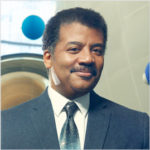

 Become a Patron