We start with one of the most inciting questions: if we had an ocean or bathtub large enough, would Saturn float? Neil tells us about the interplanetary workings of Saturn and why a “piece” of Saturn would float in a puddle of water. You’ll hear why Saturn’s rings might only be temporary. We discuss the density of water and the science of building boats. Discover more about the Titanic and the density of ice.
Then, we explore the world of neuroscience. Neil tells us why he loves tracking the progress of modern-day neuroscience. We ponder if psychologists will eventually be replaced by simple brain adjustments once we can locate what parts of the brain cause certain emotions and behaviors. Find out the history behind the phrase “we only use 10% of our brains” and how it’s been flipped from the original meaning. We also explore how the brain gets in the way of studying itself.
We discuss if Jupiter qualifies as a “failed” star. Find out what our solar system would be like if it were a two-star system. Learn more about thermonuclear fusion. We dip into tidal science and investigate tidal bulges, the Moon’s relationship with the tides, and we explain why the Earth is actually traveling “through” low tide and high tide. All that, plus, Neil shares why putting humans on the Moon was quintessential for us to truly understand Earth and why there’s still valuable cosmic perspective we’ve yet to encounter.
NOTE: StarTalk+ Patrons and All-Access subscribers can watch or listen to this entire episode commercial-free.
Transcript
DOWNLOAD SRT
From the American Museum of Natural History in New York City, and beaming out across all of space and time, this is StarTalk, where science and pop culture collide. This is StarTalk, and I'm your host, Neil deGrasse Tyson, your...
From the American Museum of Natural History in New York City, and beaming out across all of space and time, this is StarTalk, where science and pop culture collide.
This is StarTalk, and I'm your host, Neil deGrasse Tyson, your personal astrophysicist, and today is Cosmic Queries, planet edition.
But we don't just stick to planets.
This one is planets and stuff.
And today, I've got Paul Mecurio with me.
Paul.
How are you?
Welcome back.
Thank you.
Damn near irregular.
Please, that's all I want to do.
No, I didn't call you irregular, arregular.
Did I pronounce that?
No, actually, I kind of am a little bit, but we can get into that later.
I have a couple of questions about how I can fix that, but we'll deal with that later.
Fix the irregularities.
Great to have you on this.
And our normal format is we solicit inquiries from our fan base on different platforms and the questions come in.
I haven't seen them yet.
This is not stump needle day, but if I don't know the answer, I'll say, next one, please.
I've never seen you have to say next one.
No, I usually have something to say about it, even if I don't fully know the answer.
Just to tell people, did we first meet on, it's Stephen Colbert.
We first met at the same program.
Because you're the warm-up guy.
Yeah, I warm up on that show.
I was a writer on The Daily Show.
Oh, that goes even further back.
So yeah, and then the Colbert Report.
And I just came to say I was a big fan once.
You were very nice.
And then I came back the next time.
I asked for a loan.
You said, no.
Mr.
Big Shot doesn't have any extra money.
And then you were nice enough to come on my podcast, which has still gotten like one of the top listens.
Really?
Excellent.
Yeah, we talked about Dark Matter and all this other stuff.
And then you asked me for money for that.
I'm like, that's inappropriate.
I don't have any money.
You have?
No.
So yeah, so we go back.
Yeah, so it's great.
It's great to have you and see.
And we are reporting now from YouTube, New York City, in the Google building.
And the YouTube production space.
And so they're kind enough to...
So I miss all my books behind me.
Maybe I can have like a plastic version.
We just slide it in.
You could have them Photoshopped in later.
And it's right above the Chelsea market.
I got like a ham sandwich in my apartment.
Oh yeah, you can't walk through without buying food.
I know, exactly.
I don't know why any skinny people exist in this building.
That's not possible.
There's actually a Weight Watchers office here.
It's pretty weird.
But yeah, it's great to be here.
And it's a really cool space.
I didn't know this was here.
And I always say, and I'm gonna say it again, if I had you as a science teacher, I'd be doing science today.
Really, seriously?
I say that, I don't...
Right, Carol?
Yeah, that's my wife.
And because you make it accessible, your personality, it comes, it brims with sort of, you love it, and you explain it in a way that's interesting.
He said, when you're in love, you have to tell the world.
I had a eighth grade math teacher, this big hulking guy, he smoked in the class, and he was like, and we made a battery.
Like, that was the big thing.
Okay.
No, you put the thing over there, it's like this.
It's like, he was like one step away from going off track betting, you know?
And I just remember being intimidated by it, and I think people are very intuitive from a young age and can sense if somebody cares or doesn't care.
Oh, yeah.
And he did not, and that's why I think you're so great at it.
Oh, well, thank you.
Yeah.
And just, look at me.
I love you, man.
I love you, man.
It's not your fault.
It's me, it's me.
Just a little bit back at you, I deeply respect your profession.
The people who take information in the world, reshape it, hand it back to you in a fresh perspective and make you laugh at it.
These are very special mirrors.
And I don't know how bearable society would be without them, without the comedian who occasionally shows up and said, you realize this is what you've been saying?
And oh my gosh, oh.
And so this is why comedy is a fundamental part of what we do on StarTalk.
Yeah, well, thank you.
I mean, when I started on The Daily Show, we were just this little show and we were just doing jokes.
Right.
And didn't really say, okay, we're gonna have an impact on the world or whatever, right?
And then things started to happen and we were always factually based in our jokes.
In the comedic, yeah, sure, sure.
And so you have to start with the premise.
So we were delivering the news with a non-biased point of view and just saying, this seems a little strange to you.
So over time, people come up to us and go, I only get my news from The Daily Show.
I go, well, first of all, we're a bunch of idiots.
So you say, what the hell's wrong with you?
Read a couple of newspapers.
But it did end up becoming that.
And then from that, The Colbert Report, The Late Show, John Oliver Show, Sam Bee Show.
Yeah, the whole universe.
Yes, it's all sort of carrying that mantle of, let's call people to the carpet.
And so, yeah, so thanks.
Yeah, it was a nice byproduct of trying to have some fun.
And we get in so much trouble, too, because we would go too far with jokes.
The President Network would yell at us.
But anyway, we'll talk about that another time.
So what do you got for me?
You got planet questions.
I got some planet questions.
All right.
That's some very good ones and interesting ones and questions and answers I want to hear.
So let's start with a Patreon person, Ryan.
Oh, yeah, I keep forgetting we do this.
Yes, he says.
We're just kissing up to the Patreon members.
Yes, exactly.
Ryan, you are so handsome.
That shirt you're wearing looks fantastic on you.
Write a check.
Is it true that if one had an ocean large enough, Saturn would float?
So, this is often said.
I've said it.
Colleagues of mine have said it.
Let me restate that in a more scientifically precise way.
All right, because technically that can't happen.
All right, you can't get a bathtub.
It would be one hell of a bathtub.
It would be one hell of a bathtub.
I'll tell you why that couldn't happen in a minute.
So, the scientifically precise way to communicate that same information is that the average density of Saturn is less than the density of water.
And anything whose density is less than water will float.
So, Saturn, so the technical way to say it is if you scoop out a piece of Saturn, it will float on a puddle of water or in an ocean.
It doesn't matter.
So, that's the way to say it.
It's more fun to say get an ocean or bathtub big enough, Saturn will float.
And I've said that publicly, lamenting that when I was a kid, I knew this was true about Saturn.
And all I ever had in the bathtub was a rubber ducky and I really wanted a rubber Saturn.
Because with us, so later in my life, we come back to my office, someone mailed me a rubber Saturn.
Is that right?
Yes, I now have a rubber Saturn.
And I can't, I wanna leave it in my office.
I don't wanna take it home to my bathtub.
But, but I can't.
Honey, what's a rock doing in the bathtub?
It's a long story.
So, I've got a rubber Saturn.
So the problem is, if you had a lake bigger than Saturn to put Saturn in, the whole lake would collapse into Saturn.
Wouldn't the water just spill over onto the shore when you put, when it displaced the water?
No, no, no, you're thinking that they exist independently of each other.
Saturn will pull the bathtub into it and it'll become part of Saturn.
Oh, it's got the suction power.
Unless, well, yeah, it's called gravity.
It's an old joke.
It's a little condescending, you didn't need to say it like that.
There's no such thing as gravity, Earth sucks.
See, that's the old joke.
Nice.
So, what was I, where was I?
Oh, so the problem is you can't have a body of water bigger than Saturn that's flat, that you're gonna put Saturn in.
Because the body of water would become a sphere and they collapse, they fall into each other.
They each have mutual gravity that they'll attract each other.
So, it's not a doable experiment, but it does get the point across that Saturn is lighter than water.
Plus, Saturn would need a life jacket in case something happened.
No, that's what the ring is for.
That's his little life preserver.
Getting out of comedy now.
That's great.
So, it is in fact true, it is the only planet for which that is true.
Every other planet would sink.
And it would absorb all the water.
And by the way, Jupiter is very gaseous and its density is close to that of water, but just a little bit above it.
Now, how do we know this about Saturn?
Oh, yes, so what you do, that's great.
Do we go there?
No, so you know how big it is.
So, what is density?
It's how much mass you have in the volume that you occupy.
So, it's literally mass divided by volume.
Grams per cubic centimeter, pounds per cubic inch.
That's density.
Those are the units of density.
So, we know the size of Saturn and we know the mass of Saturn.
We can measure it from its gravity and other things.
You divide those two numbers, you get a number that's less than one in the right units.
And the density of water is one.
Yeah, by definition, basically, yeah, yeah.
So, we know.
Yeah, it'll float.
And here's something I figured out about myself just a couple of weeks ago.
I was swimming a couple of weeks ago and I was floating more easily than ever I have in my life.
But you had a lot of hair, you needed a haircut.
No, I'm just a little chubbier than I was when I was younger because fat floats and muscle sinks.
That's the thing, it's about the density.
How much mass are you packing into a volume?
So why do you think you float?
You can say, how much does a whale weigh?
Well, a whale weighs nothing.
It's neutrally buoyant floating, swimming in the water.
You have to ask how much mass does it have?
It's why the biggest animals that ever existed exist in the water.
They don't have to hold up their own weight against the gravity on earth's surface.
The whale is the biggest creature that ever existed in the history of life on earth.
And yet it can float.
Because its density is about the same as water.
If you are less than water, it would have to use energy to stay under water because the water would want to make it float.
Which just happens to human beings.
Well, if you're chubbier, your body will float, okay?
Will float very well.
And you'll take energy to go down below.
If you are more dense than water, you will sink to the bottom and it'll take energy to stay afloat.
If you're about the same density as water, you can move through the water with no, like the ease of a trapeze or however that line goes in the song.
So following up on that, here's something interesting, ready?
You know who the smartest person in the world was?
You raising your hand?
One of the most clever people in the world was the first person to figure out you can build a ship and everything you make the ship out of is denser than water and it can float.
You can build a ship out of steel and have it float.
That does blow me away when I see it.
This changed, it changed warfare.
And was it a specific scientific...
Wait, Paul, can you pause on that sentence, please?
It changed warfare.
You don't have to build your boat out of wood, which is susceptible to cannonball fire.
You can build it out of steel.
How do you get it to float?
Because the part of the boat that sits below water is mostly air.
The hull of the ship sits below water.
So what matters is not that steel is heavier than water and air is lighter than water.
It's what is the average density of that which you have plunked in the water?
It's the total volume divided by the total mass.
It has less mass than you think because most of it is air.
An aircraft carrier, most of its volume is air.
So it's able to flow because of the relation of density of the water.
Correct.
Anything that's floating is less dense than water on average.
Period.
And do you think that that was by mistake, a byproduct of something else, that somebody figured out steel can float?
No, they were making canoes out of wood because wood floats.
And why would you make it out of anything else?
But then the next step was steel.
In order for it to float, it has to have a significant amount of volume underwater so that the air can represent this.
So, the larger the vessel, the deeper the hull for the most part?
Generally, it's not going to just be skimming.
It's going to sink in.
It's going to respond to the fact that there is steel there.
And then it'll come down to the level that's just right for what the weight is.
If you look at container ships, they have these lines painted on the side of the hull, depending on how much gross weight it's carrying.
So, the more weight it's carrying, the heavier the thing is, the total density goes up, and it's going to sink a little lower into the water.
Got it.
And they know when they reach their max capacity.
So, ice is denser than quark.
That's counterintuitive in looking at ice versus quark.
Well, quark is from a tree, so you know it would float, but it's less dense because ice, evidence of that is quark will float almost entirely above the water.
There's hardly anything sunk below it.
Whereas ice, 90% of it is below the water.
Which is why you have icebergs.
Which is why you have the iceberg problem.
Yeah.
And James Cameron in Titanic, he did it right.
Did he?
Basically, when they hit the iceberg, it's just a little thing in the water.
It's a little thing.
Sticking out of the circle.
Just a little thing sticking out.
90% of it is underwater.
That's what cut up the side of the hull.
Oh my gosh.
Whereas, in the first Titanic movie, the black and white 1940s or whatever, there's this huge iceberg out there.
Oh my gosh.
Then it has a hand that reaches out and cuts it.
It's got a knife.
It's in a knife fight.
It's like West Side Story on the ocean.
Once a jet.
Oh, he's a jet.
In fact, this has contributed to why it was one of the several reasons why it was so hard to notice.
It's actually small.
Dark.
It was foggy.
It wasn't foggy, but it was...
Somebody was watching YouTube on their phone.
We're going to move on.
That's fantastic.
My favorite anachronistic quote is a quote from Abraham Lincoln where he said, Never trust anything you see on the Internet.
It's a meme.
You just got to love it.
Coming from him, he's got a lot of credibility.
I'll give it to you.
It's a man that knew what the hell he was talking about.
The stovepipe hat, questionable choice there.
That and a buckle on a hat.
What do pilgrims need a buckle on a hat for?
It wasn't a pilgrim.
This is 200 years later.
Would you get your time period?
It was a top hat without a buckle.
But this is where my brain goes this way.
Answer that question, smarty pants.
Why do you need a buckle on a hat?
Somebody letting their head out?
Well, no.
You can squeeze it down in case the wind blows.
It tightens up on your brim.
But the wind and the density and the volume and the wail.
Oh, I taught you too much.
You've created the master.
You've become the master.
You're going to eat that cookie later, I gave you, right?
I've got a quick one since we're talking about hat brims.
Do you know the size of your own hat that you wear?
I have a pea head, pea, like pea-brained pea head.
I'm like seven and a half small.
I have a small head.
Seven and a half would not be a small hat.
That's a large hat.
Don't argue with me about my head size.
So you've got a fat head.
If that's your actual head.
No, no, no.
Six and then it's probably six and a half.
Six it could be.
So here's...
Your head.
I have a fat head.
So here's the...
But anyway, go ahead.
So I don't know if you knew this, but that hat size has mathematical significance.
Please tell me it's not in relation to my you know what.
No, it's not.
Not that I know that you know what I know, what you said you know what.
So here's what you do.
You take a tape measure and measure the circumference of your head.
Write down that number.
Divide it by pi.
That's your hat size.
Oh.
Yeah.
I just thought it was that.
No, no, no.
Oh, you got to divide by pi.
If the circumference of your head is six and a half inches, you're some other species.
You're a rhesus monkey.
I don't know.
My wife would agree with you about some other species.
You don't want to see me in my clothes off.
Okay, well, I just learned another thing because I just thought what my head size was literally like you just measured.
No, no, no, no, no, no.
You must have never really put those two numbers together.
So I was in a hat shop because I always wanted to own a top hat that you can pop into.
I always wanted to own a top hat that you can pop.
Into.
I always wanted to own a top hat that you can pop into.
I always wanted to own a top hat that you can pop into.
It all came out, it was all perfect.
And so he wanted me to write it out.
So I wrote it out, and I signed it, and it's on the wall of his hat shop.
Yes, yes, with the pie and the rhythm.
Can you imagine him going home and saying, honey, how was work?
Well, this dude came in and we did math problems all day.
But I sold a $400 hat, so I guess it was a good day.
That's so awesome, you signed it.
Signed it, it's on his wall, it's on the wall.
That's better than like a diner that gets you to sign a picture for yourself.
I know, yeah, yeah, no, why would you picture me?
I didn't know, you wanna put.
That came from your giant ghoulish head.
We ran out of time to do a second question in this segment.
When we come back, we will continue with StarTalk Cosmic Queries.
Bringing space and science down to earth.
You're listening to StarTalk.
We're back, Cosmic Queries.
Second segment of three.
Paul Mecurio, always good to have you.
Do you tweet at what?
At Paul Mecurio, one R in my last name, M-E-C-U-R-I-O, yeah.
Okay, so good, there were no other Paul Mecurios in the Twitter verse.
Well, I had to change the spelling of my name because, no joke, there's an Australian actor, Paul Mecurio, and he got in the Actors Union before I did.
So you can't have the same name.
Still, that's still the case.
So I dropped the first R in my name.
And people still think I'm him sometimes.
He's hosting a reality beer show in Australia.
That's a thing, okay.
And so, yeah, he makes craft beer, and so every couple of weeks.
Craft or crap?
No.
No, there's an F in there, craft.
Craft, yeah.
And every two weeks or so, I get beer recipes from people thinking I'm him.
So anyway, at Paul Mecurio.
All right.
That's my thing.
Let's go for it.
Robert Weaver, also Patreon.
Good.
Thanks very much for continuing to educate and inspire us.
What news and science do you find the most interesting or important?
Is it the private space race?
No, I know too much about the private space race for that to be uniquely interesting to me.
Things that interest me are things I know little about.
And so that I want to know more about.
I love watching the progress of neuroscience.
I think the brain, our inner universe, in its attempt to contemplate the outer universe, presents one of the greatest intellectual challenges of our modern times.
And what advancements are we making right now that either surprised you or?
My view of the field, which is a very unpopular view among psychologists, is that the day will come when, I'm hypothesizing this, that the day will come where we understand the neurosynaptic phenomena in the brain with such precision that no one will ever have to lay down on a couch and spend an hour with a psychologist.
Because I do that.
And seriously, there's a lot of stuff I gotta figure out and work out.
Right, and some of it, so maybe there's...
Let me tell you about my mother.
So, there may be things where people just need someone to talk to, that's one thing.
But if you have some trauma or some issue that you can't shake or some addiction you can't overcome, I'm imagining there's a day we'll find the exact spot of the brain that's responsible for it.
And what would be...
That prevents you from pushing that next glass of highball away from you.
Or to go into depression or whatever it might be.
Oh, depression, especially depression, where or anything else that lands you in one of these...
Funky states or whatever.
One of these hospitals, in these mental hospitals.
So that's the spot that's misfiring.
What are we doing to the spot?
Are we going in and operating?
Are we taking a medication or a surgery?
At this point, who knows?
Is it too much firing or is it not firing enough?
Or does it have to be another path into it that connects to this other brain center that helps modulate it?
I don't know.
I'm imagining that a future will arrive where we have that much knowledge and control of what's going on in the brain.
So that you can just nip and tuck and fix all of these problems.
And why wouldn't psychologists welcome this theory?
Because they'd all go out of business overnight.
Because you don't go into anybody's office for an hour and talk to them, excuse me, not for an hour, for a whole suite of sessions that could go on for years that gets resolved in an afternoon.
I think my psychologist is making up a lot of stuff.
I think I'm fine.
I really do.
And I think that the...
What do you mean?
And it's not just the whole community.
There's counselors and psychologists, psychiatrists, this sort of thing.
We're kinda almost there.
Well, there's a lot of depression that is not cured, but addressed by medication.
All right?
We know what chemicals will leave you in a depressed state, which ones don't and why.
Is it the production of those chemicals?
Well, let's go in, adjust your genome or your neuro synaptic drivers in such a way that you're producing your own chemicals.
So you don't need the pill.
Right, because the problem with some of these pills is there's a sort of whack-a-mole.
You fix one problem and then there's sort of, byproduct symptoms or problems.
Correct, because the pill gets ingested and it goes into your whole system.
Whereas if you surgically go in to one part of the brain for one...
So now, one of the challenges to that future is the brain is highly interconnected to itself.
So an inability expressed in one part of the brain, some of that is also in other parts of the brain, which is how you can compensate for some brain injuries.
It's not compartmentalized.
It's not as compartmentalized as we'd want it to be for it to be a nice clean thing.
Right, right, right, right.
And while we're on the subject, did you see the movie, what's the one with Scarlett Johansson?
And her brain power has increased.
Is it Lucy?
I think it's Lucy, yeah.
Lucy, yeah.
So the entire premise of that film is that she takes some drug, turns out by accident, but it boosts her brain power.
Not to something she didn't or any of us don't already have.
It just enabled her to access the 90% of the brain that you're not using, okay?
Well, where did this whole premise come from?
And by the way, there are whole scenes in this film of rooms full of psychologists studying her as a phenomenon.
Okay, it comes from some guy 100 years ago or so, I forgot his name, forgive me, who through brain injuries and other aspects of, because you can't just go in and start poking around in someone's brain.
You can?
You sound like you have been.
I gotta stop that, cross that one off my list.
I got a guy in my basement.
You got a guy.
I gotta probably let him go now, all right.
Yeah, so what he said was, what he published was, the brain is so complex, we know only what 10% of it is used for.
But how is he?
Well, excuse me, that became, we only use 10% of our brain.
But how do we know he's right?
It's a theory.
No, no, no, you're in the wrong room right now.
All right, I'll leave then.
No, what he's, No, I'm done.
I can't work like this.
There is, in the YouTube music space.
It doesn't matter whether or not he's accurate, and he probably was accurate.
He said, well, there's a language center here, and there's another, all he said was, the brain is so complex, we only know what 10% of it is used for.
That's all he said.
A completely innocent comment.
We have much more to learn about the brain.
It got re-quoted as, we only use 10% of our brain.
Oh, but that's how I know it.
You weren't paying attention to what I'm saying.
Sorry, teacher.
And if you think we use only 10% of your brain, this is the mantra for teachers, with students.
It's a very hard thing to correct when saying it incorrectly is what you want to hear.
Why do you think we want to hear that?
Because we want to believe that we all have potential we can grow into.
Here's the underachieving student.
You're just using 10%.
Keep working on using more of your brain.
You have vastly more potential.
We're into potentiality, especially in America.
Now I'm going to teach you how to tie your shoe again when you're six and seven years old or whatever.
You've got potential.
You can do more.
That then became the premise of this entire movie.
She's now using 40% of her brain.
She's now using 60%.
At 80% she's flying through web pages, learning whole dictionaries in a matter of minutes.
She's even changing her hair color with her brain and starts doing telekinetically.
Which is weird.
Why should a smarter person be able to move things with their mind?
That's not an obvious next step for being smarter.
Maybe the object feels intimidated by the brain power and just wants to get out of the room.
It just seems to me you'll solve problems faster.
That's all.
Smarter people don't have telekinetic powers.
Right?
That's really true.
All the movies did this.
I am so smart.
Toaster, come to me.
That's not a thing.
I was in Best Buy the other day and there was a guy making TVs fly.
It was crazy.
He was a really smart guy.
But with all of our abilities...
So I'm intrigued by that branch of science.
That's what started the question.
So 100 years ago, 100 years is a long time.
Why haven't we been able to get to know more than 10% of the brain, 12%, 50%, 20%?
It's hard to study the thing that is giving you the thoughts to study the thing.
It's very recursive, right?
You just blew my mind, man.
You want to hear another recursive?
Recursion is very mind-blowing.
You ready?
Because I recently got a word into the Oxford English Dictionary.
Did you know about that?
The Manhattan Henge was in there.
First used by Neil Tyson in 2003.
I said, what took you so long?
16 years later, but I'll take it.
What's the word again?
Manhattan Henge.
You know Manhattan Henge.
Those are two days of the year where the sunset aligns on the Manhattan grid.
And now thousands of people flood the streets blocking traffic.
It's a great.
Oh my gosh.
Think about all the other reasons traffic had been blocked.
You know, it was an accident or construction or Con Ed is digging.
You know, New York's electric company.
But now we stop it for the universe.
So anyway, so get a word.
So here's what you ready?
Every word in the Oxford English Dictionary used to define every word is also in the Oxford English Dictionary.
Okay, so if I look up the definition of something, all the words they assemble to define that word are themselves.
Each one of those is in the Oxford English.
So it's not possible to have a word in there that is not in the dictionary, but is indeed a word.
Because then that's why it would be in the dictionary defined.
But how do we know that they have it covered?
We don't, but what we do know...
We don't, but we know that they have it covered better than anyone else.
It is their singular mission in life to record every use of every word.
But you're biased, you got a word in there.
You're gonna kiss their rear end all day.
Oh, you're so smart, Oxford dictionary people.
I didn't say they succeeded this.
I'm saying this is their mission statement, to have every usage of every word ever in the English language.
So if a word first appears, they have the first appearance of that word.
If you use that word slightly differently, pivoting its definition, that usage is then given.
You just pivot it again, it's gonna...
And this gets back to the point about the brain, because the brain, we can get only to 10% because the thoughts that you need...
No, no, forget the 10%.
It was misinformation from the very beginning.
No, I understand that.
But when I asked about, well, why can't...
Well, it's one of the challenges.
How do you study the thing that is the thing that's studying the thing?
A, B, you can't just sit there and operate on people for scientific experiments.
You know, Paul, I wanna know how you think.
So can I remove your top part of your skull and put electrodes in your brain just for my science experiment?
How much would you give me?
Would you take over my mortgage?
I would very happily have you open up my skull, my tiny skull.
Size six and a half, we got it.
Exactly.
Another question.
There's a follow-up to this, which I think is worth it.
Why doesn't the matter in Saturn's rings accumulate like the matter in a protoplanetary disk?
I know the answer to this because it gets cleaned once a week by a guy with a shop vac.
No, that's not it.
Saturn's rings are very thin and they're small particles and they're very thin.
And the matter does collect.
It collects into certain zones, clearing out other zones.
So in fact, Saturn's rings have gaps in them.
Which you kind of see.
You can see with a medium-power backyard telescope.
And in fact, it's not just simply a gap.
You can see the ball of Saturn through that gap when it's at the right angle.
So you know there are no particles there, or at least very few.
So they collect, not in a sphere, but they collect orbitally.
Because they have stable orbits around Saturn, and they're not much mass there to begin with, they're not going to overcome this orbit and then coalesce into one moon, for example.
When our moon was created, we had a ring.
That whole ring collapsed into a moon.
Because there were huge chunks of material that were there, whose gravity wins.
And its winner takes all.
If you have slightly more gravity than this other object, you will attract slightly more material than this will.
And those larger objects in what was the ring around the moon came from just sort of...
Earth had a collision.
We were sideswiped by another planet.
And our Earth's crust got spewed into orbit around us, into a ring, and that ring then coalesced into the moon.
And so there you have it.
So one of the most depressing things I learned, because I'm not an orbital dynamicist, so I'm reading some papers from some colleagues, was to learn that Saturn's ring system might just be temporary.
Why?
Well, because they track the orbits, and the orbits are not stable.
You're losing them down into Saturn itself.
That's the second time I'm using this word, suck.
Gravity is pulling them in.
Bring a new sentence to your earth.
Wait a minute.
Saturn sucks.
Why, because sucks not in the Oxford dictionary?
And do they anticipate when that might happen, that those rings disappear?
Well, so they suspected that it's a 10 million year or so lifespan, which should mean the dinosaurs, if they had telescopes, Saturn would not have rings for them.
Because they were 60 million years ago.
They were longer ago than Saturn's rings would have.
So the rings develop.
I feel sad.
I'm just saying.
I'm going to miss those rings.
Those times we had together.
In 10 million years.
Next question.
Okay, here we go.
This is from Carcella Bonasior.
Sorry if I'm butchering that.
This is from Twitter.
Since Jupiter is 90% hydrogen, can we tell it's a failed star?
If it's a failed star.
Yes, we can tell if it's a failed star.
But you won't learn that until after this break.
See what I did there?
That's how the pros do it.
Okay, when we come back, we will find out whether Jupiter was a failed star on StarTalk.
Thanks to the following Patreon patrons for helping us make our way across the cosmos.
Tom Hernke and Jonathan Gaffers.
Thanks so much, guys.
And if you would like to get your very own Patreon shout out, head to patreon.com/startalkradio and support us.
This is Star Talk.
We're back, Cosmic Queries, Planets and Stuff.
Paul, we last left off, yes?
Yes, we had a very interesting question from Twitter, and this is from Sarah Sela Bainseroux.
Since Jupiter is 90% hydrogen, can we tell if it's a failed star?
So she knows that the sun is 90% hydrogen.
So these big gaseous things out there basically have their birthday elements in it.
Oh, the universe's birthday elements.
90% of the universe is hydrogen.
90% of the atoms of the universe are hydrogen atoms.
About 8% are helium atoms.
When you see that ratio in big gaseous things, they're mostly made of stuff the universe was born with.
So if stars are made of 90% gas, and Jupiter is, could Jupiter have been a failed star?
Sort of.
Why, because it was on Dancy with the Stars?
Is that where all the failed stars are?
Does that joke still have currency?
People still talk about that?
People who, career, they need a boost, so they go on Dancers with Stars, yeah, okay.
I'm asked all the time to be on Dancers with Stars.
Oh, you have to go.
No, I'll tell you why not.
I wanna see you in tights, in the mass, in the volume.
You wanna check out my density, that's what you're saying?
But I remember talking about this on my podcast.
You danced professionally, or semi-professionally, you were like a trained dancer when you were younger.
I was a performing member of three dance companies, but they were like college troops, they were not, it was not the Bolshoi.
Once you got it, you got it.
But that was a chapter of my life, long gone.
I'm not thinking of my present and future and saying, gee, I should dance again.
This is, these are not my thoughts.
When I was dancing, I was not writing books.
No one was publishing my essays.
Take kindly the council of the years, gracefully surrendering the things of youth.
I think you should dance.
After all that I just told you, that's the best you could.
Just listen to what I tell you to do, please.
So you have a, possibly a failed start.
Oh, sorry, that's what we were talking about.
Thank you.
So Jupiter, had it been, I forgot the latest numbers on this.
Had it been maybe five times more massive, somewhere around between five and 10, it would have been a star.
We would have had a double star system.
Why does that size suddenly make it a star?
Because the bigger you are, the higher the pressure is in your core.
Because there's more mass, there's more weight, there's more pressure.
And when you have pressure in the core, the temperature rises.
And as the temperature rises, there's a threshold where you start fusing nuclei in the presence of heat.
Thermonuclear fusion.
That's where you get that word from.
The sun is undergoing thermonuclear fusion in its core.
The high pressures, high temperatures are squeezing together hydrogen atoms and out the other side comes helium atoms.
And the helium atom has less mass than the hydrogen atom.
Where did the mass go?
E equals MC squared.
It became energy.
And that energy is sustaining the star.
Jupiter didn't have enough.
Didn't hit that threshold.
And forgive me if this sounds like a silly question and I'm being serious.
If Jupiter is 90% hydrogen, is it just this ball of gas?
Could I fly through it or would I hit something?
Yeah, so there's no surface, right?
Right, so you fly straight into it and you just keep plunging down, but you start feeling higher and higher gas pressure above you and eventually you get squashed or vaporized depending on whether you hit a hot zone sooner than a high pressure zone.
So it depends on how resistant to pressure you are that could get you to deeper, if you have a vessel, for example, that could get you to deeper places where it's even hotter.
So Jupiter did get hot in its core.
Oh, let's not be unclear about this.
It did get hot, just didn't get hot enough to hit that threshold of thermonuclear fusion.
It would have been fun to have two suns, though, in our solar system.
What would that have been like for us?
Bad.
A lot of sunscreen.
As you go around the suns, you're closer to one at one point and then not so close to the other.
That can wreak havoc on the stability of your climate.
Also, it wreaks havoc on the stability of your orbit.
Where's your orbital allegiance today relative to yesterday?
Never good for orbits.
Your orbits go unstable and you fall into one of the two stars or you get flung out into...
I say that all the time.
It's never good for two orbits.
I mean, you know, never good for orbits.
Next question.
Next question, okay.
This is Ulysses Lindblad, Twitter.
Do you get high and low tide on the northern and southern poles?
Ooh, very good question.
You know, I never thought about that.
So let me think about it now for the first time, and I'm thinking no.
Because the bulge, well, excuse me.
You wouldn't, definitely wouldn't in the first day of spring and first day of fall.
Because on those two days, the poles are sideways to earth.
And the tidal bulge is a bulge of the ocean, of the water mass of the earth, and a tidal bulge, it bulges both towards the moon and away from the moon.
So bulges in both directions, okay?
This way.
This way, correct.
That's why there are two high tides.
That's why there are two high tides in a day.
Right, do you ever know, do you ever?
Oh yeah, I know, we go boating.
You go boating, there are two high tides in a day.
Why, why, I don't even know that.
Because it has two bulges.
So here's the moon, or to the side.
There's a bulge that's closest to the moon and a bulge that's opposite the moon.
So you say, well, if the moon is tugging on it, how could it bulge the other way?
Here's what's happening.
The moon is tugging on the water and on the earth.
So it's tugging, the closest water gets pulled the most.
Which makes low tide.
Only on the sides of this, because the water got sucked out of the intermediate places on earth.
The point that points towards the moon, that's closest, it feels the moon's gravity the greatest.
Then it's earth that feels it next greatest.
Then there's the side of the water on the other side of the earth that feels it the least.
So there's an elongation of the entire system in the direction of the moon.
And that's called.
These are called tidal forces, tidal stretching.
Earth has tidal, goes through tides.
They're not as high as the water, but earth, the solid mass of earth actually stretches in this way.
So as earth turns once a day, as earth turns once a day, it goes through two high tides.
Now, these bulges come out from one side of the earth and the other.
Okay, so the size of your tides are affected by several things, but also sort of your latitude, yes, on earth.
I'm expecting that the equator will have higher range between high and low tides than other latitudes would.
But there are other factors that affect it.
Do you know the highest swing in tides is the Bay of Fundy?
Why?
Oh, Bay of Fundy, because there's a long, is it a fjord?
It's a very long track of land that, two sides of the land that has a long, I think it's a fjord, I mean.
And so what happens is, the tide comes in and the slope is very shallow.
So if the tide goes up a foot, it goes in a half a mile.
It's really cool.
You can run alongside the tide as the tide is coming in.
Because it's so shallow.
It's so shallow.
And so the tide, when it goes up a foot, it's gonna go up a foot.
But if to go up a foot means you have to go down shore a mile, that's where it's gonna be when it goes up a foot.
So the movement of these tides creates friction against between the waters and the earth.
And the height of the tide I think is not so important in that case as much as how much the tide moves and how much friction earth feels against it.
And do you know this friction between the oceans and the tide is slowing down earth's rotation?
We're in the stuff part of this broadcast.
Why is it slowing down the rotation?
Because earth, oh, I left something out.
This tidal boat, so they settle lines with the moon?
It doesn't.
Don't lie to me, man.
Don't play with me.
I have to lie to begin the explanation.
Otherwise, it's TMI, okay?
Do we understand what I just told you, that the moon stretches this whole system?
First of all, stop yelling at me.
And I'm just kidding.
Yes, and can I just say it quickly for my own?
So we're on the East Coast, the Atlantic Ocean.
So when, and we're in New York City.
So when we're, when this side of the earth that we're on is sort of aligned with the moon, that's when you're gonna get low tide because it's pulling.
No, if we're aligned with the moon, it pulls it and we're gonna get high tide.
I'm sorry, it's pulling, right, okay, got it, okay.
Okay, now, you wanna know something interesting?
When you're at the beach, we say, oh, the tide's coming in, tide's going out.
That's not what's happening.
The tide is just always there in space.
You're on the solid earth and you're rotating through the high and low tides.
So, if I pick the spot in the ocean, the tide is always that level?
No, not a spot in the ocean.
You pick a spot in line between earth and the moon, pick that spot that'll always be water at a certain height.
It'll just be there.
And so, that whole system, and earth is, the solid earth is rotating in that.
And so, when we're in it, it feels like high tide.
When we're in it, we say it's tide coming in and out, but it's earth rotating into a high tide bulge and out of a high tide bulge.
Yeah.
Does the water get this plate?
So, it's the illusion that something's coming towards us and away from us.
It's you are rotating into it.
And so, now, I said it aligns with the moon.
It doesn't.
It's ahead of the moon.
And why is that so?
Because earth is dragging the tide.
This whole bulge wants to align with the moon, but earth is not letting it.
It's pulling it in front.
So, the tidal bulge is ahead of the moon.
It's gravitational pull, right?
Yeah, I didn't use the word suck.
No, no.
It's the friction between earth and all of this water that is shoving the water ahead of where the moon is.
And the moon is trying to resist this by pulling.
Come back to me, tide.
No, I'm pulling it ahead of you.
This battle between earth and the moon is slowing down earth's rotation.
It is the source of the occasional leap second that is thrown into the calendar.
Because it's slowed down by this process?
Because the moon is making the tides, and the tides are resisting what earth is trying to do.
And what would earth be like if that did not happen?
If we didn't have tides?
If it didn't get slowed down by this friction that's happening?
If we didn't get slowed down, then the duration of a day would be stable.
But it's not.
The length of the day is increasing.
Very slowly, by the way.
You're not going to notice it and you're not going to care.
But clocks care.
GPS satellites care.
That matters.
But a day is in 24...
Every day is in 24 hours, per se?
No, not anymore.
It's slightly longer than 24 hours.
And rather than increase the length of a second, which would create its own problems, we just say, wait till that increase accumulates a second.
Then we just throw one in.
So on the leap second years, this last minute of that year has 61 seconds in it.
Just to make up for things.
Because of the tides.
Because we are dragging ourselves through high tides and low tides in space.
This explains why I'm always late.
The tides.
I got to the bottom.
Did we only get through four questions?
Quick one.
I think we have actually run out of time.
I will give a sound bite answer.
Ready?
Give it to me.
This is from TropicalTroy68 Instagram.
Hello there guys.
I love the show.
Can you tell me what US tax payers gained by going to the moon six times from 1969 to 1972 other than a bag of rocks?
Hold me back.
Hold me back.
I can give you another question.
No, I said I was only going to give a sound bite answer.
Here it is.
Ready?
So I could speak on this for an hour, but I won't.
I'm going to speak on it for one minute.
We went to the moon to explore the moon.
We turned around and photographed Earth.
We discovered Earth for the first time.
All major environmental legislation that exists in this country is traceable to the years that we were landing on the moon.
We went to the moon to explore the moon, and we discovered Earth.
Oh, my gosh, Earth, not as your schoolroom globe showed it to you.
No, not with color-coded countries.
No, Earth as the universe intended you to see it, with oceans and land and clouds, and we're all down there together.
It is the greatest of the gifts of the cosmic perspective that we have ever received.
Only when the photo of Earth from the Moon was published, do we say, hey, wait a minute, maybe we should ban leaded gas.
Maybe we should ban DDT.
Maybe we should clean up the Earth.
Maybe we should clean up the water supply.
Maybe we should clean up the air.
Maybe we should protect species.
There were some versions of those acts that existed earlier, but the comprehensive versions where everybody's behind them, that all happened, 1969, 70, 71 and 72.
The Environmental Protection Agency was founded in 1970.
We're still going to the moon.
So I ask you, what is the universe and the cosmic perspective it provides worth to you?
This has been...
I'm intrigued and frightened at the same time.
I've been your host, Neil deGrasse Tyson, Paul Mecurio.
Go, host.
Thanks for being on, Dean.
Absolutely.
As always, until next time, I bid you to keep looking out.
See the full transcript



![NASA Hubble Space Telescope visible light photo of Jupiter taken June 27, 2019. Credit: NASA, ESA, and A. Simon (NASA Goddard) [Public domain].](https://startalkmedia.com/wp-content/uploads/2019/11/Jupiter_image_taken_by_NASAs_Hubble_Space_Telescope_June_2019_1400x975-1400x427.jpg)
![NASA Hubble Space Telescope visible light photo of Jupiter taken June 27, 2019. Credit: NASA, ESA, and A. Simon (NASA Goddard) [Public domain].](https://startalkmedia.com/wp-content/uploads/2019/11/Jupiter_image_taken_by_NASAs_Hubble_Space_Telescope_June_2019_1400x975-750x975.jpg)
![NASA Hubble Space Telescope visible light photo of Jupiter taken June 27, 2019. Credit: NASA, ESA, and A. Simon (NASA Goddard) [Public domain].](https://startalkmedia.com/wp-content/uploads/2019/11/Jupiter_image_taken_by_NASAs_Hubble_Space_Telescope_June_2019_1400x975-820x570.jpg)
 Unlock with Patreon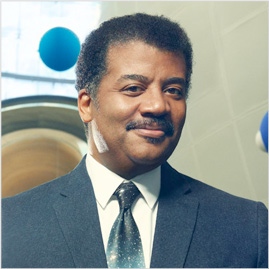
 Become a Patron